Friday, May 7, 2010

Osprey caps magic morning

Great morning dotted with birdwatching magic. So, connect the dots.

Eastern Osprey (Pandion cristatus) caps things. Bird's distant plunge and capture of large fish marks another in run of six-year firsts.

Thought for a moment it was heading to devour catch on 'Osprey Tree' (and nest) erected for nesting by the species. But that was asking too much.

Spotted Osprey entering water from 250 metres off, after Collared Sparrowhawk sped overhead and flashed out across lagoon. Lost it but gained picture of a fish that didn't get away.

Had Azure Kingfisher to thank. Splashes into water beneath low wooden footbridge crossing outlet from main lagoon to creek led to hopeful wait close by. Directly beneath what proved to be Sparrowhawk's line of ambush for unwary birds.

Only knew of Azure's presence because Little Kingfisher darted away with high-pitched calls from large creek pool crossed by concrete footbridge leading to lookout.

Heard the Little because of spell watching Metallic Starlings, Figbirds, Helmeted Friarbirds and White-bellied Cuckoo-Shrikes chasing insects and fruit in Corkwoods and other trees by the pool.

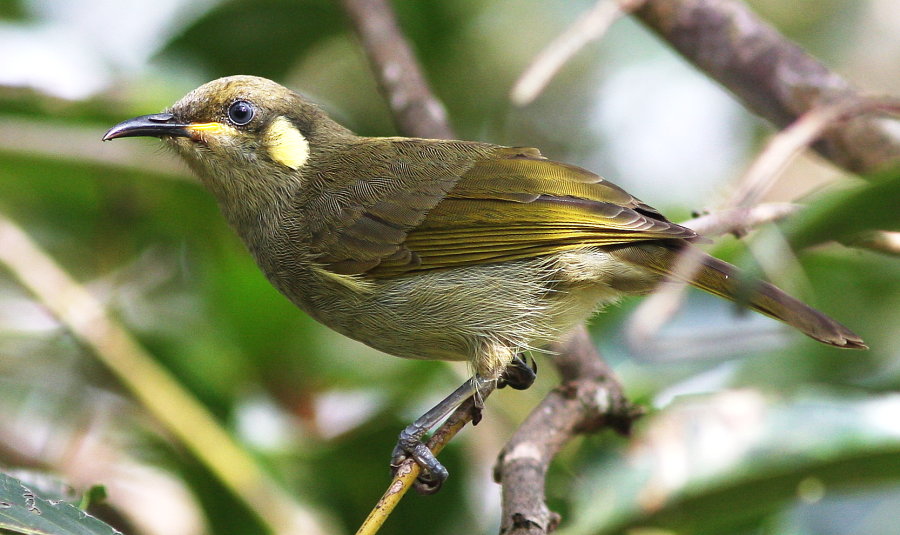
Less visible, but much noisier, Brown Honeyeaters sang of their delight of a second morning full of sunshine. Also seen and heard, Yellow, White-gaped and Macleay's Honeyeaters, White-throated and Fairy Gerygones, Leaden Flycatchers, White-browed Robins, Varied Trillers and Rufous Whistlers.

Plus the Willie Wagtails, Northern Fantails, Forest Kingfishers, Crimson and Red-browed Finches, and Red-backed Fairy-wrens.

All within 50 metres of the lookout and footbridges. but wait, there's more.

Two Eastern Great Egrets (one above) squabbling over sole possession of the entire main lagoon.

And a long-distance confirmation of happy days in Jacanaville:

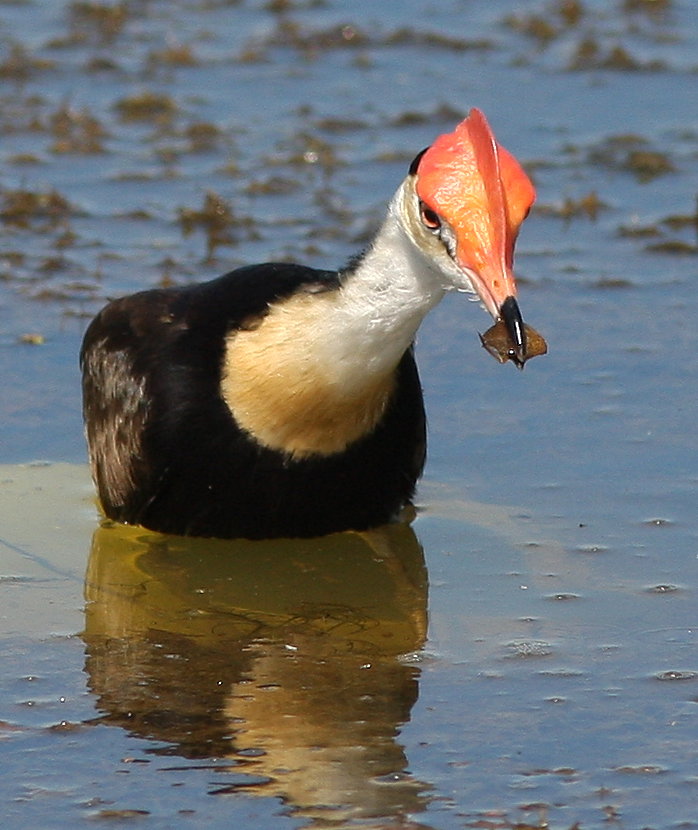
Mr four-legged Comb-crested Jacana. Here's the male of many recent posts with wing securely folded over youngster yesterday.

Similar sightings today. Seems other three eggs really were lost. Better news with one of the other Jacana families. Four thriving juveniles seen out and about today.

Shining Flycatchers (still on x eggs).


Dots all, folks!

Wednesday, May 5, 2010

Jacana carries on laughing at me

Comb-crested Jacana gets another laugh at my expense. Final egg reported gone yesterday. Today - after two hours of nothing at all - noise on water. Yesterday's 'keening' at 'loss' of egg(s) proves to be warning for tiny hatchling.

As I watch from long way off adult (males do the parenting) folds wing over youngster and skitters away acoss the water lilies with two small legs dangling beneath the left wing.

So, did the first three eggs hatch and get similar treatment? To be stashed in thicker cover? No sign of that. But next few days may tell another story.

Elsewhere, long-necked turtle warms to the day. No interest to the turtle, but its stare just happens to be almost directly up at nest of the Shining Flycatchers (still on x eggs).

And on pandanus very near the same spot, Little Kingfisher looks for another little kill.

Tuesday, May 4, 2010

Wetlands going to the dogs

Pity to wipe smiles off faces of Tyto visitors. But some just don't pay attention to signs forbidding them entry. Pair (mum and son) skidded to stop yesterday and slunk off at shout of 'Get home!' (wherever that is). Bad dogs? Nope. Bad owners.

More welcome drop-in visitor, immature Dollarbird (Eurystomus orientalis), taking break on way to warmer winter quarters in the islands.

Comb-crested Jacana lost three of four eggs over the weekend. Nest platform awash for three days but floating higher yesterday (above). Today, last egg gone. Water python? Maybe. Water rat? Maybe. Eggs sunk? Unlikely. Eggs shifted by Jacana? Does happen. But bird almost keening loss today (below).


Shining Flycatchers still on x? eggs: incubation should be nearing end.

And here's another six-year first sighting for me: Brolgas (Grus rubicunda) on the ground (though some overfly most years).

Thursday, April 29, 2010

Cotton allows closer approach

Closer look at female Cotton Pygmy-goose (Nettapus coromandelianus). Male gone.

Female today remarkably unflighty.

Allowed me to walk to lagoon edge, about 20 metres from it feeding alone.

Updates: Comb-crested Jacana still on four eggs. Seems juvenile Jacana quads reduced to three in one family, two in the other. Shining Flycatchers still on x? eggs.


And here's a six-year first: yabby (Cherax spp) on a walking track. But no sign of Dodos ...

Tuesday, April 27, 2010

Too close to gorgeous

Came upon this male Olive-backed Sunbird (Nectarinia jugularis) up a bit too close for 300mm lens and 1.4x converter yesterday.

So images are rather soft. And tongue was too quick. But gorgeous is gorgeous. Right?

Also found Cotton Pygmy-goose (Nettapus coromandelianus) twosome (male, left, chasing female) - seldom seen singly in Tyto; rarer still paired - feeding and squabbling among themselves and two Green Pygmy-geese (Nettapus pulchellus).

Easy at a distance (and more so in poor light) to confuse Cottons (front) and Greens (rear). Safest guide often pattern on birds' flanks.

And here's a surprise. Not! Birds Cottons turned up day after I advised visitors of their rarity in the wetlands. Almost enough to make one talk of lack of Dodos, in hope they'll magic into being just to prove one wrong!

Updates: Comb-crested Jacana still on four eggs. Shining Flycatchers still on ? eggs.


Thursday, April 22, 2010

Graceful Honeyeater chips in nicely

Hard to get open shots of ever busy Graceful Honeyeaters (Meliphaga gracilis), a handful of which have begun sounding again in Tyto.

Best view for long time came today as bird foraged, mainly on insect-ravaged corkwood leaves. Oft-repeated 'chip' call identifies Gracefuls from very similar Yellow-spotteds.

But not all the 'chips' fall from Gracefuls. Northern Fantail (Rhipidura rufiventris) also can go for long spells on one maddeningly similar note. Pity, because it means the fantail less often breaks into one of the most cheerfully sweet songs heard in the wetlands.

Sweet scarcely describes the sound of any flycatcher. Above female Leaden Flycatcher (Myiagra rubecula) rasped away near the site of the Shining Flycatcher nest this week. Didn't seem to bother the nest builders, specially the male, which is lately doing much sitting.

Update: Comb-crested Jacana eggs OK. No sign of the two lots of four Jacana juveniles. Probably safe in inaccessible parts of lagoon system.

Tuesday, April 20, 2010

Pardalote heralds the sunshine

Got first Striated Pardalote (Pardalotus striatus) in six years at northeast corner Tyto late in 2009. Today, first of species seen (or heard) in heart of the wetlands.

Visible near footbridge to lookout for about three seconds after much distant 'witchy-chew'. Twitchy bird landed briefly in corkwood. Switched to taller paperbark. Vanished east.

Sun today, following three miserable wet and grey days. Above, Green Pygmy-goose (Nettapus pulchellus) not so showy under lowering sky. Below, Australasian Darter (Anhinga novehollandiae) reflects a washed-out morning.

Updates: Comb-crested Jacana eggs OK. Ditto, eight juveniles. Shining Flycatchers still at (but rarely on) nest.

Of note: three immature Dollarbirds came and went; ditto small dark Brown Goshawk

Friday, April 16, 2010

Crimsons lead in breeding bonanza

Tyto teeming with tinkling young Crimson Finches (Neochmia phaeton). Plenty more on the way as nesting carries on apace. Why stop with one lot of four or five? Five for Mum, five for Dad. Maybe even five for the country (he smirked).

Also numerous, but not so fixed on nonstop breeding, Golden-headed Cisticola (Cisticola exilis) finds time to sing and enjoy the warmth this week.

Bad news at Shining Flycatcher nest? Well, female turned up again yesterday and today. The epic nest build is back on. Be 2011 before eggs are laid at the present erection (pun if you like) rate.

Found another four young Comb-crested Jacanas today. That's eight thriving in main lagoon system. Above, four more (one hidden behind egg on left) on the way.

Parent resented the attention, but 'threatening' display actually drew me to look for the eggs.

Wednesday, April 14, 2010

Today the trees are full of Forests

Suddenly Tyto's alive with Forest Kingfishers (Todiramphus macleayii). The pattern repeats every year, yet the day always comes as a surprise.

Today was the day. Yesterday, two or three here or there. Today, six here, six there, and more elsewhere.

For all their numbers, not one bird allowed close approach. On rare occasion Forests will ignore someone walking up. Hope it's soon!

Bad news at Shining Flycatcher nest. No sign of female for three days. Scrambled across to nest. No sign any eggs. Nest not quite fully lined. Appears male and were abandoned.

But the four young Comb-crested Jacanas continue to thrive on the lily pads out in front of the lookout.

Also thriving, Agile Wallabies. Perhaps last year's flooding triggered heavy breeding to replace the losses. Certainly numbers bounced back speedily.

This joey about due to quit the pouch.

Monday, April 12, 2010

Hungry Jacana gets last laugh

No more obsessed with Comb-crested Jacanas (Irediparra gallinacea) than with other birds in Tyto but they have proved rather centre of recent focus. (The junior four all OK today).

Did not set out to capture this Jacana seizing shred of water lily leaf yesterday. The birds do this on occasion, probably a byproduct of their search for insect (larval?) morsels from the underside of the leaves.

My hope was for flight shots when bird reacted to slow sinking by uplifting elsewhere. Got caught unable to use tripod and in blazing sun waiting, waiting, waiting ... Camera got heavier. Bird wouldn't uplift. Sun got hotter, hotter, hotter. Camera heavier, heavier, heavier.

Of course, bird waited till I lowered camera. Uplifted, and strolled off, laughing (I have no doubt whatsoever) at me.

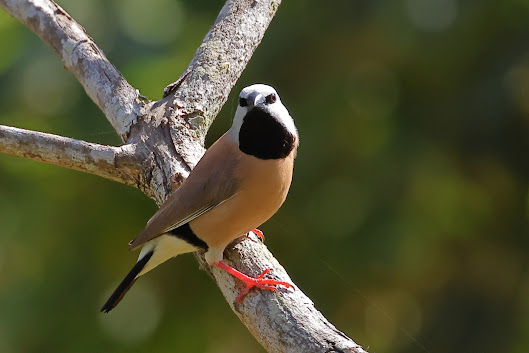
Lament for southern Black-throated Finches

Hollow logs for at risk birdies? Nature's nest boxes if you please Oh, such a clever wheeze So gather in twos and threes? Hundreds you w...