Showing posts with label MacLeay's Honeyeater. Show all posts

Sunday, March 18, 2012

Pale-yellow Robin drops in

Pair of Pale-yellow Robin (Tregellasia capito race nana) recently turned up at Jourama Falls, more or less at sea level and well below their usual highland rainforest habitat. 


Not so uncommon in creekside forest near the falls, Pied Monarch (Arses kaupi).


Macleay's Honeyeater (Xanthotis macleayanus) isn't so keen on cluster figs but has a taste for insects among the fruit in the camping area.
Click pix to enlarge  

Friday, December 16, 2011

How can you tell he's from the Shaky Isles?

Evidence coming up in three shakes . . . 


Macleay's Honeyeater (Xanthotis macleayanus)


Silvereye (Zosterops lateralis)


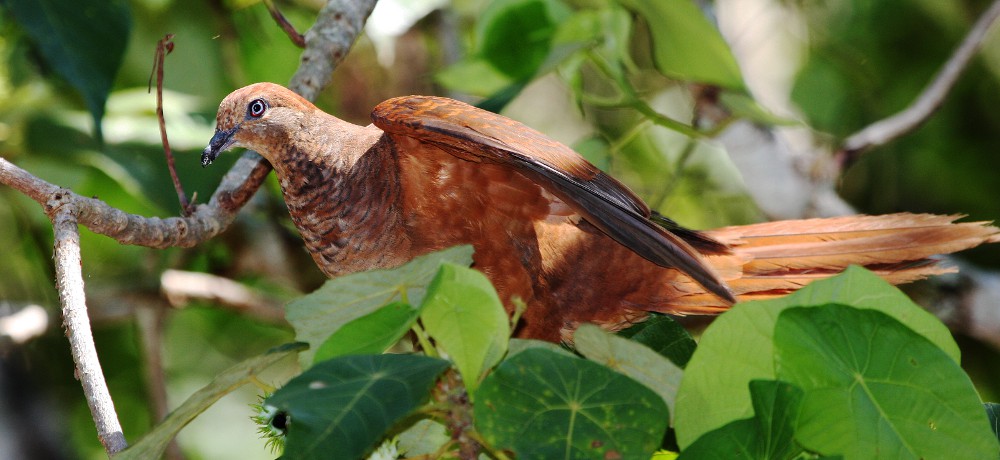
Brown Cuckoo-Dove (Macropygia amboinensis)
Click pix to enlarge

Tuesday, July 19, 2011

Pale-yellow Robin stands out

Trip up Wallaman Falls road today failed to locate rarities but added to Pale-yellow Robin (Tregellasia capito) collection.


Also got close to Macleay's Honeyeater (Xanthotis macleayanus), without any luck in the pose.
Click pix to enlarge
Wednesday, August 11, 2010

Honeyeater rifles cheesewood seed

Cooler months see Macleay's Honeyeater (Xanthotis macleayanus) return to Tyto. Riflebird-like in much of its foraging, species is said to be sedentary, but appears not to like summers in hot, dry woodlands.


Caught this bird today with red seed from cheesewood (because fruit resembles segmented round cheeses) tree. New Speedlite 580 to thank for both pictures.


Also for rather soft image of Rufous Fantail (Rhipidura rufifrons), another species dropping in as temperatures 'plummet'.


And to close, very soft image of green ant crawling down head of Amethystine Python. Snake didn't move as I almost walked over it in a grove, so no surprise when it ignored the (tres)passing ant.
(Click pix to enlarge)       

Wednesday, June 2, 2010

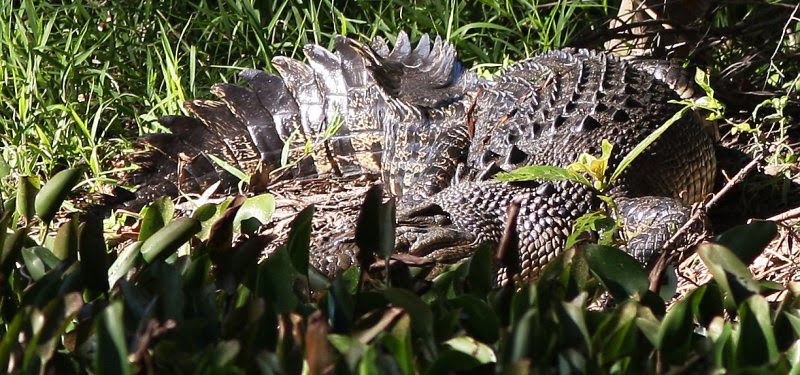
Crocodile almost caught napping

Checked out the nearby wetland site of Saltwater Crocodile nest (December post) yesterday and found possible nester sunning.

But the 2.5-3-metre animal kept head down. Slid silently into plant-choked water before I got inside 40 metres. Try again in a few days for closer shots.

More than close enough to this young Macleay's Honeyeater (Xanthotis macleayanus) in Tyto. But bird kept moving bit too sharply.

Similar story with young Graceful Honeyeater (Meliphaga gracilis).

Two or three encounters with this bird and yet to capture top shots.

Finally, easier target to hold in focus, and safer to tiptoe toward, Long-necked Turtle.

Tuesday, July 14, 2009

Honeyeaters enjoy varied diet


Honeyeaters enjoy a varied diet, though not quite so wide-ranging as this series might indicate. Starting with Brown Honeyeater (Lichmera indistincta) tucking into red bottlebrush at the Tyto carpark.


Next, Macleay's Honeyeater (Xanthotis macleayanus) dipping into rotting bananas set out in and around a pig trap.


Last, White-gaped Honeyeater (Lichenostomus unicolor) appears to be seeking an end to iron deficiency. Perhaps the bananas are too sweet.

Tuesday, July 7, 2009

Macleay's Honeyeater going bananas

Up close with a Macleay's Honeyeater (Xanthotis macleayanus) today in Tyto. Three birds (sorry, Snail, only got this one) and a pair of White-gapeds were picking at bananas in a pig trap.

Two other closeup holdovers: Black-fronted Dotterell, and Magpie Lark.

Sunday, October 12, 2008

Rare morning in the rainforest

The rainforest creek pools today produced rare local sightings of Orange-footed Scrubfowl (Megapodius reinwardt) and Channel-billed Cuckoo (Scythrops novaehollaniae). Noisy Pitta (Pitta versicolor), Shining Flycatcher (Myiagra alecto), MacLeay's Honeyeater (Xanthotis macleayana), Large-billed Gerygone (Gerygone magnirotris) and Azure Kingfisher (Alcedo azurea) also showed up.

Sadly, not one bird did a photographer any favours. The scrubfowl strode off sturdily, the pitta made a colourful exit into tall timber, where the channel-billed perched heavily for a few seconds before heading west, the Azure streaked away, the gerygones busied themselves in the nest, the honeyeater (below) grabbed an insect and departed, and the flycatchers mostly detoured around me.

The latter behaviour at least explained why the birds have been difficult to track. Most Shinings I've encountered elsewhere - even along similar small creek systems - stuck close to the low ground and shadowed areas. The present pair make darting flights sideways into the forest, or weave through the trees parallel to the creek before turning to forage again along the banks (male, below).

In Tyto proper, a Glossy Ibis (Plegadis falcinellus) - first for several months - stood out in the midst of the expanding set of regulars standing in the rapidly evaporating shallows.

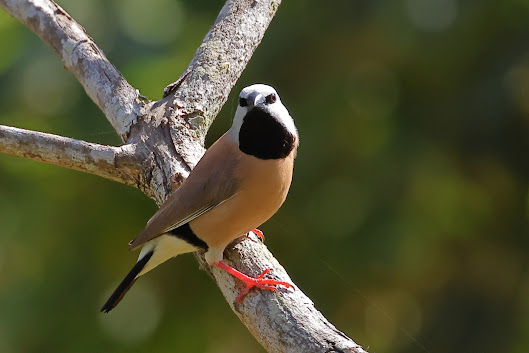
Lament for southern Black-throated Finches

Hollow logs for at risk birdies? Nature's nest boxes if you please Oh, such a clever wheeze So gather in twos and threes? Hundreds you w...