Showing posts with label Whistling Kite. Show all posts

Saturday, April 30, 2022

Whistling Kite whistles down, whisks up fish

Whistling Kites in my experience seldom make much of a splash in their infrequent efforts to take fish. Unlike Ospreys they lack specialised flexi-talons and grip-pads for the job, and deep plunges without plumage waterproofing could be life-threatening.


But, along with the odd Black Kite, a few Whistlers will snatch dying fish from the surface as they float up from deoxygenated water during the late dry season. Again, in my experience, few watching kites follow their more opportunistic snatch and grabbers.


So Whistling Kite's swoop down near edge of pool and take of unidentified fish in front of Payets Tower in the Town Common Conservation Park, Townsville, two mornings back, was probably because fish was freshly dead and floating in paragrass at pool's edge. The kite flew to cover in nearby trees and made short work of the small fish. A lucky scavenger rather than a skilled fisher, in my judgement. Others may disagree.


Friday, April 22, 2022

What Beauty and the Beast have in common


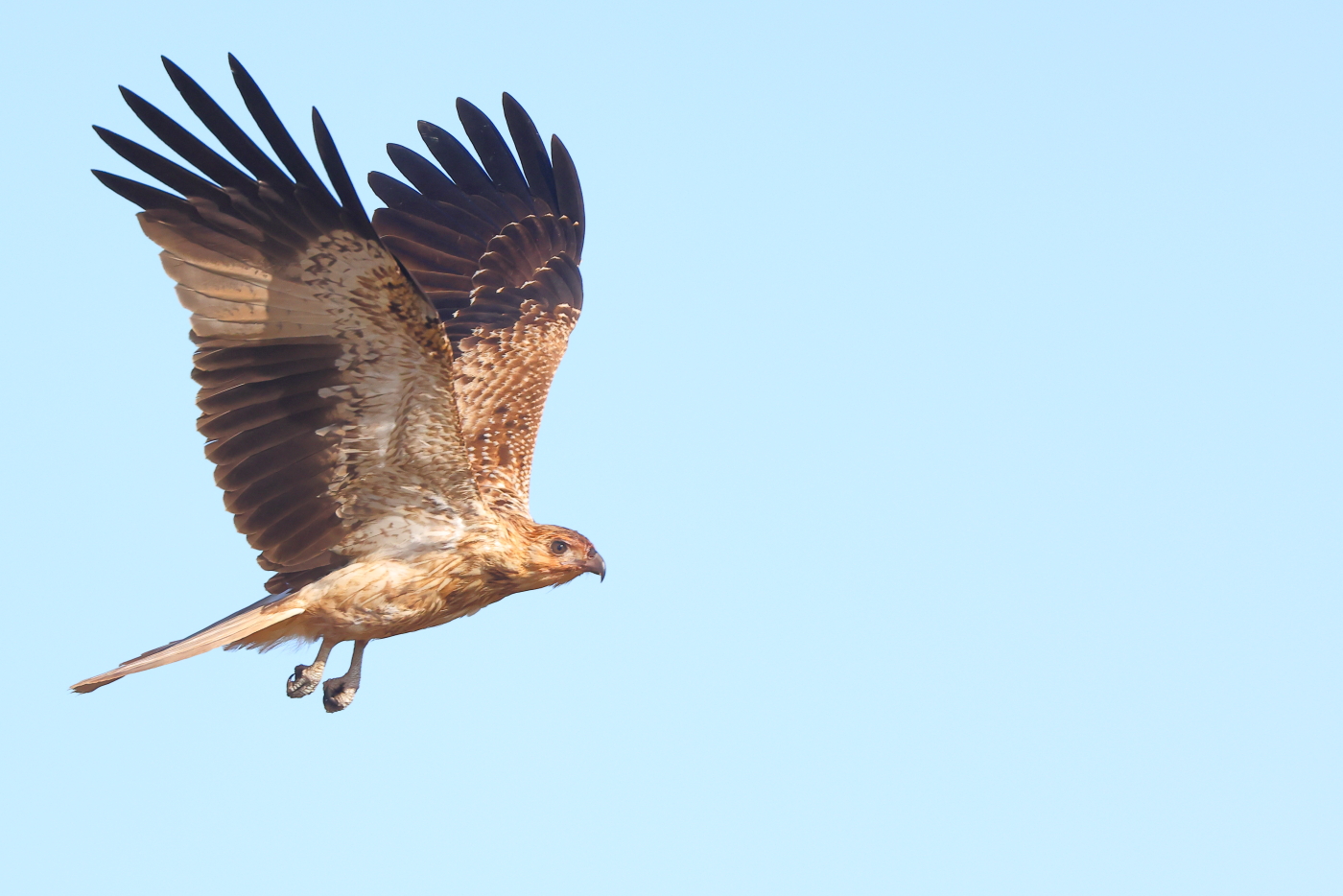
Fairy tales and hairy tales - how Beauty and the Beast plays out in a case from the real world. Above, Whistling Kite in the sky low over part of Town Common Conservation Park in Townsville. Not often that kites in flight present so prettily for a photographer. 


More often it's an underview, in this case two looks - right and left. Beauty! But this was just one of six birds hanging about the area. 

Which is, of course, where the Beast comes in. Maybe two beasts, depending on how one regards the actions leading to the presence of six Whistling Kites. Be warned the image below is not a pretty sight.


The beast is a feral boar without its head, sliced off by a hunter. And though Queensland Parks and Wildlife rangers routinely trap and kill wild pigs in the Common and other state and national parks - because of the great habitat damage they can do - private hunting is, within my knowledge, not allowed. 

The hunter may be doing the park a service of sorts, may even be showing considerable courage, since no dog or vehicle tracks marked the scene, but the scene remains, for me, one of beastly unlawfulness. 

So, why show it? Perhaps because Beauty is not whole without the Beast . . .


Sunday, September 20, 2020

Magpie Lark whistles down upon Kite


Whistling Kite finds Magpie Lark whistling down the other day and clearly wishing it elsewhere.


Action came over Rowes Bay Golf Course, close to water hazard residence adopted by two-metre Saltwater Crocodile.


Which has thus far failed to greet me with toothy grin. We live in hope. But keep a safe distance.


Also living in hope, fluttering for prey over nearby salvinia-laden hazard, another Magpie Lark.


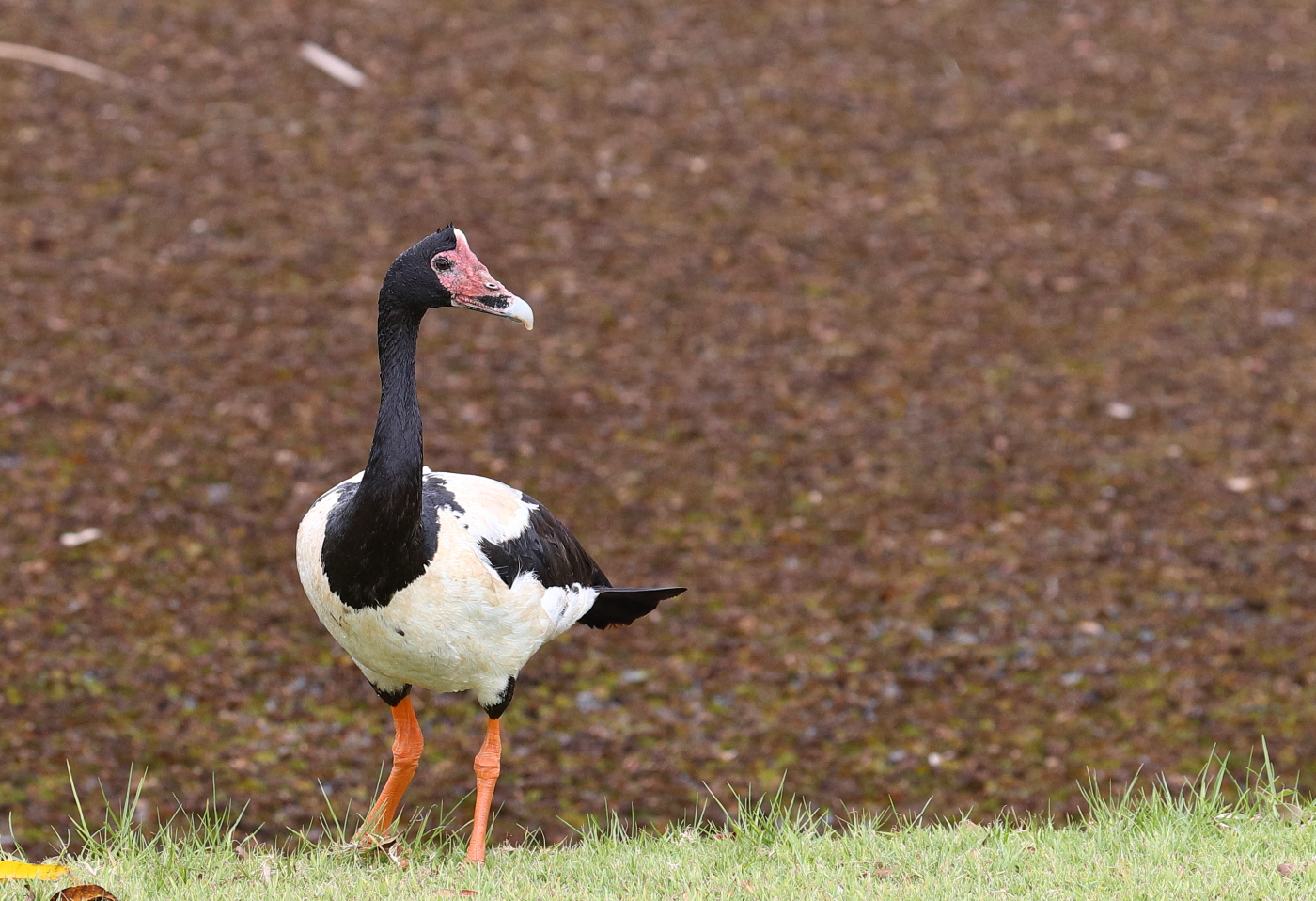
And steering clear of the croc's pool, Magpie Goose poses as prettily as the species can manage. 

Wednesday, March 20, 2019

Life in the sticks stacks up for birds

Sticks. Some birds need stacks of them. Whistling Kite returns towards nest after seeing off cheeky young Brahminy Kite that ventured too close. But on the way home, why not stop off for a bit of extra for the relatively modest nest high in eucalyptus?

Young White-bellied Sea-eagle not so long ago stood upon stack of sticks vastly outweighing the kite's. Parent birds lately heard honking from their massive creation in Townsville Town Common Park. Be no surprise soon to see them carrying fresh stocks of sticks to the nest.


Then there's those that stick to standing stock still on sticks. Nankeen Night Heron, in early morning light, for example. Or Little Pied Cormorant.

Pheasant Coucal not sticking totally to the theme, half on, half off.

White-bellied Cuckoo-shrike goes one better, all on and all off.

Little Friarbird, meanwhile, sticks to daily preening routine, stock-in-trade for all birds whether from the sticks or the heights.


Sunday, February 10, 2019

Groping to explain Whistling Kite's missing Groper


Groping for words to go with pictures of Whistling Kite homing in on fish thrown up on sand at Pallarenda in gusting break during the 10 days and 1.5 metres of rain in Townsville.

Caught bird coming in to land beside what appears to be small Groper. But didn't notice the fish when taking pictures. Nor when Kite fed on portions of entrails (oh, all right, guts). Nor when it flew and Silver Gull dropped in to grab a bite. So didn't think too much of it when unable to pinpoint where the birds had landed. I'd missed little photographic catch-of-the-day.

Did better with mating dragonflies flying over pool in the Pallarenda parking area. So what? Well, it's a minor macro miracle, using 600mm from 5m to roughly manually focus on flying insects and thus enable very quick autofocus.

Another capture of note recently. Nothing to be proud of about the image but Little Egret's taking of Eastern Striped Skink isn't something seen too often. Water rising quickly into its habitat probably led to skink's demise.


Saturday, December 30, 2017

Little Egret, Red-capped Plovers fight for last bites


Last days of 2017, last days of action on, around and over the last two pools as Townsville Common wetland hardens under baking sunny days - which may last past January. So, bit of pressure for last of prey, as above with Little Egret flexing muscles and wings and things to see off fleeing rival.


And junior Red-capped Plover letting older bird know who's stud of the mud.

Red-necked Stint sticks to stints picking up prey and avoids those picking fights.

Black-necked Stork won't be walking across Payets pool with any more tilapia until next year's Wet (if it comes - no sure thing for Townsville). Even the hardy pest fish species are dying in the deoxygenated water.

But there's still prey enough in the air on and just above the water to keep Gull-billed Tern coming back every day.


And there'll always be the birds to keep me there day after day, wet or dry. Here's to 2018 and more Peregrine Falcons, White-bellied Sea-eagles and Whistling Kites, and . . .


Sunday, October 15, 2017

Reality of the fish that got away just old crap

Plenty of fishing stories boil down to little more than boring old crap, as Black-winged Stilt feeding today in shallows near Payets Tower might attest. Might, if it had bought into above inadvertent illusion.

'Fish' turns out to be boring old crap stuck on the mud. Just another story about the one that got away.

Whited-faced Heron (same site, two days ago) comes up with dinkum catch. Not a fish, but anything living in or near the water is fair fare.

Brolgas don't come up with many fish but like getting stuck into the mud. And muddy water. Many these days showing necks stained brown by the now fast-evaporating water.

Getting a bit dry on slightly higher ground.

Higher still, Brahminy Kite (once often miscalled Fish Eagle) circles the Payet Pool. Species can tell few fishing stories as it's more likely to be seeking to hook insects or frogs from sedges and reeds.

Whistling Kites also show little fishing ability, though a few (ditto Black Kites) learn to watch for and snatch dying fish as they rise gasping to the surface of stagnating waters.


Friday, July 16, 2010

Standing and delivering the goods

Caught this Whistling Kite (Haliastur sphenurus) adorning post on my favourite country road today. 


Some birds just stand around and yet command attention.


Bush Thick-knee (Burhinus grallarius) shows plenty of presence, at edge of new Tyto lagoon earlier in week.


And Eastern Great Egret (Ardea modesta) commands paperbark heights above another Tyto lagoon.

Thursday, October 22, 2009

Slight kite skite, all right?


Black-shouldered Kite (Elanus axillaris) has taken to morning stints in small dead tree on Tyto's northern boundary. Not too worried by me, till within 20-25 metres. But haven't had any luck with prey capture, or even in-flight close-ups. May be bit greedy seeking more than this bird's beauty. . .


Less often ready to sit and pose, Black Kite (Milvus migrans) remained still for a few seconds early in week, before taking off to join mate.


This Brahminy Kite (Haliastur indus) has lately added Tyto to its rounds. Bit odd, since the species usually doesn't hang about for long till fish begin dying, which isn't happening at present.


And to complete the Tyto kite set, Whistling Kite (Haliastur sphenurus) surveys the wetlands scene from a Leichhardt tree.

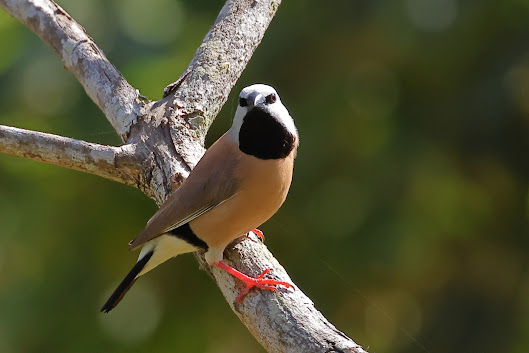
Lament for southern Black-throated Finches

Hollow logs for at risk birdies? Nature's nest boxes if you please Oh, such a clever wheeze So gather in twos and threes? Hundreds you w...