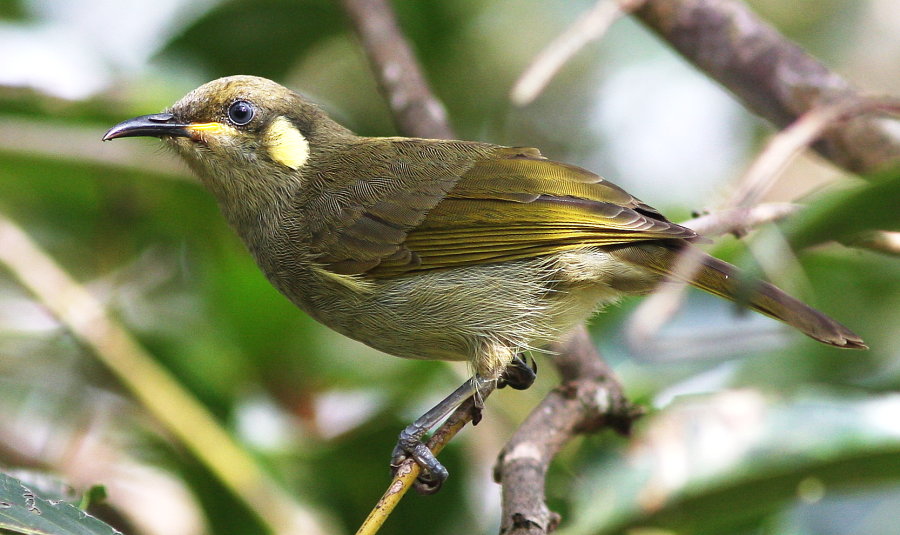


 Male Rufous-throated Honeyeater (Conopophila rufogularis) reaches under a dead pink lotus flower head in its search for small insects. The birds are seldom absent from Tyto, but often disappear high into trees through the day. Mornings and evenings, they more actively forage at and near the water's edge.
 Northern Fantail (Rhipidura rufiventris) takes a spell from competing with Willie Wagtails for moths and other flying prey. The fantails can't match their more numerous rivals in open woodland. They do better in closed woodland, and stick around long after the Grey Fantails have headed off for cooler forest and higher ground.
 Australasian Pipit (Anthus novaeseelandiae - formerly Richard's P.) surveys its typical mown grass territory from atop an Ingham airstrip security fence, which forms Tyto's southern boundary. I'm not too keen on manmade bits in my bird pictures, yet have to admit they do sometimes make a photgrapher's life easier.
Hollow logs for at risk birdies? Nature's nest boxes if you please Oh, such a clever wheeze So gather in twos and threes? Hundreds you w...