Showing posts with label Little Kingfisher. Show all posts
Tuesday, March 15, 2022
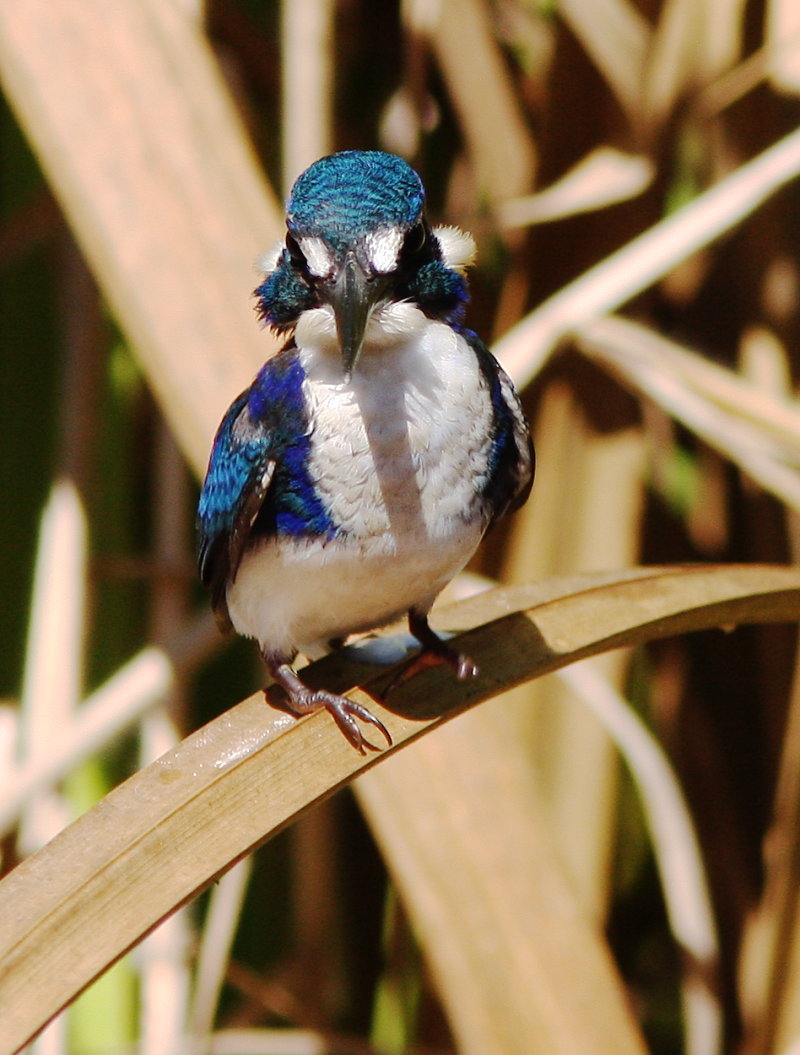
Little Kingfisher manipulated in case for freeware
Long time since I've bored anyone about my arguments for freeware. But sparked by generously informative Feathers and Photos exercise lately on post-processing workflows here's my no-cents (can't get cheaper than that!) worth. One caveat: I make no claim freeware will better pro combos of apps, but say it can come close and at big savings in time and money. So, recent pic, above, Little Kingfisher, full frame, Canon Raw.
Little Kingfisher, cropped, adjusted for brightness, colour saturation, shadow, contrast and sharpened - about two minutes in DPP4, Canon freeware.
Little Kingfisher, most of background tidied up by simply cloning much of background - Gimp clone tool (because DPP4 clone tool is simply useless).
Then, couple more little touches in Gimp - to white hot spot (select spot with lasso tool and cool it down a bit) and bill (lasso, and make tiny bit sharper). More could easily be done without ever getting into more complex time-weighty techniques. And, yes, many claim Gimp is too this, that and t'other. But let the pictures speak for themselves.
Tuesday, June 8, 2021
Look sharp about all the noise for Denoise
You must try Topaz Denoise! After being told by so many so often, I have. On a free trial. Which proved trickier to set up, as these things too often are.
Anyway. The results? Noisy shots. Noise gone. Great. But good shots without noise don't become great. The Topaz sharpening tools don't work any magic. (Watermark part of free trial)
Forced to use high ISOs? Topaz does trick. Looking for magic on already good shots? Dream on!
Monday, June 7, 2010
'Tis Little Kingfisher biz, tizz, whizz
Find Little Kingfisher (Ceyx pusilla) in noon sun on Saturday.
Unworried by my walk on to scene.
Intent on water below scleria perch. Seems the fish are hard to spot.
Sudden flap as Red-backed Fairy-wren darts by.
Little Kingfisher stands up for itself.
Further flap.
Without warning, dives to water. (Catches fish: darts elsewhere with it)
As we were. Life's yummy! (click pix to enlarge)
Unworried by my walk on to scene.
Intent on water below scleria perch. Seems the fish are hard to spot.
Sudden flap as Red-backed Fairy-wren darts by.
Little Kingfisher stands up for itself.
Further flap.
Without warning, dives to water. (Catches fish: darts elsewhere with it)
As we were. Life's yummy! (click pix to enlarge)
Monday, May 31, 2010
Little Kingfisher tests the reflexes
Tested reflexes by trying to catch Little Kingfisher (Ceyx pusilla) on the dive yesterday.
Bird won 149-1. Well, almost one. And maybe it was 249 duds.
Anyway, just near enough to encourage more efforts.
Meanwhile, Shining Flycatcher (Myiagra alecto) juveniles doing well.
Female parent was doing almost all the feeding.
Male now doing some, because one juvenile chasing it.
May species count: 112, very slightly down on most of previous six years.
Bird won 149-1. Well, almost one. And maybe it was 249 duds.
Anyway, just near enough to encourage more efforts.
Meanwhile, Shining Flycatcher (Myiagra alecto) juveniles doing well.
Female parent was doing almost all the feeding.
Male now doing some, because one juvenile chasing it.
May species count: 112, very slightly down on most of previous six years.
Wednesday, May 5, 2010
Jacana carries on laughing at me
Comb-crested Jacana gets another laugh at my expense. Final egg reported gone yesterday. Today - after two hours of nothing at all - noise on water. Yesterday's 'keening' at 'loss' of egg(s) proves to be warning for tiny hatchling.
As I watch from long way off adult (males do the parenting) folds wing over youngster and skitters away acoss the water lilies with two small legs dangling beneath the left wing.
So, did the first three eggs hatch and get similar treatment? To be stashed in thicker cover? No sign of that. But next few days may tell another story.
Elsewhere, long-necked turtle warms to the day. No interest to the turtle, but its stare just happens to be almost directly up at nest of the Shining Flycatchers (still on x eggs).
And on pandanus very near the same spot, Little Kingfisher looks for another little kill.
As I watch from long way off adult (males do the parenting) folds wing over youngster and skitters away acoss the water lilies with two small legs dangling beneath the left wing.
So, did the first three eggs hatch and get similar treatment? To be stashed in thicker cover? No sign of that. But next few days may tell another story.
Elsewhere, long-necked turtle warms to the day. No interest to the turtle, but its stare just happens to be almost directly up at nest of the Shining Flycatchers (still on x eggs).
And on pandanus very near the same spot, Little Kingfisher looks for another little kill.
Wednesday, March 31, 2010
Chastening chase ends the month
Chased after Rufous-throated Honeyeaters (Conopophila rufogularis) today in Tyto under yet more grey skies and passing showers, but above male represents an admission of defeat, dating from earlier in month.
Had even less luck in quest for Little Kingfisher (Ceyx pusilla), above, and by chance on same morning as honeyeater. Azure kingfishers, which were also much in evidence earlier in month, have likewise dropped out of sight in past two weeks.
Shining Flycatcher pair continue work on nest (seems rather laboured build), Comb-crested Jacanas continue sit in sight of lookout, Crimson Finches still busy nesting here and there, but in total things somewhat subdued. Here's hoping for April sunshine and typical jump of 10-20 species in monthly count over March's 97.
Had even less luck in quest for Little Kingfisher (Ceyx pusilla), above, and by chance on same morning as honeyeater. Azure kingfishers, which were also much in evidence earlier in month, have likewise dropped out of sight in past two weeks.
Shining Flycatcher pair continue work on nest (seems rather laboured build), Comb-crested Jacanas continue sit in sight of lookout, Crimson Finches still busy nesting here and there, but in total things somewhat subdued. Here's hoping for April sunshine and typical jump of 10-20 species in monthly count over March's 97.
Friday, March 5, 2010
Catching a kingfisher; losing a digit
How to catch a Little Kingfisher. First train spiders to spin super strong line ... Nah. See bird on bridge wire. Shoot dud pictures today against harsh morning light (the rain stopped Monday: sunshine ever since: who sez season should change with equinox?) Start to delete pictures. Notice strand appearing to tether bird. Sneaky wee bit of cloning adds to illusion.
It's a little better than Brown Falcon caught briefly from rolling car yesterday.
And much better than Bar-shouldered Dove caught at start of flight early in week.
February counts: 91 bird species in Tyto: 89 in 2009; 94 in 2008.
Last word: Telstra and Tyto Tony tangle and tango no more. tonyashton1 AT bigpondbastards DOT com loses a digit (bit like Frodo in a way) and gains freedom as tonyashton0 AT gmaildonoevil DOT com. May the satanic $249 modem melt in the fires of hell, or Mordor.
It's a little better than Brown Falcon caught briefly from rolling car yesterday.
And much better than Bar-shouldered Dove caught at start of flight early in week.
February counts: 91 bird species in Tyto: 89 in 2009; 94 in 2008.
Last word: Telstra and Tyto Tony tangle and tango no more. tonyashton1 AT bigpondbastards DOT com loses a digit (bit like Frodo in a way) and gains freedom as tonyashton0 AT gmaildonoevil DOT com. May the satanic $249 modem melt in the fires of hell, or Mordor.
Friday, February 19, 2010
Three to look back on from sunnier days
Plenty of rain and grey skies lately. Time for sunnier pictures (enlargeable) that won some praise elsewhere late last year. First up, Little Kingfisher (Ceyx pusilla) on scleria at front of Tyto hide. Member of species dived into flooded shallows at hide yesterday. No chance for worthwhile picture.
Last, Golden-headed Cisticola (Cisticola exilis) enjoying morning sunshine amid the scleria. Another prominent grass inhabitant harder to approach since the Wet set in.
Footnote: Rain comes. Lagoons flood. Birds go. Almost no egrets, herons, ducks, darters cormorants to be seen. Crakes, rails, bitterns, bush-hens hidden in flooded grasses. But still 50 or so species to be found - with effort, and much mozzie mashing!
Wednesday, October 7, 2009
Winner under my nose

Another to turn up more or less under the nose, this Emerald Dove (Chalcophaps indica). One or two find their way into the more thickly wooded areas every year, seldom staying for more than a few days. This bird for more than two weeks teased me with distant glimpses. The other morning, as I sat on a footbridge, it waddled behind my back down to a remnant pool in the creek. Slight noise gave it away. My turning brought bird into view, but led to quick departure.
Also given to turning up under the nose and to sudden departures, Latham's Snipe (Gallinago hardwickii). This bird, heading for cover yesterday, is probably the solitary one among three that settled in for a spell around the main lagoon soon after the first of the species arrived early in August. The species can sometimes be approached when feeding actively. More often, they zigzag away at speed. Or march off into reeds and grasses, though always taking care to keep an eye on the intruder.
Thursday, September 3, 2009
Peacefuls plus bits and pieces

Sometimes the birds under our feet in suburbia can be the most difficult to sneak up on in the wild. Peaceful Doves (Geopelia striata) in Tyto rarely stand for being walked up on. These two birds allowed me nearer than usual, but not close enough.

Eastern Great Egret (Ardea modesta) easier to close in on. The difficulty is trying to control the dazzling whites. (This is made even trickier because my notebook's LCD screen is typical in being extremely sensitive to tiny changes in viewing angle.)

From big to tiny: Little Kingfisher (Ceyx pusilla) on scleria in front of the Tyto hide yesterday. The birds have given up the remnant pools on the outer creek and shifted to fishing at various points within the main lagoon system.
Bonus bird for anyone chasing kingfisher is Australian Reed-Warbler (Acrocephalus australis), more often heard in the scleria than seen on its fringes.
But still no sight or sound from the scleria of the Little Bitterns that inhabited several areas before the floods of January-February drove them elsewhere.
And a quick note of overall August sightings: 111 species, 6 down on July, 8 down on August last year. A few more snakes however: 8 species for the month (of 12 on my total list in 5 years).
Monday, August 10, 2009
Mannikins head memorable morning
Some days start well and just keep getting better. Hard to top today's start of Chestnut-breasted Mannikins (Lonchura castaneothorax) sprucing up in one of the new pools near Tyto's entrance. So, two pix for them.
Onwards, to one of many Brown-backed Honeyeaters (Ramsayornis modestus) busy, busy, busy gathering nesting material. (Yellows, and Browns doing likewise).
Nearby, male Rufous Whistler (Pachycephala rufiventris) sang and danced methodically through the cheesewoods in typical togetherness with mate (which didn't pose for me).
Plaintive noises from amid the mistletoe led to juvenile Red-winged (Aprosmictus erythropterus) whingeing at parent, which seemed immune to pleas, suggesting the youngster knuckle down and find its own fare by following mother's example. Later, similar story with male (below) and another juvenile.
Still better to come. Splash and dash from pool announced presence of Little Kingfisher (Ceyx pusilla). Bit of chasing about led to another pool and bird sitting pretty high off water. (Have helped several birdos find the reclusive Littles lately.)
No trouble finding Forest Kingfisher (Todiramphus macleayii). But few of them are willing to sit around when people come by. Picture one of several taken with new 2x converter, which means losing Auto Focus and many, many botched shots!)
No need for 2x when White-browed Robin (Poecilodryas superciliosa) turns up close to the Little Kingfisher pool. Bird jaunted about in the shadows briefly and just as quickly flashed off deeper into the trees.
Last bird of the morn, Rufous-thoated Honeyeater (Conopophila rufogularis) head down and hard at it to gather soft lining for nest in nearby paperbark. (Brown-backed and Rufous specialise in big bulky ovals with verandahed side entrances.)
To round off the outing, a Common Tree Snake sunning as I entered the hide, re-emerged from hiding, tasted the air, decided there was no threat and came from three metres away and almost over my outstretched hand before heading out and up off the bench and into a paperbark.
As I said, the morning just kept getting better!
(Note: used Picasa tools to fast-process all this post. One nit: can't scale images, so some inconsistent sizing.)
Wednesday, August 5, 2009
Flitting after finch and flycatcher

The quest for top pictures of Red-browed Finches (Neochmia temporalis) goes on. These two entries merit a showing, but don't quite do full justice to the birds.

Indeed, the species might have a case for cruel and unusual caricature after being shot in the round at Tyto today.


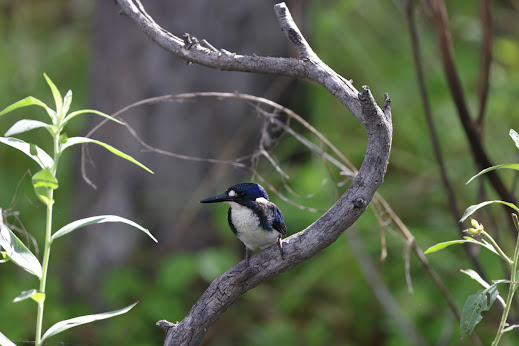
Also flitting shy of satisfaction, the Shining Flycatcher (Myiagra alecto) that has been keeping company (more or less) with a Little Kingfisher (Ceyx pusilla) at a creek pool. Here's an earlier picture of the Little up close.

Subscribe to:
Posts (Atom)
Lament for southern Black-throated Finches
Hollow logs for at risk birdies? Nature's nest boxes if you please Oh, such a clever wheeze So gather in twos and threes? Hundreds you w...
-
Seems Townsville will feel only the sting in Cyclone Debbie's tail. Nothing but light breeze and a rare drop of rain here yet as the c...
-
Hollow logs for at risk birdies? Nature's nest boxes if you please Oh, such a clever wheeze So gather in twos and threes? Hundreds you w...
-
Golden-headed Cisticola not so rusty when it comes to catching a feed See the eagle-eyed birdo doing his stuff. Eyes always on the move, mi...