Showing posts with label Brown-backed Honeyeater. Show all posts

Tuesday, November 9, 2021

Young Brahminy Kite off nest to less than flier


Quitting home for first time takes nerve for a big bird. This juvenile Brahminy Kite in Cape Pallarenda Conservation Park yesterday perhaps lost confidence after quitting nest up above. Though it showed no sign of panic or fear when I came upon it, not much above head height. No sign of it today. Nor any adult. Hope to see it flying - and, common error, being mistaken for Little Eagle - in next few days.


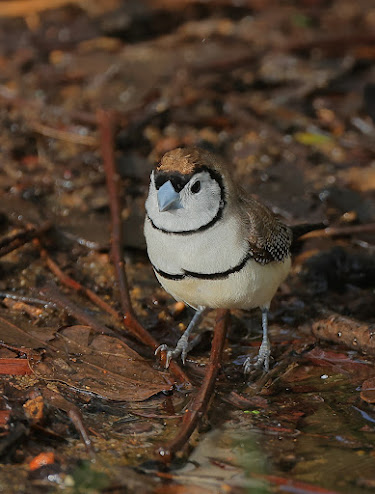
On the ground yesterday in the park, Double-barred Finches drink at pool below bountiful dripping tap.


Brown-backed Honeyeater - slower to descend to drink a day before. 

Thursday, October 15, 2020

Back-breaker bags Brown-backer

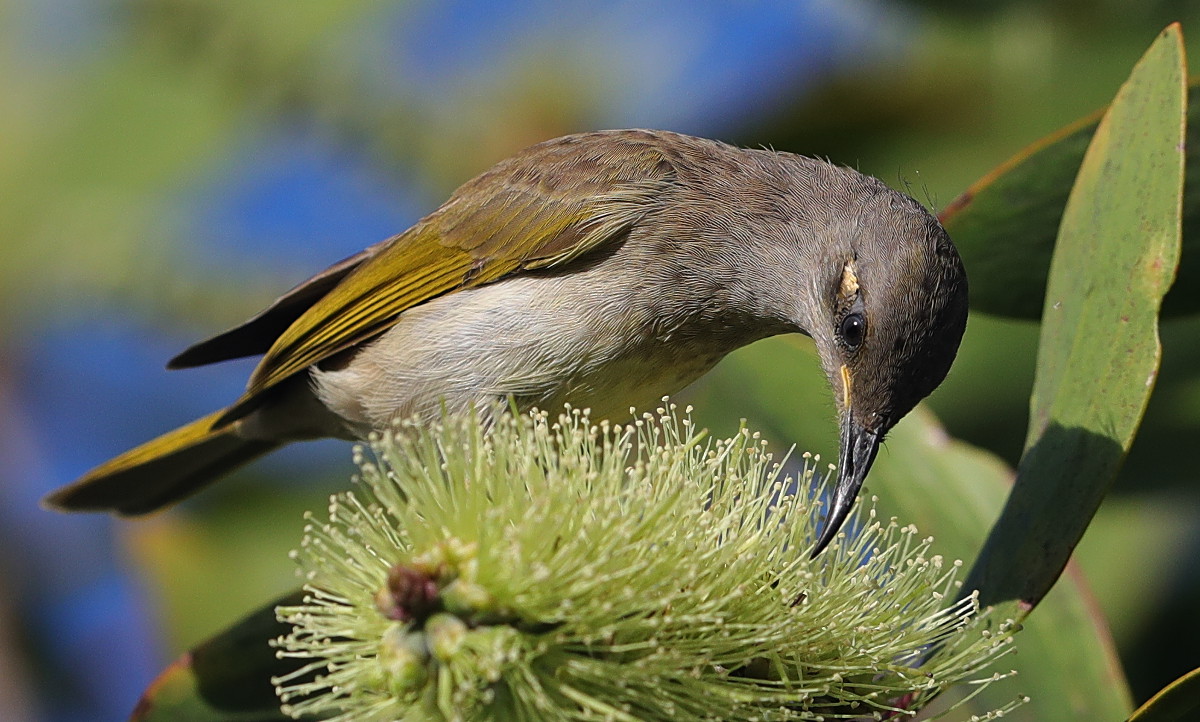
Back-breaking crawl got me close to Brown-backed Honeyeater before it twigged my presence in Town Common Cons. Pk, Townsville, today. Time I found technique with fewer twinges.


Much easier on the spine catching Nankeen Night-Heron doing daytime flyover this morning.

Even simpler, walk up close and talk to obliging Pelican.

And yesterday at Pallarenda stood comfortably under tree and clicked away after coming upon Osprey ripping into fresh catch. John Dory, I'm told.


Sunday, December 8, 2019

Yellow Wagtail rewards hours seated on Common mud

Finally! Eastern Yellow Wagtail sees things my way and comes close enough for decent image.

But all water is fast vanishing from main pool in front of Payets Tower, Town Common Conservation Park, Townsville. And the wagtail vanished a day or two later.


Couldn't con uncommon Little Curlews into coming near, particularly when a solitary bird drew another three to the site. All four went about same time as wagtail.


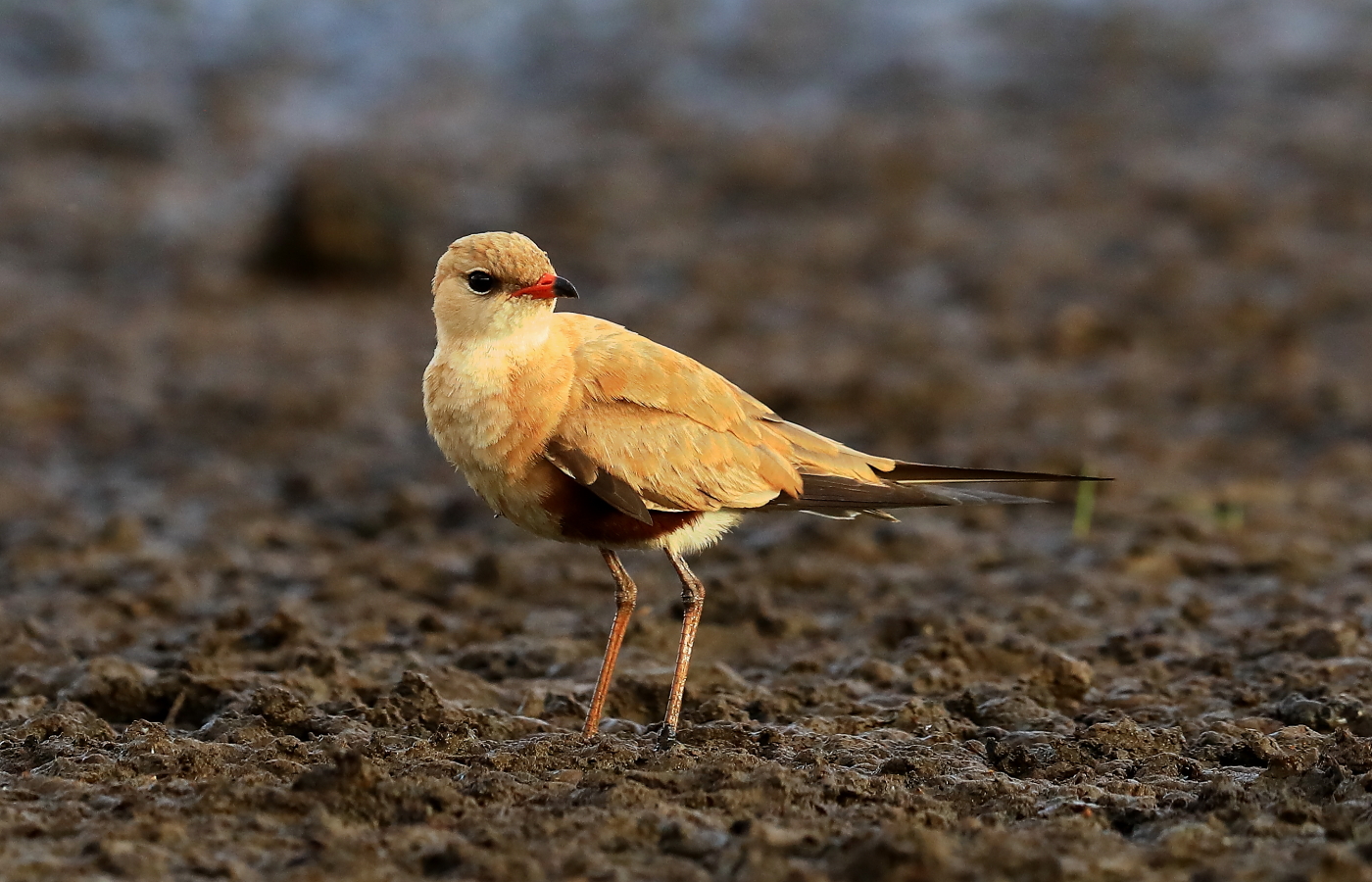
Sitting on wet grass early in the morning or the drying mud later in the day brought other rewards however, including wary Australian Pratincole venturing within handy range.

Pied Stilt more interested in food than photographer.

As also Horsfields Bronze-Cuckoo. Three active in the paperbarks near the hide over the past 10 days. Not so often on the ground.

Can usually count on a few Brown-backed Honeyeaters to be drinking at a small deeper pool nearer the hide.


The Black-fronted Dotterels have been the consistent stayers. First to appear as the mud began to appear. Almost certainly they'll be the last to leave.


Monday, June 11, 2018

Barefaced blag of birder's bicycle at Bald Rock

This is Bald Rock. Serene. Scenic. Witness to mountain bike exercisers below and around it every day. And birders, on foot and bicycle. 

Home to many Brown-backed Honeyeaters: juvenile above.

And  Brown Honeyeaters - though not in the numbers elsewhere in the Town Common.

So peaceful (juvenile Peaceful Dove above). 1.7 kilometres from the Freshwater parking area, nearest point of legal motor vehicle use. Nobody living within about 4km. No need, obviously, to lock a bicycle left leaning against a tree while the rider goes birding. Right? Think again. Today, bike gone. And new foot pump. And new tube. And repair tools. And bug spray. Slow walk back to Troopy.

Possibly not crime of the year. But one can dream of chaining someone to Bald Rock. And having an eagle eat his liver. Just the once, mind. For eternity might be overdoing it.


Thursday, June 16, 2016

Seek a Little and ye shall rest Azured

Seek and ye shall find. Doesn't often work perfectly for me. But today ventured to bottom southwest corner of Mungalla Station, planted myself beside known kingfisher habitat only lately accessible as surface water disappears, and got lucky twice over in two hours.

Azure Kingfisher (Ceyx azureus) harder to find this year because late Wet season failed to provide the conditions small fish want (they swim into flooded grasslands). Not this year. So the true fishing kingfisher, Little and Azure appear to be much dispersed and missing from some normally reliable sites.

This morning, Sacred Kingfishers stood out for first hour, hawking for insects above water weeds.

Then, Azure turned up, well away downstream to the west. No luck, thought I. With which, bird (only one sighted at this point) flew toward me and plonked down on falled branch low over water. Ten metres closer would have been perfect, but can't complain at result.

Then Little Kingfisher (Ceyx pusilla) whizzed upstream and vanished. Don't be greedy, said I to self. Lo, bird sped back and took up the prime perch. Drawback? Species so small, really needed it more than 10m closer.

And got Little Bronze-Cuckoo ...

...and Brown-backed Honeyeater as interesting extras. Extra bonus: the many mozzies were mostly well behaved.


Sunday, September 11, 2011

Blurred bird pans honeyeater hopes

Bit of blurry nest-building action from Brown-backed Honeyeater (Ramsayornis modestus) near main lagoon in Tyto. Tried to pan with bird but ageing reflexes not up to task.


Here's a less action-packed view from today.


Thinking of nesting and calling (without success) for females, are two recently-arrived White-winged Triller (Lalage sueurii) males.


More interested in food than breeding, two Little Shrike-Thrushes (Colluricincla megarhyncha).
Click pix to enlarge

Sunday, November 14, 2010

Woodswallow tucks into tree fork

White-breasted Woodswallow (Artamus leucorynchus) peers out from nest tucked typically into fork of paperbark. 


Brown-backed Honeyeaters (Ramsayornis modestus) nesting in same tree though little activity spotted through past three very wet days.   


Close by, Shining Flycatcher (Myiagra alecto) nesting near creek-side spot used earlier in the year. 


Male - much quicker to quit the nest - has been sharing more of the sitting this time.  
Click pix to enlarge  

Sunday, November 7, 2010

Brown-backed Honeyeaters in your face

 Hanging around nests for photographs isn't cool but when Brown-backed Honeyeaters (Ramsayornis modestus) start setting up house smack dab over the middle of the main Tyto entry track, well, what can you do?


Takes a bit more effort - and sets up more interesting images - to catch the bird at work elsewhere, above stripping nesting material from a small paperbark.


And here's another BB up a bit too close below the Tyto hide today.
Click pix to enlarge    

Tuesday, September 28, 2010

Birds bit noisy, pictures less so

Looking sharp along my favourite country road today, an Australasian Pipit (Anthus novaeseelandiae), one of scores active and even singing a bit on road, grass and fencing. 


Awkwardly posed, but also sharp, a Horsfield's Bushlark (Mirafra javanica). Plenty of song from this and a few others of the species.


And from Tyto today two views of a cheery churry Brown-backed Honeyeater (Ramsayornis modestus), building, yet again, in front of the hide. 


Those bored by camera details should look away now. All the above images shot at ISO 400. No noise reduction applied. Lately been told Canon uses under and over exposure tweaking to provide intermediate ISOs from the primary 100 200 400 800 etc. Pushing 200 to 250 (my previous preferred setting) creates picture noise. Helps explain high ISOs many use. Nikons don't have the problem.


Back to today's birds. Bit of takeaway food for immature Black-necked Stork (Ephippiorhynchus asiaticus). 


But turtle proved too tough a nut to crack. Even mature birds try and fail to open turtles up. I suspect, on rather limited observations,  that White-bellied Sea-eagles get to the meat of things by carrying turtles up and dropping them. However, I've only ever seen the pickup.                 
Click pix to enlarge   

Lament for southern Black-throated Finches

Hollow logs for at risk birdies? Nature's nest boxes if you please Oh, such a clever wheeze So gather in twos and threes? Hundreds you w...