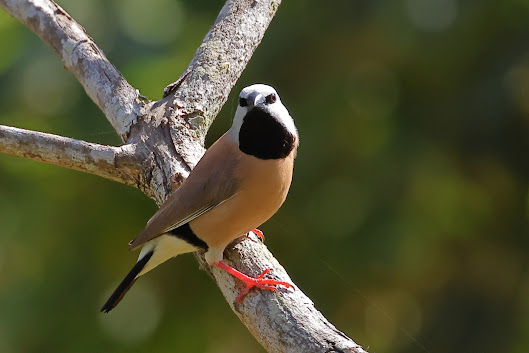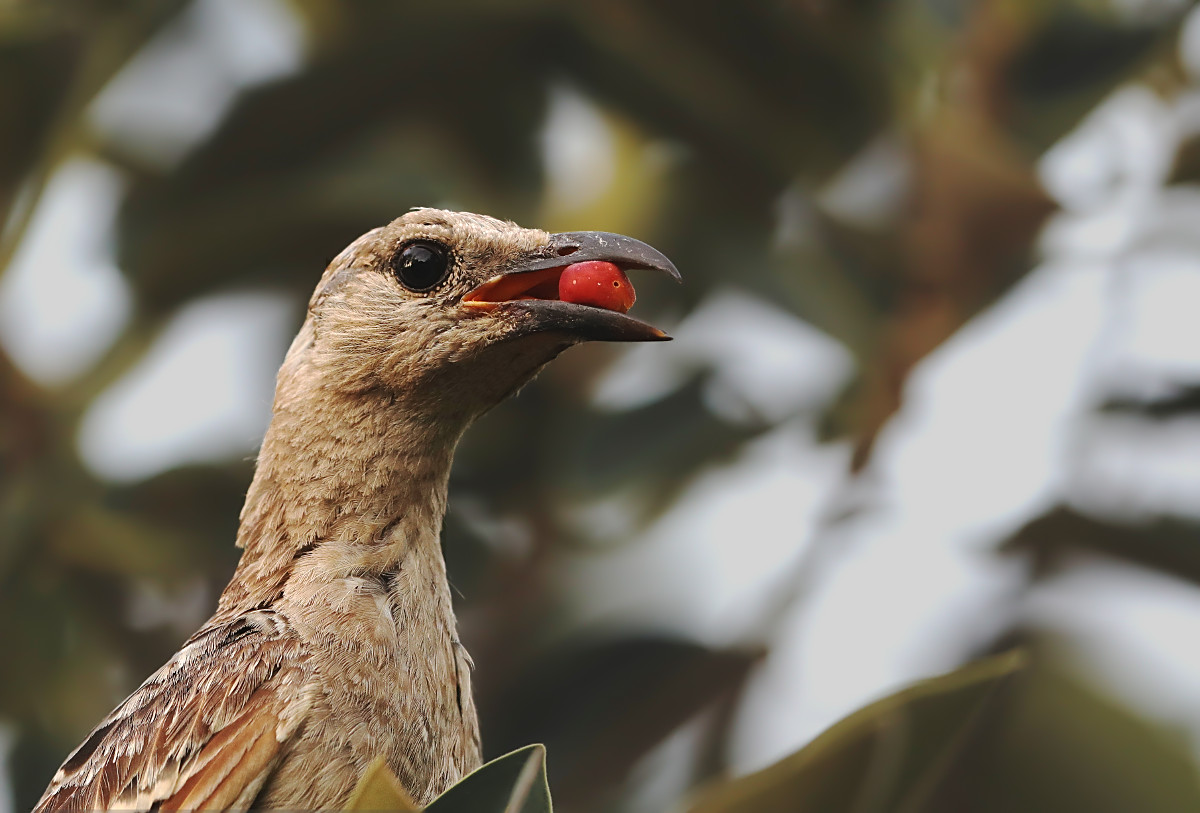


 Few Great Bowerbirds (Chlamydera nuchalis) spend much time in Tyto. They prefer dry woodlands but are happy enough in rain-shadow North Queensland urban parks and gardens and even city riverbanks (Townsville).
 So today's male Rhino was a bit unlucky to be grabbed from a small patch of vine thicket by a visiting Great Bowerbird. The beetles are an imposing size (up to 40mm) and though harmless can take an amazingly secure grip on flesh or feathers using their spiny legs. They squeak defensively sometimes.
 Heard no squeaks today but noticed the extreme care the bird showed in dealing with the beetle. Fast grab and fast, violent release. Another grab, another release. The beetle was given no time to catch hold of the bird.
 Something had to give. Bits of beetle legs proved vulnerable. Unfortunately once the legs were devoured the bird no longer feared the beetle. Off it flew, beetle in bill, into the distance. I can only guess that more thrash and bash would eventually break down the Rhino.
Just can't imagine the bird eating that hard horn - even as an aphrodisiac. Only some humans are capable of such delusions!
Hollow logs for at risk birdies? Nature's nest boxes if you please Oh, such a clever wheeze So gather in twos and threes? Hundreds you w...