Showing posts with label Horsfield's Bronze-Cuckoo (Chalcites basalis). Show all posts

Tuesday, July 11, 2017

Young Brolga stands out from the rest

Looks a bit lost in full frame image from Pandanus viewing point in the Town Common but maturing Brolga more trusting than the few others to be seen roaming in the distance.

Walked up on bird yesterday morning and ended openly close to it and chatting about this and that.

Of special interest, much younger bird lately seen with parents more than twice its size. Can't remember ever seeing Brolga near Ingham with any but flying juveniles. Got no help with this question.

Also in the area, returning pair of Bush Stone-curlews. Problem: heavy traffic at their preferred site, hard beside road. Compare distrusting look above ...

... with relaxed pose of one of 24 sunning recently in the city's Anderson Park.

Also on ground for a few days, scruffy parasite-afflicted Magpie Lark. Mud-grubbing species appears subject to both more unwanted passengers and facial diseases.

Not such a risk for Horsfields Bronze-cuckoo, which will feed on and near ground but spends much time calling from atop highest tree in the area. Bird above teased for a week before coming within shot.

Similar story with Sacred Kingfisher, another more often seen flashing off into the distance.

Thursday, September 13, 2012

Cuckoos pose parental puzzle


Cuckoos puzzle me. Their parasitic habits seem to offer freedom from parental labours, yet over recent years I've seen three Horsfield's Bronze-Cuckoo (Chalcites basalis) pairs feeding immatures of their own species - perhaps indeed their own young. Just as baffling, how did the species first come to pop eggs into the tiny hidden domed nests of Red-backed Fairy-wrens? After the first, imprinting would explain continued laying: the cuckoos recognise fairy-wren nests are theirs. But the first ... ?


And Little Bronze-Cuckoo (Chalcites minutillus) can on a rare day be seen in what might be family groups of three or four, though the young appear more often to be begging than receiving food. 


Not seen anything similar with Brush Cuckoos (Cacomantis variolosus). Perhaps others have?
Click pix to enlarge

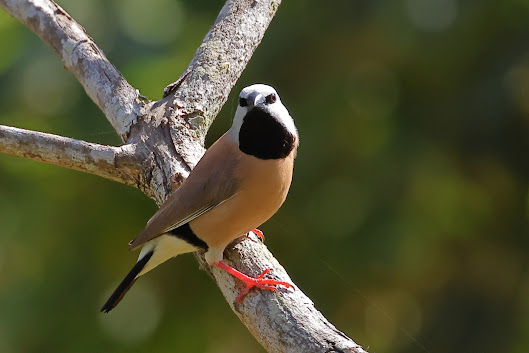
Lament for southern Black-throated Finches

Hollow logs for at risk birdies? Nature's nest boxes if you please Oh, such a clever wheeze So gather in twos and threes? Hundreds you w...