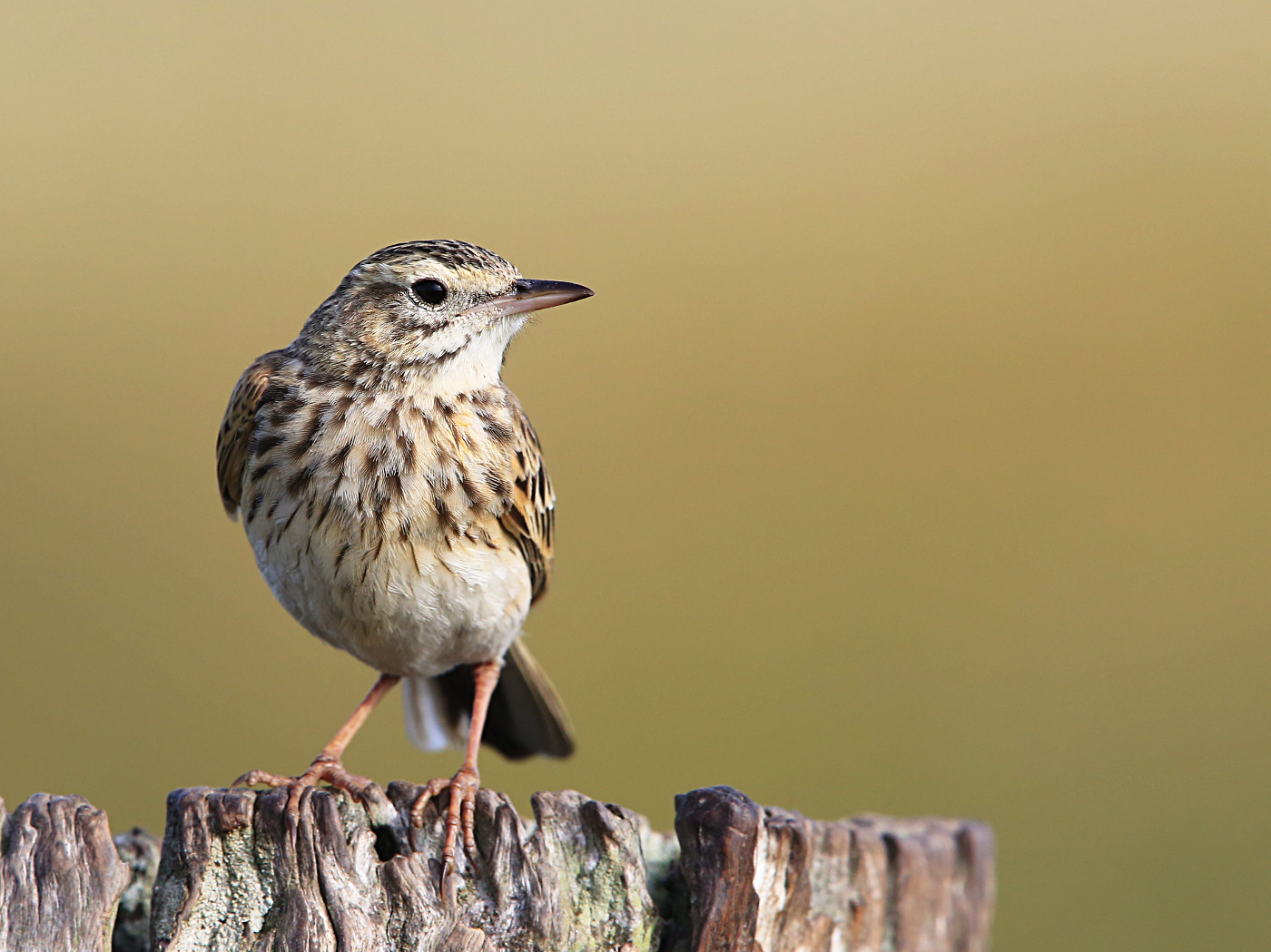
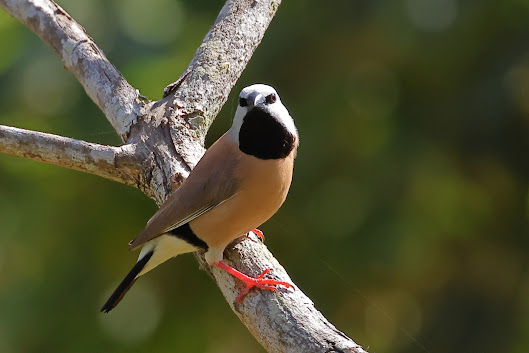
Showing posts with label Australasian Pipit (Anthus novaeseelandiae). Show all posts

Tuesday, March 27, 2018

Stubby-tailed gecko spotted in leaf litter

Quick grab at leaf litter got reptile new to my Townsville list in the bag briefly at the Town Common. At first sight it seemed Northern Spotted Velvet Gecko had sacrificed tail - survival strategy to distract predators with wriggling discard. But the stubby tail is characteristic of species.

Not so stubby toes characteristic of Comb-crested Jacana. Explains how species seems able to walk on water (with help of minimal vegetation) and thus is still known by some as the Jesus bird.

Standing grounded, or, as in this case, samphired, characteristic of Australian Pipit. Bird's-eye view for this species most often means close underfoot. Desired bird's-eye camera angle means photographer must also get grounded.

Or not fully, perhaps. Samphire bokeh behind the bird adds 'colour' lacking from lower angle. And a quirky side note: the bird's feet and legs look almost like organic offshoots to or from the bird. Worth getting bum wet and muddy for, I reckon.

Friday, February 9, 2018

Samphire step-out with flighty Bustard

Saunter over samphire and other salt-loving stunted stuff today turned briefly into long-range stepping out withAustralian Bustard.


Distance between us narrowed slowly before the bird chose company of two others well away from me.

Which left the plentiful Horsfields Bushlarks free to tease with flights all around me. Fluked just one aerial frame.

But similar walk the other day - and some knee-walking-crawling - turned up one Bushlark more trusting than commonly.

More crawling elsewhere led to closeup of Australian Pipit.

And nearby found Lesser Black Whipsnake sunning on ground turned over by pigs. No crawling, not for fear of snake, rather because it let me walk within touching distance.

Top picture taken from 5metres with 600mm lens, above picture from 20cm with newish iPod. Note the difference in image quality.

Saturday, September 3, 2016

Young Pipit lets parent do all the work

Bit of a double oddity at Mungalla Station the other day. Watched Australasian Pipit (Anthus novaeseelandiae), parent and immature, as adult bird foraged and fed youngster.

The young bird sat silent as parent scoured nearby ground for insects. Even when food was plucked up from almost under its nose the passive and unprecocious youngster did not try to forage for itself. Odd. Perhaps this one young bird is a very slow learner. It's not as if grabbing insects from the dirt is a high skill. Or does it need help with prey ID?

Also odd, that in several years and hundreds of Pipit sightings this was my first undoubted view of parent-immature feeding. And I can't explain why I've never stumbled on a nest. Seems I might also be a slow learner.

Thursday, August 25, 2016

Horsfield's Bushlark makes the dust fly

Warm days and dusty cattle tracks draw Horsfield's Bushlark (Mirafra javanica) out to compete with Australasian Pipit (Anthus novaeseelandiae) for a share of pasture pickings.

Got close to the dust-bath action the other day at Mungalla Station.

Dust flies as bird wriggles in.

And feathers dance as breeze picks up.

Mustn't leave Pipit out of the picture. One on a post from awhile ago.

Tuesday, February 9, 2016

Yellow Wagtails sticking together, sticking around

Three's not often company among Eastern Yellow Wagtails (Motacilla tschutschensis) at Mungalla Station but today a trio of birds stuck together through four shifts to various sites along the road in from the highway. Sorry, no trio picture presented itself. (Above, one I can almost always count on.)
First time I've seen three birds getting on well and sticking relatively close together (10-20 metres apart) as they foraged along the roadside, being forced to move as station traffic travelled the road.

In its usual spot, at the waterhole that marks the eastern end of Palm Creek these dryish days, the only Yellow Wagtail that can be counted almost every day its looked for.

The bird moves from typical dry, patchy pasture favoured by Australasian Pipit (Anthus novaeseelandiae) to wet areas of dead water hyacinth (sprayed from helicopter some weeks ago).

The birds would in a normal Wet season have flown on south by now. It appears likely North Queensland will get only patchy rain this season and the Wagtails may stay until ready to fly off north to Japan and/or Russia about the end ofApril.

Time enough to have one, or even a trio, come close enough for 'the' shot. Meantime, this post offers the recent best.


Wednesday, June 17, 2015

Missing Pipit telltale tail tells tale

Chased young Australasian Pipit (Anthus novaeseelandiae) up and down Tyto ditch for a spell without the bird ever showing in flight the telltale prominent light outer tail feathers. 

Yet the pale edge shows clearly, if narrowly. An older bird came along and took my young friend off, the older with full white edge showing, the youngster still flying with tail uniformly dark.

Nothing too significant about the differences. I imagine the young bird's tail will become more prominently white-edged soon. But the lack of the usual distinctive tail initially caused me to question the young bird's identity. 

Maybe it was a female Brown Songlark (Cincloramphus cruralis)?

Well, there is some similarity, but the larger songlark - much less common about Ingham - is clearly less strongly streaked and coloured. 

Just a little unsettling when doubts set in and second-guessing kicks in.  

Tuesday, December 9, 2014

Hunt for Yellow Wagtail leads to gold


Set out once, twice and thrice more for Yellow Wagtail at Mungalla Station and come home with gold - mostly Golden-headed Cisticola (Cisticola exilis).


And Australasian Pipit (Anthus novaeseelandiae) shares much the same habitat beside Palm Creek.

Where - less often since the first thunderstorm of the Wet season - the target Eastern Yellow Wagtail (Motacilla tschutschensis) does still show up, but never close enough.

Wednesday, May 28, 2014

Going to ground and crawling around the mound

Becoming a bit of a crawler lately. Getting down isn't too hard, but age shows in the creaky rising. And there are certain mounds of material best avoided. But those same mounds come in handy, as above for Australasian Pipit (Anthus novaeseelandiae).


Plenty of the same in dusty territory of Willie Wagtail (Rhipidura leucophrys), another local at Mungalla Station.

As also is this Australian Bustard (Ardeotis australis), in a greener part of the station.

Sunday, May 11, 2014

Crimson Finch numbers down

Seems timing of the wet spells this season has not been to benefit of 
Crimson Finch (Neochmia phaeton), though above maturing male looks to be coming along nicely.

Fewer young birds around Ingham and the juveniles are popping up in ones 
and twos rather than threes and fours to a family.

Better days for Australasian Pipit (Anthus novaeseelandiae), popping up in healthy numbers on grazing properties everywhere in the area.

One of the important soil inputs makes a top vantage point.

Among the reed beds at the Orient Station the other day, Brolga (Grus rubicunda) pair had been joined yesterday by more than 30 others stalking prey in the pasture. Probably be hundreds on the coastal stations soon.
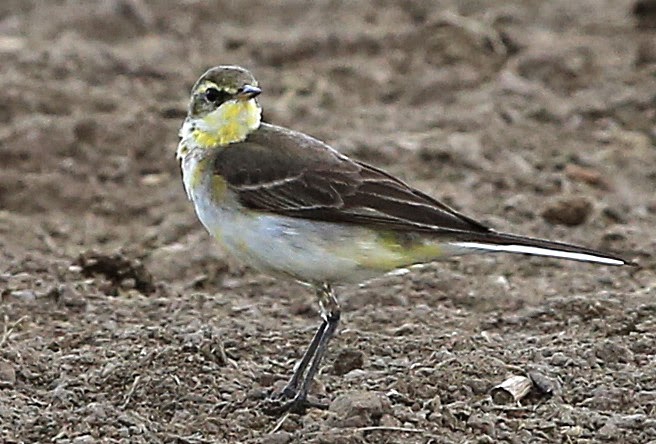
Lament for southern Black-throated Finches

Hollow logs for at risk birdies? Nature's nest boxes if you please Oh, such a clever wheeze So gather in twos and threes? Hundreds you w...