Showing posts with label Tyto Wetlands. Show all posts

Friday, November 13, 2015

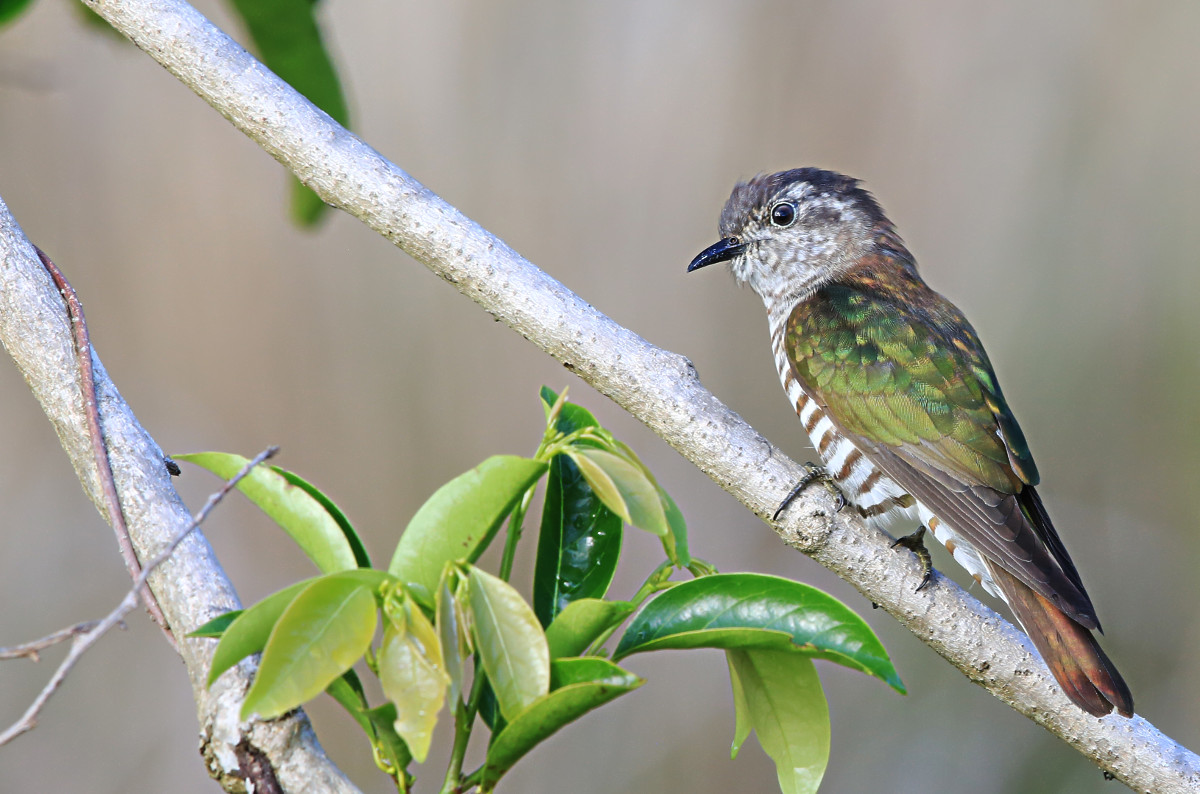
Shining Bronze-cuckoos taking shine to Tyto


Shining Bronze-Cuckoo (Chalcites lucidus) making more regular appearances in Tyto in last year or two. Though probably still outnumbered by more tree-loving Littles and Gould's, the Shinings some mornings show out as often as Horsfield's Bronzes in competing for prey among  weedy habitat.

So, saving best for last, I got lucky in chasing bird around reveg area the other morning to capture it on a clean background and with low angle of sunlight doing full justice to the bronze tones.  Image also benefits from two major elements: seeming interaction between bird and camera; and cropping to the 'rule of thirds'  (in this case, to place the bird's eye one-third in and one-third down in the picture).

And following up on previous post, another eel about to go down the hatch. Even as I broke into fast walk to get closer Eastern Great Egret (Ardea modesta) flipped neck up and slurped the eel down in a flash. If I were an egret I'd be an eel lover too. No nasty spines and the perfect shape for swallowing fast.

Monday, November 9, 2015

Whistling Kite makes catch of the day

Surprise catch of the day in Tyto late this morning with Whistling Kite (Haliastur sphenurus) launching from above me ...

... going straight to centre of shin-deep main lagoon to strike and grab eel ...

... and heading off with writhing prey ...

... still spraying droplets of water as the kite turned back towards trees - with glimpse of lookout shelter in background.

It all seems so easy, but most Whistling and Black Kites do not exhibit any skill at taking live fish or eels, even after seeing others of their species make catches.


Monday, October 12, 2015

My Red-bellied Black too late to claim fame

Learned the other day my various images of Red-bellied Black Snakes held significance beyond their dubious technical qualities. Seems the northern sub-race, race or species (taxonomy up in air) has not be formally introduced and described. Or something ... see here for much detail.

So, too late to claim any laurels, here's another look at a one-metre specimen found snoozing in the morning sun along Palm Creek on Mungalla Station the other day. Shy, as always, snake snuck off into thicker grass once I got out of its way.

Another friend of older vintage, 'my' Tyto Saltwater Crocodile, popping up on old sunning spot in main lagoon, many months after last sighting. And the really good news, the croc trap has gone down the road to needlessly chase another old favourite, a longtime resident in Cattle Creek.

Friday, June 26, 2015

Tyto flying high on hotspot listings

Eight of Australia's top 10 birding hotspots are in North Queensland.

Tyto Wetlands sits fourth equal, according to listing site, eBird, sharing with Kingfisher Park, Julatten.

But metre for metre, minute for minute, it appears at present Tyto (90 hectares) offers more birds than any other spot in the land, with 70-80 species possible from an easy morning's walk (say four hours).

Townsville Town Common heads the hotspots, but dry conditions mean much reduced listings lately. Western Treatment Plant, Werrribee, Victoria holds second. It's great area would require a marathon walk or much driving to tally 70-80 birds. Cairns Esplanade sits third, but waves farewell to many of its prize species in April-May. Seasonal variation also cuts in Kingfisher Park counts.

So, Tyto rules, okay?

The bad news? Can't find any Grass Owls or Little Bitterns, and all the White-browed and Spotless Crakes have gone, likely because the Wet didn't happen this year.

Also probable will be depleted fish, frog, reptile and insect cycles, with consequences for all their predators.

The heat's on even the hottest hotspot.

Today's highlight, resident pair of Black-shouldered Kite (Elanus axillaris) on fallen tree over reeds at western end of lagoon. Flight by one (possibly male) drew calls from mate before it too flew off.

Sunday, December 21, 2014

Godwit tailed across mud just in time

Early morning walk out on Tyto mud came just in time yesterday to capture sole Black-tailed Godwit (Limosa limosa) of the season feeding at western end of main lagoon. Overnight came the Wet. Goodbye now to such walks till late 2015.


Goodbye too to Spotless Crake (Porzana tabuensis) foraging out in open near the hide. Species likes secure footing, vanishes inside scleria when the rains come.


Even White-browed Crake (Amaurornis cinerea) won't be so easily walked up on as prey becomes harder to find with the lagoon's rise. On the plus side, Bitterns Black and Little will be among growing numbers of birds benefitting from the Wet. 

Wednesday, October 15, 2014

Night drive proves owling success

Night drive west of Ingham proved an owling success with Eastern Grass-Owl (Tyto longimembris) and Eastern Barn Owl (Tyto javanica) found along 100-metre stretch of country road beside a cane field.

Dark female Grass Owl stood without concern as I gradually moved very close and didn't move away even when all light was taken off her.

Different story with Barn Owl. Fled its post after just a few quick shots from the cab of the Troopy.

And this male Grass Owl didn't hang around long when flushed in Tyto Wetlands the other morning. Recent sightings suggest last year's breeding pair in Tyto are not together right now. But their swamp ricegrass habitat is still too flooded for creation of grass tunnels and breeding sites.  

Tuesday, July 15, 2014

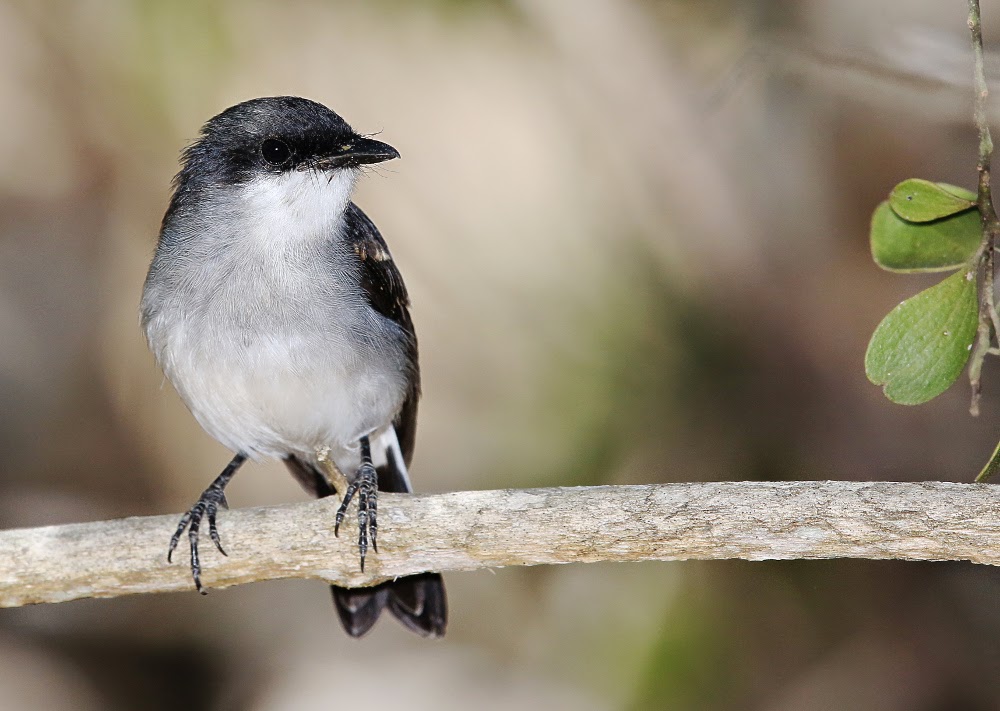
Immature Mangrove Robin stands out

Couple of youngsters stand out among captures with big new toy. Immature Mangrove Robin (Peneonanthe pulverulenta) leads the way, after clumsy tripod-toting chase through dry coastal forest near mangroves at the end of the road through Orient Station, near Ingham.


Spotty remnants of immature plumage will soon disappear.


Another young bird popped up yesterday. Black-necked Stork (Ephippiorhynchus asiaticus) juvenile about 60m away peers from huge nest high in Leichhardt tree at Mungalla Station. There had been two chicks. No  sightings at all for weeks. But this bird at least must have been lying doggo.


And another relative youngster lying about the place is 2.5-3m Saltwater Crocodile, sunning at western end of island in the main lagoon at Tyto Wetlands. First confirmed sighting of the species in Tyto for several years. Picture taken with old 400mm lens from about 80m, nearest point of dry land to the croc's  basking place.   

Thursday, May 15, 2014

Sea-eagle wins another battle of sits

When you want them to fly they won't, and when you want them to sit they don't.

Focussed on distant White-bellied Sea-Eagle (Haliaeetus leucogaster) in Tyto today with determined effort to get exposure spot on and then add 1.4x converter and see what changed. All locked up on tripod.

No reason for bird to take off, so of course it did. 

Tried to follow by panning on ball and socket and failed miserably. 

Had I been hand-holding camera and asking bird to fly there'd have been the standard 20-30 minutes of two lives on hold: and I always lose that game. 

Sunday, February 2, 2014

Eastern Grass-Owls eye intruder

Might be last sightings of Eastern Grass-Owls (Tyto longimembris) for a while as tail end of Cyclone Dylan drenches swamp ricegrass habitat at the western end of the main Tyto Wetlands lagoon.

Male takes close look at intruder in his territory before the rains came.

Larger, more richly coloured female sets off for another ground-roosting spot.

Thursday, January 2, 2014

Grass Owl rises from the ricegrass

Super start to 2014 as Eastern Grass-Owl (Tyto longimembris) flushes from swamp ricegrass at the western end of the main Tyto Wetlands lagoon.

The extended dry period since one downpour in mid-November has been good for the owls, snug in their ricegrass roosts by day and flying out to find prey by night.

It's almost certainly coincidental - though a little intriguing - that owl sightings have increased lately as ground snake sightings in Tyto have, since 2009, fallen markedly.  

Monday, November 18, 2013

Black neck? You're having a laugh, aren't you?

What's in  a name? Nothing like  the truth when it comes to Black-necked Stork (Ephippiorhynchus asiaticus).

'Black neck? That's a laugh,' said Mrs Stork, in Tyto, t'other day.  'My Rhynky's got a gorgeous neck, I reckon.'

'Too right, Eph,' said he.   They're right, of course, my lovely Jabirus.

Sunday, October 13, 2013

Eastern Grass-Owl takes to the blue skies

Week too late for Birdlife photographic group thronging Tyto Wetlands for Labour Weekend, Eastern Grass-Owl (Tyto longimembris) rises from grass today.

Just the one bird, perhaps also the pre-dawn sighting at back of the wetlands two mornings ago.

Time for three sharpish images before bird dropped back into distant grasses. Tough luck, DPITB guys.

Thursday, October 10, 2013

Who grovels as the Ass in Little GrAssbird?

Grovelling apologies,  Birdlifers. You said Little Grassbird (Megalurus gramineus). The all-knowing Tyto Tony said: I don't think so. Show me the pictures. Later, you did. You wuz right.

But ... enough grovel ... and in life there's always a but ... but my pictures (above) from today in Tyto ...


... and yesterday at Mungalla are better. Thank you one and all!       

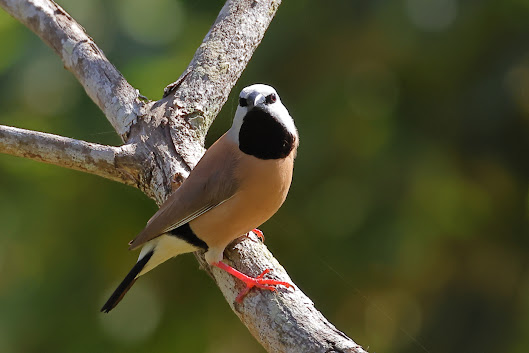
Lament for southern Black-throated Finches

Hollow logs for at risk birdies? Nature's nest boxes if you please Oh, such a clever wheeze So gather in twos and threes? Hundreds you w...