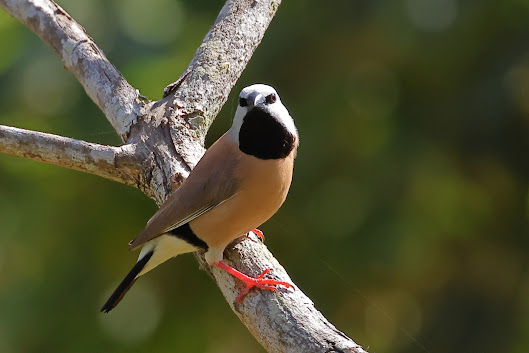


 Thought I had a sharp shot of this Azure Kingfisher carrying a fish for its nestlings (burrowlings?) yesterday, only to find shaky tripod and high ISO rendered the bird blurred and looking as if I'd gone mad with the saturation slider. On the plus side, the bird went almost straight to the burrow. The minus side? An hour's wait and no more action.
 Today, this male Red-backed Fairy Wren carrying a red enticement for females danced here and there on the Scleria. Just wouldn't stay still and unobscured long enough for anything better than this hasty effort - and many others even less successful.
 Good pose from a distant White-browed Robin in the shade. This typical robin angled hold on a vertical trunk is seldom seen in Tyto, possibly because White-broweds behave and forage more like flycatchers or fantails most of the time. This bird was taking a short break from nest-sitting.
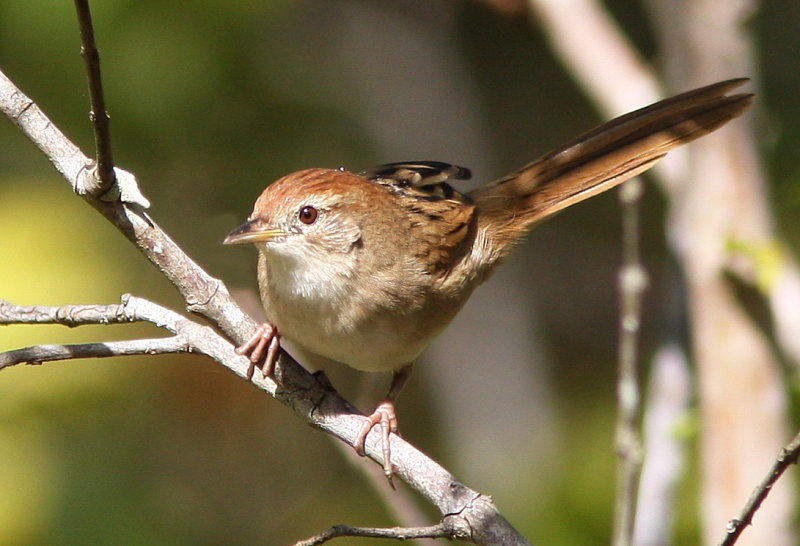
 Finally, this Tawny Grassbird the other day led me a circular dance through long grass and under low trees. Round and round we went, the bird singing heartily and me muttering mightily. It might look a draw, but I think the singer more or less won the day.
 Tawny Grassbirds (Megalurus timoriensis) filled the air with their chiding descending songs in many spots at Tyto today. Though they've been noisy for some time activity has stepped up.
 Different story, similar result with a hyperactive Fairy Gerygone (Gerygone palpebrosa).
The birds usually move through a wide variety of trees in groups of six to eight, rarely still and seldom low in foliage. (Unlike White-throated Gerygones (Gerygone Olivacea), usually in pairs, almost always in paperbarks, and scouring them from top to bottom.)
Today's solitary Fairy, busy foraging, stayed low in a small tree and near the outside of foliage close to me. Too close, in fact, since I had trouble locating the bird in the viewfinder.
In the end, no great picture. The bird was too quick and the foliage too thick. Pity, but there it is. Two almosts for the day. But two pictures to build future hopes on.
Hollow logs for at risk birdies? Nature's nest boxes if you please Oh, such a clever wheeze So gather in twos and threes? Hundreds you w...