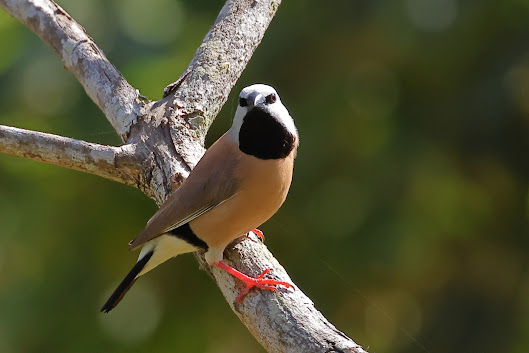
Steamy stuff in the daytime? Sounds a bit like soap opera to me. We'll call it The Bad, the Ugly and the Beautiful!

Not so bad to look at, but ugly is as ugly does. And what the Cane Toad (Bufo marinus) does is reproduce its poisonous self in noisome numbers: up to 30,000 eggs per female a season. Perhaps 99% will not survive. Still leaves 300 to do their worst. Look closely and you'll see a chain of black eggs stretching along the flank of the male toad (above, at work in Tyto. Click to enlarge).

Hard to see bad barbed wire as anything but ugly, even with an attractive young Welcome Swallow (Hirundo neoxena) taking a comfort stretch upon its rustiness. But I was taken with the colour match between rust and parts of the bird. (Note to barbed wire collectors: I don't think this is a rare piece.)

Nothing ugly about the Ulysses butterfly (Papilio ulysses), though the brilliant blue coloration signals a warning against swallowing the swallowtails. The males sip salts from small puddles, in part to produce pheromones to attract females. Their liquid uptake - and throughput - must be considerable as this butterfly spent several minutes moving from puddle to tiny puddle and produced scores of drops, such as that shown.

Nothing ugly or bad about Plumed Whistling Ducks (Dendrocygna eytoni). Two have taken up temporary quarters in a waterlogged corner of the caravan park. Funnily enough, Plumed Whistlers can give the impression they are averse to water. They stand around by day, prefer ground landings to splashdowns, will breed far from water, and feed nocturnally on grasses and other low growth.
Well, that didn't go so badly, did it?


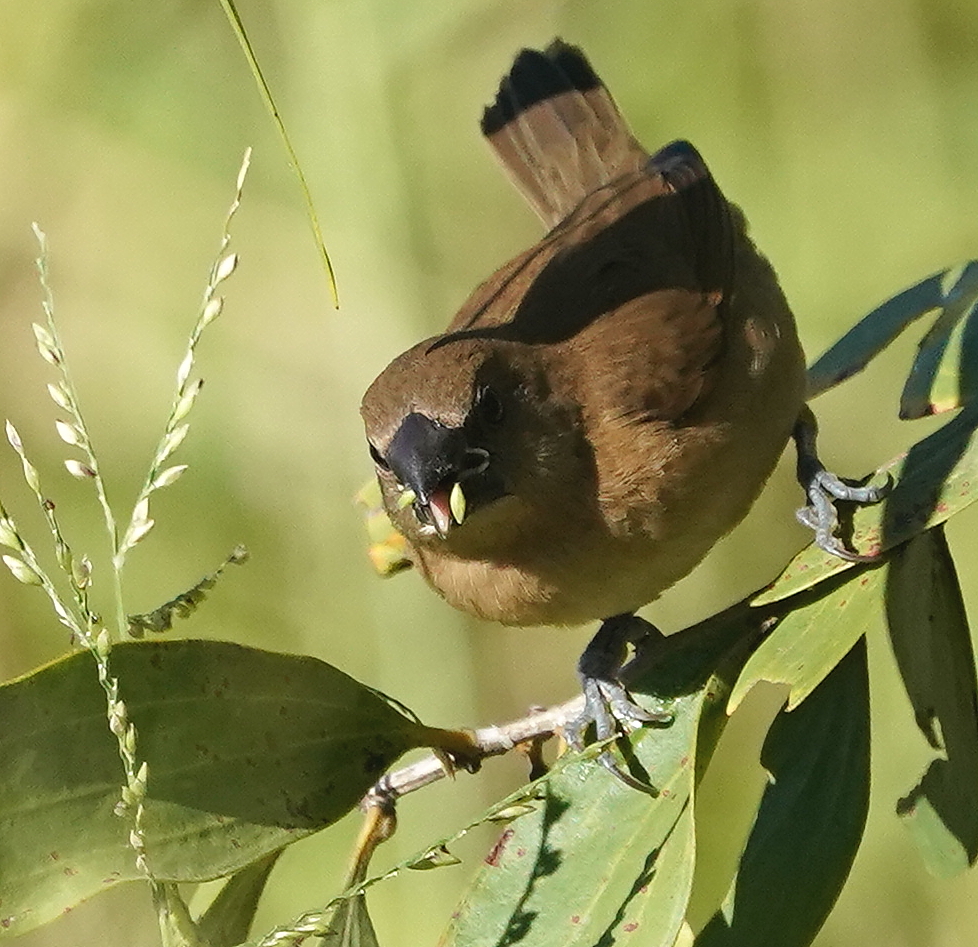


 One day, if only the if-onlys are aligned correctly, and fate decrees, I'll get a decent picture of little Ixo!
 ...and people think teenagers can be just a teeny bit demanding! At least they don't physically try to bite your head off.