Showing posts with label Latham's Snipe. Show all posts

Tuesday, October 8, 2024

Look sharp at Sharpies but beware wild goose chase


Look sharp! Look, Sharpies! Sharp-tailed Sandpipers that is. But wait, look sharpish! What am I looking for? Uncommon Pectoral Sandpiper. Sharp cutoff in breast streaking. Touch of yellow at base of bill. Look hard. Nothing. And thus fail to notice uncommon Curlew Sandpiper right under my nose. Broad white rump, black downcurved bill. There for all to see. Or all those not on narrow focus wild goose chase. See how you go.


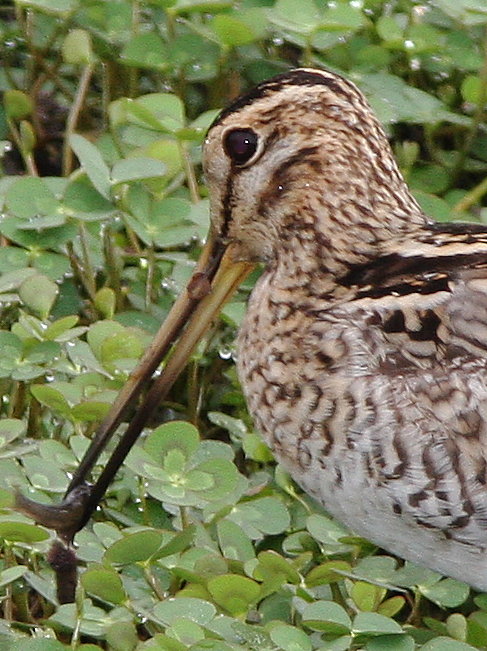
Elsewhere lately, finally caught up with a Latham's Snipe a month or two after the first migratory arrivals from the Northern Hemisphere.


It was mixing with a few Sharpies, which are always more obliging when it comes to hanging about for bird photographers. If only Pectorals were as obliging . . .


Saturday, October 21, 2023

Wet and dry times helping Town Common birders

Wet mud's turning dry and firm in the Townsville Town Common wetlands as El Nino starts taking charge for now, and many months to come. The conservation park will look even drier this and next year because last year's high water levels carried through early in 2023 and killed off much para grass and other weeds. 

Bonus for birdwatchers has been ease of scanning broad areas of flattened dead stalks and more readily seeing several regular migratory species standing out more than usual. I'm hopeful conditions continue to attract late migrants such as Yellow Wagtails, due in 2-3 weeks. We'll see!

Most prized of recent weeks has been a Banded Lapwing, usually drier country bird. 


Latham's Snipe were, on schedule first seen early in August.


Curlew Sandpiper (downcurved bill) found recently tucked away in groups of Sharp-tailed Sandpipers.


Ditto Red-necked Stints. And Red-kneed Dotterel.


Pacific Golden Plovers as content on pasture as wetland mud.


Australian Pratincole often on dry-country coastal roads.


And Australia Pipit another bird happy mostly on dry and cracked habitat. But also very good to birders as it attracts migratory Wagtails. Fingers crossed for November-December!  


Sunday, September 18, 2016

Focus on a winged Ood up to no good

Looking like a winged Ood up to no good, Masked Lapwing (Spur-winged Plover: Vanellus miles) targets me at Cattle Creek. They're mostly bluffers, and the spurs are not such high-speed threats but collision wouldn't be pleasant. Hard to keep them in focus so pays not to be thinking 'what if?'.

Short walk into wetland aimed to look for Latham's Snipe. They've gone from some other areas as the migrants continue on south after stopping locally to feed following their long flights from Northern Hemisphere. But I did find five birds between the highway and the rail bridge about 500m east. Be warned, the open pool is home to big Salty. Above picture is holdover from the early arrivals.

Saturday, August 20, 2016

Whole lot of sniping going on

Since they first arrived about two weeks ago, migratory Latham's Snipe are popping up in numbers on wetlands near the coast east of Ingham.

Got a bit closer to some of 24 on roadside pool at the Orient Station today, so intent on feeding they didn't flinch as I walked up openly toward them.

Unfortunately fence marking boundary between public road and private land prevented me taking full advantage of birds' interest in feeding above all else.

Later, got bit offside with presumed property owner when chasing Red-backed Kingfisher in tree on unfenced portion of grazing land.

He invited me to leave. I did, with my best pictures of a species uncommon to the area.

No need quit the road for head shot of immature Black-necked Stork (Jabiru).

Nor for Yellow-billed Spoonbill, tucking in near the snipe.

Afterword: Trespassing birdwatchers risk upsetting helpful property owners. Orient Station, however, has long tried to deter all birders from using the 7km public road through the property with ambiguous Private Property signs beside the road. Over the years I've helped farm managers with info about sick stock, dog and croc sightings and rubbish pickup. I figure we're more or less square.


Thursday, November 24, 2011

Awake-up Snipe allows walk-up

Posted super Latham's Snipe (Gallinago hardwickii) images earlier in year, but today's presented greater challenge, being totally open walk-up rather than drive-by.


It's satisfying having a wary bird accept - even if nervily - intrusion into its space.


In this case, bird chose to walk off and get on with feeding, in Tyto yesterday.
Click pix to enlarge

Tuesday, September 6, 2011

More reflecting on Latham's Snipe

Overcast mornings no help in trying for 'the' shot of Latham's Snipe (Gallinago hardwickii).


But got a reflection.


And a reflective look.   
Click pix to enlarge

Sunday, August 28, 2011

It's no snip snapping Snipe


Weary and wary, Latham's Snipe (Gallinago hardwickii) make their way south away from the Asian winter.


In past few years the birds have reached Ingham early in August.


Bit later this year, but no easier to close in on.


They will, however, on occasion allow the old Camry to sneak up on them.


Just a familiar Japanese background, no doubt! :-)


But haven't had much luck in capturing picture of prey, which sometimes takes considerable effort to slurp up.  
Click pix to enlarge

Wednesday, October 7, 2009

Winner under my nose


Surprise sighting of Little Kingfisher (Ceyx pusilla) by the Tyto hide provides opening for one of my best pictures (click pic to enlarge), posted early in September on BirdingOz and, he said modestly, winner then of Image of the Week. Didn't see any more of the Littles after taking the above till yesterday's sudden appearance, which came an hour into an extended stint watching fruitlessly for Little Bitterns. Somewhat chastening to go for more than a month thinking a species has departed for the season and then find a bird under one's nose!


Another to turn up more or less under the nose, this Emerald Dove (Chalcophaps indica). One or two find their way into the more thickly wooded areas every year, seldom staying for more than a few days. This bird for more than two weeks teased me with distant glimpses. The other morning, as I sat on a footbridge, it waddled behind my back down to a remnant pool in the creek. Slight noise gave it away. My turning brought bird into view, but led to quick departure.


Also given to turning up under the nose and to sudden departures, Latham's Snipe (Gallinago hardwickii). This bird, heading for cover yesterday, is probably the solitary one among three that settled in for a spell around the main lagoon soon after the first of the species arrived early in August. The species can sometimes be approached when feeding actively. More often, they zigzag away at speed. Or march off into reeds and grasses, though always taking care to keep an eye on the intruder.

Saturday, December 6, 2008

Chick gives parents bad turn

White-browed Crake (Porzana cinerea) chick took an unusual turn at Tyto today. It took to the water instead of getting under vegetation's cover.

In turn, the parents set about creating diversions to draw me away. One took to the water and hopped about on lotus leaves. The other trailed an 'injured' wing into the long grasses.

Squeaky noises nearby suggested two or three other little black chicks in hiding. Probably getting ready to scold the bold - or unwise - one.

Its behaviour was so untypical I assumed on first seeing it puddling about it had been caught in mud or had snagged a foot. Only when I drew closer did the chick head for cover.
Then it changed its mind and took to the water. Another change of mind - possibly in response to calls from the vegetation - and it finally did the 'natural' thing and got out of sight. Black isn't such a protective colour in blazing sunlight!

Others showing up in the sultry heat (33C+) today were a pair of Latham's Snipe (Gallinargo hardwickii). Showing up - for snipe - doesn't mean showing out.
Here's the pair doing their usual trick of hiding out right in front of the birdo. But the reeds don't do a great job disguising them. They prefer more mixed cover, and quickly headed off to find some. I did manage one so-so flight picture.
Still at the water's edge, all is alive - sadly, with 'toadpoles'. Seething is the word. Parts of the shore are almost equally alive with toadlets. The good news is that almost all will fail to survive. And cane toad numbers seem to have plateaued (perhaps even dropped) in recent years.

Lament for southern Black-throated Finches

Hollow logs for at risk birdies? Nature's nest boxes if you please Oh, such a clever wheeze So gather in twos and threes? Hundreds you w...