Showing posts with label Metallic Starling. Show all posts

Friday, March 30, 2012

Male Riflebird finally in shot

Mature male Victoria's Riflebird (Ptiloris victoriae) - species described as moderately or fairly common in tropical Queensland rainforest above about 500m - showed up briefly (clutching a fig) near Wallaman Falls yesterday: hope my next eight years bring more than one bad picture!


Meanwhile, most Metallic Starlings (Aplornis metallica) have departed north after breeding. Their clustered nests are falling in ruin from rain trees throughout the area. Plenty of this species in the years ahead.
Click pix to enlarge  

Male Riflebird finally in shot

Mature male Victoria's Riflebird (Ptiloris victoriae) - species described as moderately or fairly common in tropical Queensland rainforest above about 500m - showed up briefly (clutching a fig) near Wallaman Falls yesterday: hope my next eight years bring more than one bad picture!


Meanwhile, most Metallic Starlings (Aplornis metallica) have departed north after breeding. Their clustered nests are falling in ruin from rain trees throughout the area. Plenty of this species in thhe years ahead.
Click pix to enlarge  

Saturday, October 15, 2011

Starlings show their mettle

Tyto's lookout fig tree full of action lately. Male Eastern Koel (Eudynamys scolopaceus) continues trying to deny other birds a feed. (The motive may not be greed but an effort - as a great provider - to attract females.) 


But Metallic Starlings (Aplornis metallica) - in town for seasonal noisy social nesting - have proven unafraid of their larger fellow migrant. 


And Australasian Figbirds (Sphecotheres vielloti) won't be denied a share of the fruit.
Click pix to enlarge

Monday, January 3, 2011

Exotics at home in the wetlands

Many Metallic Starlings (Aplornis metallica) flashing low through Tyto's lowering skies these days but had to journey slightly east on Ingham to get closeup of bird (above) on edge of social nesting area in large rain tree.


Meanwhile, back in the wetlands, Indian Peafowl (Pavo cristatus) balance briefly on fence dividing Tyto from suburbia. Unfit to be pictured in such company, Mr Ugly, male Muscovy, in sole possession of front pools, will keep for another day.  
Click pix to enlarge

Wednesday, October 14, 2009

Metallic Starling show(er)s the way


Metallic Starling (Aplornis metallica) wouldn't spring first to mind in a quick post featuring wildlife and water. Tenuous link. Starlings have switched rain trees in Ingham for their semi-communal nest building this breeding season. Many of the new nests are close to the sugar mill's waste water re-oxygenation sprayers. Result? Misting around the trees much of the time. But Metallics always look as if fresh from an oily shower, don't they?


Yellow Honeyeater (Lichenostomus flavus) emerges from self-created shower of spray in the last of Tyto's creek pools. (Even the main lagoon is evaporating fast after three months without more than two minor moments of rain.) Honeyeaters will persist in bathing in low-light areas!


Australian Water-rat (Hydromys chrysogaster) also usually sticks to darker spots. But this one surfaced sleekly yesterday during my long and fruitless wait for a crake to emerge from cover. Australia's biggest rodent is sometimes mistaken for a platypus (different bow wave) or even (by tourists) an otter (an understandable error).


Comb-crested Jacana (Irediparra gallinacea) shows off its long, long toes as it crosses a channel close to the rat's surprise appearance. I've never witnessed interaction between the rats and Jacanas, but can't imagine them as best friends. It takes more than a love of Wind in the Willows to change many minds about rats.

Tuesday, December 30, 2008

Oily boids get ... caterpillars


Gloriously 'oily' Metallic Starlings (Aplonis metallica) were busy taking to caterpillars on a Leichhardt tree in Tyto today. The birds appear to have migrated south in lesser numbers this year.

Favourite trees (usually rain trees: Albiza spp, I think) carry fewer of their bulky 'apartment' buildings. Perhaps Ingham has not retained the favour of these spectacularly plumaged tourists. There may be greater numbers elsewhere.


One small blessing will be reduced mortality around town. All the birds, but particularly the immatures, are terribly naive. Their low, swift flights lead tailenders to crash into windows, fences, power lines and vehicles.

An aside on Leichhardt trees. It's curious how one or two trees will be ravaged by caterpillars (sorry, no idea of species) grazing on the surface of the large leaves , yet others nearby go untouched.   

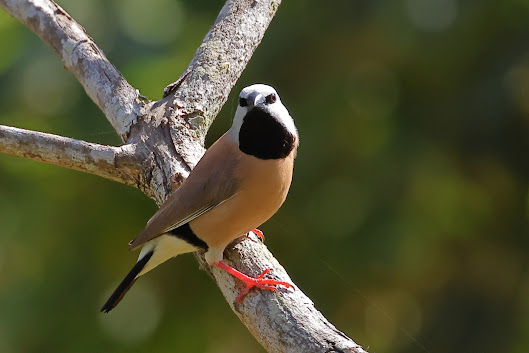
Lament for southern Black-throated Finches

Hollow logs for at risk birdies? Nature's nest boxes if you please Oh, such a clever wheeze So gather in twos and threes? Hundreds you w...