Monday, October 10, 2016

Luck takes a hand in what's spied from the hide

Lady Luck got to work for me in Tyto today. Been haunting the hide of late because water levels gradually dropping and offering bit more mud for White-browed Crakes - in particular - to forage on out in the open. Doubly lucky to get a bird right below hide, after just missing great action shot yesterday.

And there have been teasing calls - mainly from afar, once quite near - from Australian Little Bittern/s. More luck. Today's sighting of female and male could not have been made from the hide. Distant picture above of male with treefrog (probably Peron's - usually brownish, but as with many frogs able to change colour) came as I was returning after quick check on nesting fantails and sunbathing python.

More luck. Walk to Northern Fantail nest led me to almost step on Large-tailed Nightjar. Blur of brown before my eyes and much diversionary fluttering followed. 

Bird kept trying to lure me away. I kept trying to locate egg/s/hatchling/s, oh so cryptic and laid or lying near the track. We both failed. But all the time being taken produced the lucky sighting of the bitterns.

So, just for luck I'll throw in a few more from the latest Tyto outings, starting with Brown-backed Honeyeater.

And ever-present Crimson Finch, female chomping weed seeds.

Solitary Sulphur-crested Cockatoo sitting a while before beginning to chomp chucks out of perch.

And Common Koel male taking break from noisy advertising for females. But he'll probably get lucky. Just not so lucky as this watcher.



Saturday, October 8, 2016

Many questions about behaviour

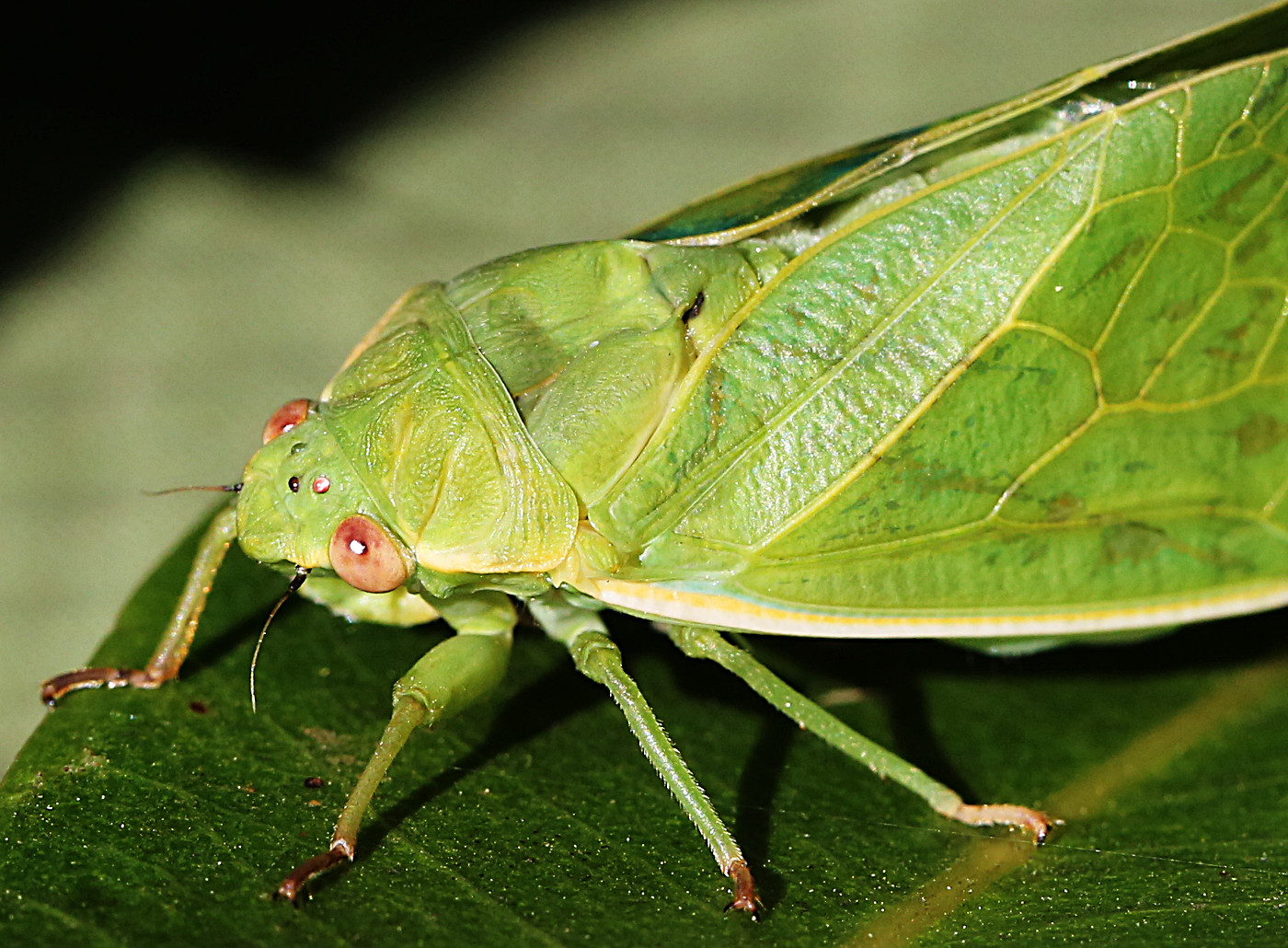
Today we shall talk of bladders and behaviour. Fear not, you're safe from revelations about an old man's prostate. Bladder cicadas, which confine their calls to dusk and soon after dark, lead off.

Took almost an hour of searching for anything insecty to turn up the above pair this week. Usually only see these cicadas when they've fallen victim to larger birds.

Much messing about in annoying breeze produced few shots in focus. Yesterday, walked from patch of bush, felt something crawling up leg. Yep. Bladder cicada. None for months. Then three. Just like the buses: none, then three come (maths whizzes can explain the buses).

Next to young Rufous-throated Honeyeater (age shown in white edge to gape: back of beak). This bird picked away at growth on branch. Just the stuff for a nest, right? Yes, but ... but bird's too young for the job. Seemed to realise this and moments later let material fall. Copying elders? I don't know.

Now Crimson Finch male. They're building nests all over Tyto. They build, female inspects. Often he's wasted his time. She flies off, dissatisfied. But the males persist and will continue building even after rejection, or when site limitations make the job impossible. (Depth of the oval nest with entry from one end appears to be critical).

On to Cotton Pigmy-goose. Pair today swam onto leaves of pink lotus and used their support to assist with preeening. Years of watching the birds and suddenly a simple action I've never before seen.

 And behaviour that's always puzzled me: why Scrub Pythons are so passive. This 2.5metre beauty beside a Tyto track is in prime health and not so laden with recent meal as to be immobile. But with hidey hole close by and crushing strength Scrub Pythons often just sit out any encounter.

This one didn't even flick a tongue out till the lens was 30cm away. It beats me. Buty I love them all.


Wednesday, October 5, 2016

Dragons watch over jewels


All know that a major task for dragons is guarding treasure (and trying to scorch fair maids). No sign of latter lately but below be jewels.


Wednesday, September 28, 2016

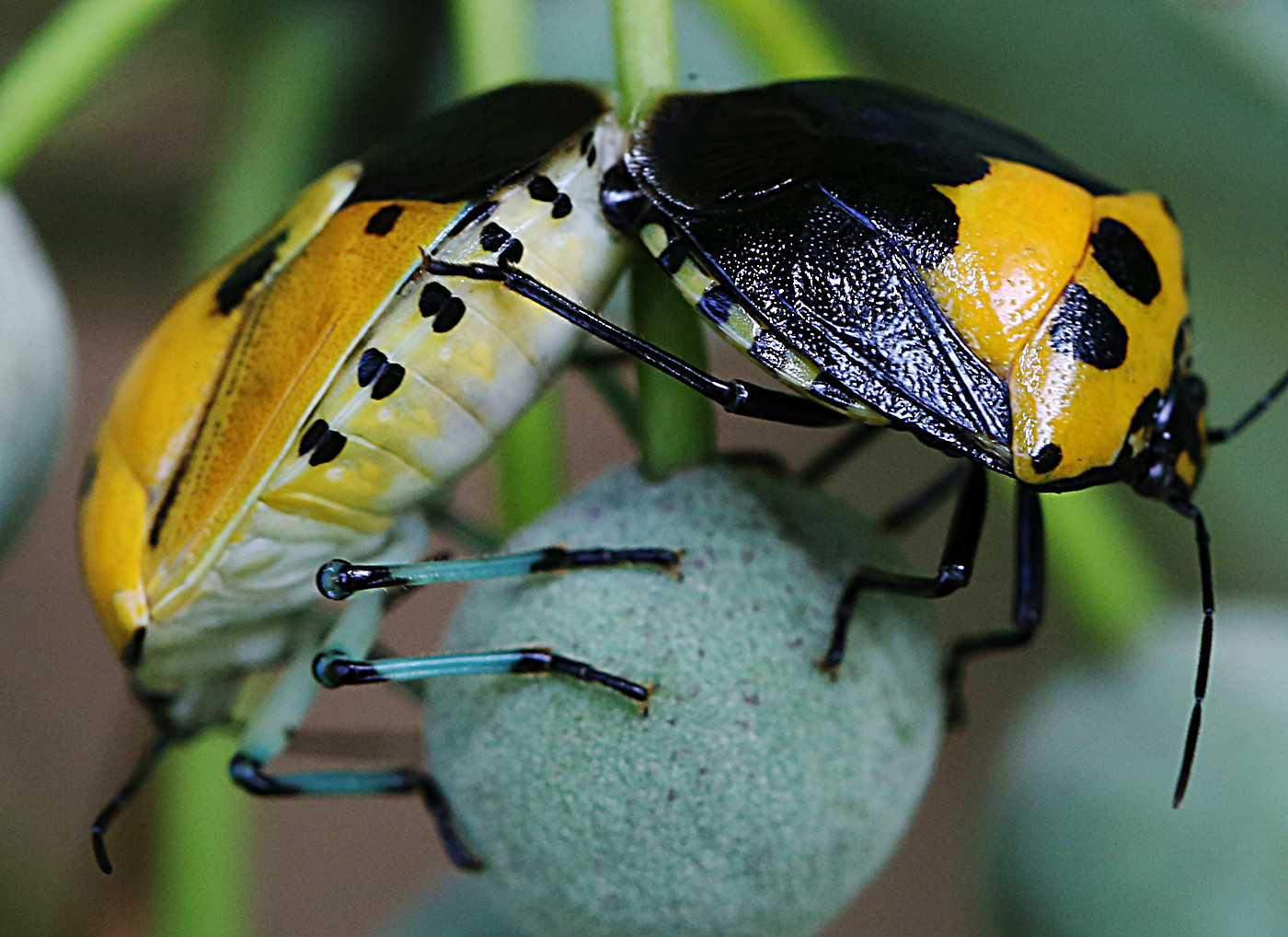
Life questions for Man-Faced Stink Bug

How would you like to grow up as a  Man-faced Stink Bug? Hard to face that sort thing every morning. Stare in the mirror and know you'll be a Stink Bug. All day. Every day.

And what about the other half. Should she be pleased that she's not a Woman-Faced Stink Bug? Or annoyed to lack gender identity?

Do the nymphs know what's ahead of them? Perhaps because they're not yet man-faced, not even baby-faced, they're yet to know their fate.

Worse. Being an Australian Man-Faced Stink Bug is to be denied existence. Wikipedia and others place you in many Asian and Island lands, but not in Oz. Sometimes life just stinks!

Catacanthus incarnatus pair mating and nymphs sunbathing in Tyto today did not comment.

Sunday, September 25, 2016

Mistletoebird jumps to it, others not so lively

Female Mistletoebird jumps to it after collecting nest material from palm trunk at Tyto Wetlands.

Tried backtracking bird to nest today but flight across water sunk my sleuthing.

Northern Fantail sitting pretty after putting finishing touches to neat cup nest with little dangling tail.

Brown-backed Honeyeater spends almost a week building nest alongside the Tyto hide. Change of mind yesterday and bird seen pulling apart new nest and shifting materials to less open site 20m away.

Shifting no more, seldom seen Giant Centipede on Tyto track becomes food for the ants. Do not mess with the painful biters if alive.

Spikier, but friendlier, Bearded Dragon seldom bites, preferring to play dead if caught out in the open.


Sunday, September 18, 2016

Focus on a winged Ood up to no good

Looking like a winged Ood up to no good, Masked Lapwing (Spur-winged Plover: Vanellus miles) targets me at Cattle Creek. They're mostly bluffers, and the spurs are not such high-speed threats but collision wouldn't be pleasant. Hard to keep them in focus so pays not to be thinking 'what if?'.

Short walk into wetland aimed to look for Latham's Snipe. They've gone from some other areas as the migrants continue on south after stopping locally to feed following their long flights from Northern Hemisphere. But I did find five birds between the highway and the rail bridge about 500m east. Be warned, the open pool is home to big Salty. Above picture is holdover from the early arrivals.

Wednesday, September 14, 2016

Meet a Mangrove Robin mum-to-be

Say hi to one of my Mangrove Gerygone (Gerygone levigaster) mums from the mud at the end of Orient Road. She's back on the job not so long after her last young one went whereever they vanish to. (Which means I have no idea why there are always three or four pairs amid their stretches of mangroves and no trace of yesterday's young in the wider area.)

Anyway, the gender giveaway is the divided breast plumage - from long sitting on the egg (in this case) or eggs (two sometimes, though often just one survivor) in the nest. Once the egg hatches, mum's old man will arrive with food. Perhaps a picture of them together will reveal little differences. We'll see.

Sunday, September 11, 2016

Young Cassowary heads the week's roundup

Up to Wallaman Falls to hunt for Cassowary and almost fall over big juvenile upon jumping (aged knee joke) from Troopy near known haunt of resident male. Hurriedly grab camera, five frames, junior takes off and gone, swallowed up by forest. Fading juvenile stripes showed down front of bird, which didn't look big enough to be fending for itself. But long search in all directions turned up no trace of adult male (responsible for all hatching and rearing).

Down at Jourama Falls, Topknot Pigeons out and about in scores, though seldom dropping in anywhere near me. About 60 birds coming and going, stopping mostly on native olives (no threat to any farmed olive). Two of 60 was as good as it got for me.

Nearby, Dusky Honeyeater getting stuck into insectivorial side of its diet. Most honeyeaters are happily gymnastic in the hunt for leaf-laid food.


At Mungalla Station, Tawny Grassbirds made rare showings out of their frustratingly enclosing habitat. Closed in slowly on sodden bird during morning wash. Got no closer before it flew on to barbed wire (an ugly look). Then into hiding. But its mate came out and showed off in the open (ugly background but better than on barbed wire).

Among the mangroves at the end of Orient Road found bigger targets than expected, with two of about 30 Pelicans circling low above me after quitting one of last remaining big pools of king-tide saltwater, soon to evaporate away.

At Tyto, Jacana takes in extras along with dead glasswing plucked from the muddy edge of the main lagoon. Ants foraging on the insect carcase are about to disappear into the bird, except those falling back to the surface.

Closing this quick roundup of sites, Red-capped Plover stands its ground along the Lucinda sandspit. Not my target on the day, but all the migrants stayed well clear. Not to worry, the tides are more in my favour later this week. And, who knows, maybe more tidings of Master Cassowary!

Monday, September 5, 2016

Beach Thick-knees lead me a merry dance

They're up to something, these Beach Thick-knees (Stone-curlews) (Esacus magnirostris). Took stroll along Lucinda sandspit yesterday and met the pair behaving suspiciously.

They slunk out from behind my back, led me up the spit, circled back, split up, came together again, ran toward me, stopped, propped, ducked into the dune grasses, and popped up again out the shore side. A merry dance indeed.

Are they just playing games? is there an eggy hollow somewhere in the sand? Or some little feathery bundle or two? Off tomorrow to have another look, weather willing.


Elsewhere, major meeting of Caspian Terns offered flight shots ...

... and similar chances with Great Knots. The migrants are among us!

Saturday, September 3, 2016

Young Pipit lets parent do all the work

Bit of a double oddity at Mungalla Station the other day. Watched Australasian Pipit (Anthus novaeseelandiae), parent and immature, as adult bird foraged and fed youngster.

The young bird sat silent as parent scoured nearby ground for insects. Even when food was plucked up from almost under its nose the passive and unprecocious youngster did not try to forage for itself. Odd. Perhaps this one young bird is a very slow learner. It's not as if grabbing insects from the dirt is a high skill. Or does it need help with prey ID?

Also odd, that in several years and hundreds of Pipit sightings this was my first undoubted view of parent-immature feeding. And I can't explain why I've never stumbled on a nest. Seems I might also be a slow learner.

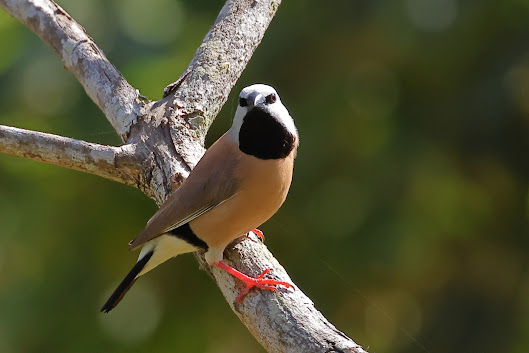
Lament for southern Black-throated Finches

Hollow logs for at risk birdies? Nature's nest boxes if you please Oh, such a clever wheeze So gather in twos and threes? Hundreds you w...