Freezing cold (well, about 15C: you must allow for us thin-blooded types) start to Tyto mornings this week, but glorious days. Above, el cheapo (iPod) pano from lookout at main lagoon. Below, a few days earlier and quite a few degrees more:
First bird of note today, female Jabiru (Black-necked Stork) stalking edge of kidney lagoon near beginning of walking tracks to the main lagoon.
Much later in morn, in paperbark not far from where the Jabiru had been, Little-pied Cormorant shows the flexibility of its webbed feet. No trouble securely clutching branches, or converting to underwater speedster when in pursuit of fish.
And yet another from the same kidney lagoon late in morn, Great Egret yawns after swallowing small prey, revealing long thin tongue.
Giving tongue elsewhere in several places, White-gaped Honeyeater pauses for a second in relatively clear setting near bridge leading to lookout. White-gapeds and Yellow Honeyeaters provide much of the shriller sounds within Tyto.
No action on maps and signage, but most tracks freshly mown. And the days look set to stay glorious. Another week in paradise!
Wednesday, June 8, 2016
Sunday, June 5, 2016
Sacred dive heads day of splashy catches
Catching Sacred Kingfisher (Todiramphus sanctus) on the dive one of several highlights at Mungalla Station over weekend.
Can't claim super reflexes for this one. Bird was one of three launching from atop Leichhardt tree and swooping on insects just above water level and on hymenachne growing along the edge of pool below.
And White-bellied Sea-Eagle (Haliaeetus leucogaster) happened along overhead in time for leisurely tracking. The major blessing is having the underwings well lit.
Catch of the day for Whiskered Tern (Chlidonias hybrida) came with the bird's only deep dive. After mostly scooping smaller fish from the surface, the bird took a steeper line into the water. It wasn't where I'd been focussing. No time for viewfinder so spun lens on gimbal and jammed shutter button for high-speed burst (almost always have camera on the setting). My catch not quite so perfect as bird's. Splashy though.
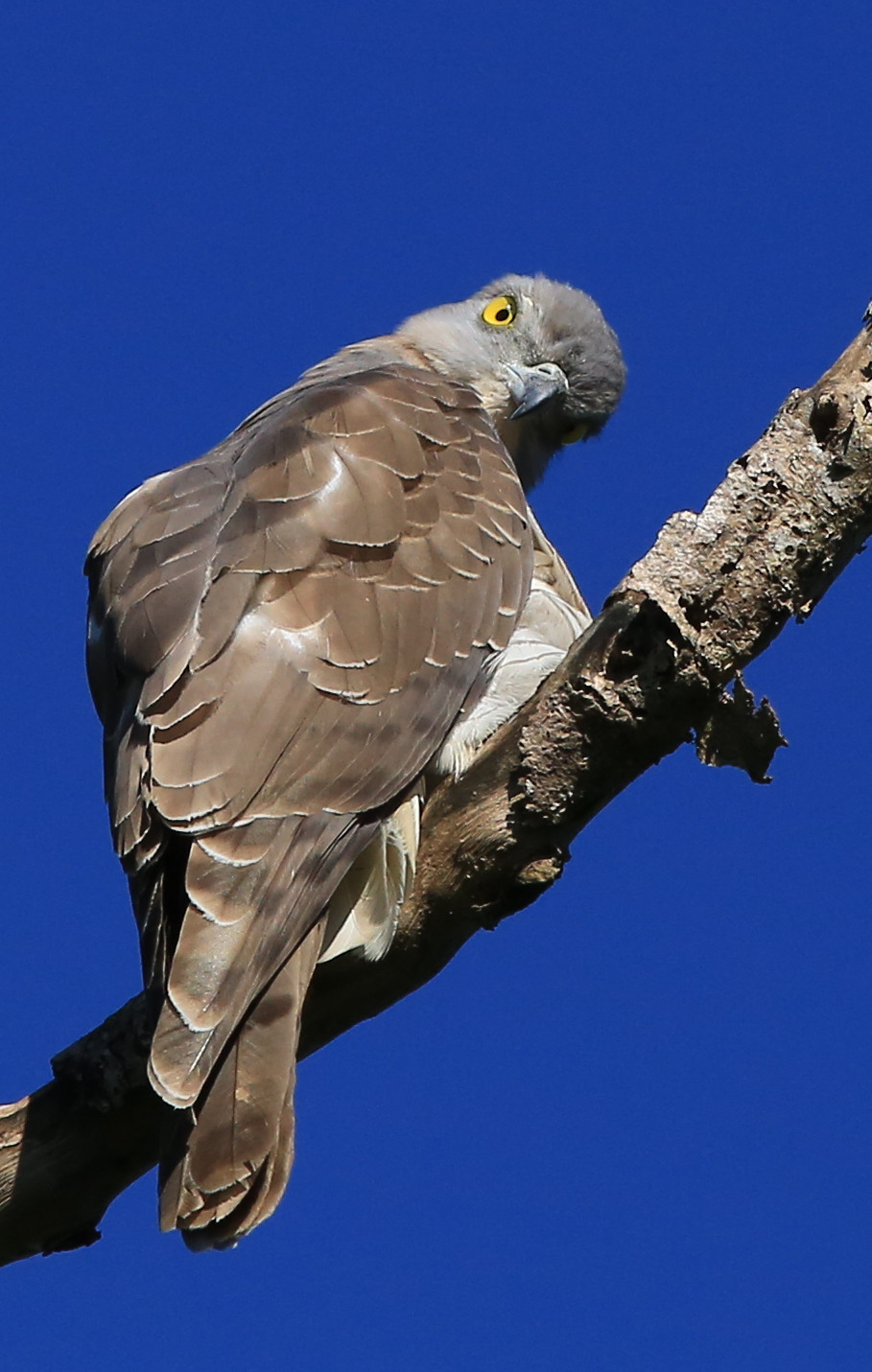
No such luck in Tyto today. Managed to draw glare from Pacific Baza (Aviceda subcristata). It's a mark of the species' acceptance of people that this look came after much arm-waving and whistling.
Can't claim super reflexes for this one. Bird was one of three launching from atop Leichhardt tree and swooping on insects just above water level and on hymenachne growing along the edge of pool below.
And White-bellied Sea-Eagle (Haliaeetus leucogaster) happened along overhead in time for leisurely tracking. The major blessing is having the underwings well lit.
Catch of the day for Whiskered Tern (Chlidonias hybrida) came with the bird's only deep dive. After mostly scooping smaller fish from the surface, the bird took a steeper line into the water. It wasn't where I'd been focussing. No time for viewfinder so spun lens on gimbal and jammed shutter button for high-speed burst (almost always have camera on the setting). My catch not quite so perfect as bird's. Splashy though.
No such luck in Tyto today. Managed to draw glare from Pacific Baza (Aviceda subcristata). It's a mark of the species' acceptance of people that this look came after much arm-waving and whistling.
Thursday, June 2, 2016
Large-billed first sighting for large bill of challenges
Started June with touch of luck in getting Large-billed Gerygone (Gerygone magnirostris) up close near Tyto main lagoon lookout yesterday.
Pair of birds flitted about an old nest dangling beneath cluster fig tree. Checked here and there and then cleared off as suddenly as they appeared. Perhaps thinking of another nest nearby? Who knows.
So, almost 100 species seen in last week of May. 67 yesterday during slow walk over the main tracks. Time to make an effort before the southern birders get up here in force. Set them a challenging sort of target. Roughly 245 species on current list. Roughly, because several sightings must be more than 15 years old. And several of the latest claims are decidedly dodgy. And shire's division of 245 into total Australian birds of roughly (that word again) 900 and therefrom claiming Tyto as 'home' to 27.% of Oz birds is even dodgier. But there should be a relatively easy 100 species seeable in a week, and maybe 130 in a month. We'll see what we're able to see.
Above, continuing a new theme of challenges for the shire (as nothing else over several years has achieved desired changes - such as trustworthy map, clear signage, moderated sightings, flora and fauna surveys, and more, Complaint? Hide fails to hide anything much. Better would be double slatting to preserve some airflow while giving some 'hide' to those entering it. But Tyto's still a splendid birding experience. Just ignore the joke map and signs and challenge yourselves.
Pair of birds flitted about an old nest dangling beneath cluster fig tree. Checked here and there and then cleared off as suddenly as they appeared. Perhaps thinking of another nest nearby? Who knows.
So, almost 100 species seen in last week of May. 67 yesterday during slow walk over the main tracks. Time to make an effort before the southern birders get up here in force. Set them a challenging sort of target. Roughly 245 species on current list. Roughly, because several sightings must be more than 15 years old. And several of the latest claims are decidedly dodgy. And shire's division of 245 into total Australian birds of roughly (that word again) 900 and therefrom claiming Tyto as 'home' to 27.% of Oz birds is even dodgier. But there should be a relatively easy 100 species seeable in a week, and maybe 130 in a month. We'll see what we're able to see.
Above, continuing a new theme of challenges for the shire (as nothing else over several years has achieved desired changes - such as trustworthy map, clear signage, moderated sightings, flora and fauna surveys, and more, Complaint? Hide fails to hide anything much. Better would be double slatting to preserve some airflow while giving some 'hide' to those entering it. But Tyto's still a splendid birding experience. Just ignore the joke map and signs and challenge yourselves.
Monday, May 30, 2016
Crimsons lighten the morning
Came upon bunch of Crimson Finch (Neochmia phaeton) beside sugar cane railway tracks this morning as the clouds from 60mm overnight rain sullenly refused to disperse. So, decided to give them time to show us what they've got. And added couple of others. Are you reddy for them all?
Crimsons smoke, all right?
Thursday, May 26, 2016
Chestnuts go for green slime, others want meat and fish
Taking a spell from slurping up green slime, Chestnut-breasted Mannikin (Lonchura castaneothorax) casts an eye down for more of its favoured food in Tyto. Other mannikins and finches locally don't show similar tastes.
No green vege stuff for Comb-crested Jacana (Irediparra gallinacea). Meat, that's what real water birds want. Plenty of lively small prey on and below the pesty water hyacinth at Mungalla Station today.
In trees above the Jacana's waterhole, Little Black Cormorants (Halacrocorax sulcirostris) jostle for position as they wait for me to quit the scene and let them get back to chasing fish. Talk about the Black Death!
And for fish, here's the blue and white death: Little Kingfisher (Ceyx pusilla) at Tyto this week. Not a reliable visitor so far this year, and a bit blurred about the belly because of pesky blady grass.
No green vege stuff for Comb-crested Jacana (Irediparra gallinacea). Meat, that's what real water birds want. Plenty of lively small prey on and below the pesty water hyacinth at Mungalla Station today.
In trees above the Jacana's waterhole, Little Black Cormorants (Halacrocorax sulcirostris) jostle for position as they wait for me to quit the scene and let them get back to chasing fish. Talk about the Black Death!
And for fish, here's the blue and white death: Little Kingfisher (Ceyx pusilla) at Tyto this week. Not a reliable visitor so far this year, and a bit blurred about the belly because of pesky blady grass.
Saturday, May 21, 2016
Dingos in the gun but help Night Parrots' shot at life
Seldom find any Dingo up close in open country standing still for a picture. But the animal above showed no concern about me out of the Troopy and walking towards it on Orient Station this week. Bit odd, because all dogs are in the sights of cattle breeders everywhere. Calves (and sheep, elsewhere) are killed by dogs, Dingos and wild mixed breeds. So most Dingos throughout Australia are in danger of death by shooting or baiting.
There is another side to the Dingo however. Fuss in birding circles lately centres on competing claims about Night Parrot ('world's rarest bird') research. Rival conservation groups have unhappily got knickers in a twist over wildlife protective fencing and claims of parrot deaths thereupon.
In the course of hoo-ha, good news. Extensive surveys within thousands of square kilometres of mooted parrot habitat showed Dingos all over, few cats and no foxes. The Dingos fed on wallabies and the like. Foxes obey an invisible ill-defined line which they don't cross. Cats suffer no such limits. But Dingos like eating cats, and foxes. And don't seem to trouble the spinifex dwelling parrots. Win-win-win.
Pity pro-Dingo arguments are not everywhere so compelling.
There is another side to the Dingo however. Fuss in birding circles lately centres on competing claims about Night Parrot ('world's rarest bird') research. Rival conservation groups have unhappily got knickers in a twist over wildlife protective fencing and claims of parrot deaths thereupon.
In the course of hoo-ha, good news. Extensive surveys within thousands of square kilometres of mooted parrot habitat showed Dingos all over, few cats and no foxes. The Dingos fed on wallabies and the like. Foxes obey an invisible ill-defined line which they don't cross. Cats suffer no such limits. But Dingos like eating cats, and foxes. And don't seem to trouble the spinifex dwelling parrots. Win-win-win.
Pity pro-Dingo arguments are not everywhere so compelling.
Wednesday, May 18, 2016
Python passes on climb but eyes the sky
Three-metre Amethystine Python thinks about tackling a 15-metre ascent at Jourama Falls. The first 0.6-metre would have been the easy part. It decided otherwise soon after. A pity, because it's fascinating watching the technique climbing snakes use to go up vertical trunks. They form a series of right angles. Up, across, up, across back, up, across. Nature's geometry - and muscles - at work.
Less often seen and far removed from right-angled climbing is the convex mirror of the large eyes. Above, trees and sky reflected in closeup. As usual, the snake paid almost no attention to me pushing a lens close to its head. Little ever appears to disturb an Amethystine.
Thursday, May 12, 2016
Sunbird shows off blue glory
Sunny morning and sudden drop in overnight temperature made for a fitting Tyto appearance today by Mr Cool, male Olive-backed Sunbird (Nectarinia jugularis) in all his blue gorget glory. Also fitting, his perching on pandanus, as an old nest dangles from a nearby pandanus.
Also out in force - particularly vocal - today, White-browed Robins (Poecilodryas superciliosa). Another four spotted during the morning.
Other recent Tyto sightings include notably blue Varied Triller (Lalage leucomela). The species usually looks black and white. But early morn light would seem to have provided a glimpse of the male as seen by another bird. Most birds see in a much wider range of colour than us. Notice that the effect is not merely an unwanted blue cast over the image.
Nothing blue about Spangled Drongo (Dicrurus bracteatus), again in bright morning light. Low- angled light has brought out the eye colour, which tends to be lost and quickly dulls as the sun climbs.
Young Brush Cuckoo (Cacomantis variolosus) will soon lose attractive brown tones and turn duller grey.
White-gaped Honeyeater (Lichenostomus unicolor) reveals strong grey eye colour and the gape that inspired its name, though it often looks more creamy yellow than white.
And a touch of violence from a recent morning. Typical brief flurry from Comb-crested Jacanas (Irediparra gallinacea) competing for territory on the main lagoon. Waterboarding comes to mind as descriptive of the technique. Jump upon and submerge the foe. Oddly, the bout doesn't always go to the one most wetted. I suspect one bird loses interest and simply moves on. Pity people couldn't do likewise!
Also out in force - particularly vocal - today, White-browed Robins (Poecilodryas superciliosa). Another four spotted during the morning.
Other recent Tyto sightings include notably blue Varied Triller (Lalage leucomela). The species usually looks black and white. But early morn light would seem to have provided a glimpse of the male as seen by another bird. Most birds see in a much wider range of colour than us. Notice that the effect is not merely an unwanted blue cast over the image.
Nothing blue about Spangled Drongo (Dicrurus bracteatus), again in bright morning light. Low- angled light has brought out the eye colour, which tends to be lost and quickly dulls as the sun climbs.
Young Brush Cuckoo (Cacomantis variolosus) will soon lose attractive brown tones and turn duller grey.
White-gaped Honeyeater (Lichenostomus unicolor) reveals strong grey eye colour and the gape that inspired its name, though it often looks more creamy yellow than white.
And a touch of violence from a recent morning. Typical brief flurry from Comb-crested Jacanas (Irediparra gallinacea) competing for territory on the main lagoon. Waterboarding comes to mind as descriptive of the technique. Jump upon and submerge the foe. Oddly, the bout doesn't always go to the one most wetted. I suspect one bird loses interest and simply moves on. Pity people couldn't do likewise!
Saturday, May 7, 2016
Woof-woof, woof-woof, woof-woof, woof-woof, woof-woof
Woof-woof, woof-woof. Woof-woof, woof-woof. Woof-woof woof-woof.
Last night's single-minded, single-voiced visitor, Barking Owl (Ninox connivens)
Monday, May 2, 2016
Flashback to those walls of flying ducks
Flashback to the '50s today at Tyto Wetlands with Cotton Pygmy-goose (Nettapus coromandelianus) trio flashing across the main lagoon like a middle class home lounge decor feature.
Do think though nature does the decorating better than the plaster kitsch plants.
But a bird doesn't have to flash over some picturesque stretch of water to enhance the natural beauty of a scene. Who's a pretty Plumed Whistling-Duck (Dendrocygna eytoni) then?
Less pretty as a picture, but pretty true to nature is the alarm of Pied Heron (Egretta picata) as it realises vehicle along Orient Station has come to a stop on road beside its fishing sspot. Adding insult to you-know-what, the driver and his mate then leapt out and began wholesale capture of heron's fish with big circular baitnet.
Same spot, but with lens swivelled 90 degrees and here's a Sharp-tailed Sandpiper (Calidris acuminata) showing typically less concern about people close by. Pretty, but not really possessing that '50s look.
An afterthought: whatever happened to all those pink flamingos embedded in lawns?
Do think though nature does the decorating better than the plaster kitsch plants.
But a bird doesn't have to flash over some picturesque stretch of water to enhance the natural beauty of a scene. Who's a pretty Plumed Whistling-Duck (Dendrocygna eytoni) then?
Less pretty as a picture, but pretty true to nature is the alarm of Pied Heron (Egretta picata) as it realises vehicle along Orient Station has come to a stop on road beside its fishing sspot. Adding insult to you-know-what, the driver and his mate then leapt out and began wholesale capture of heron's fish with big circular baitnet.
Same spot, but with lens swivelled 90 degrees and here's a Sharp-tailed Sandpiper (Calidris acuminata) showing typically less concern about people close by. Pretty, but not really possessing that '50s look.
An afterthought: whatever happened to all those pink flamingos embedded in lawns?
Subscribe to:
Posts (Atom)
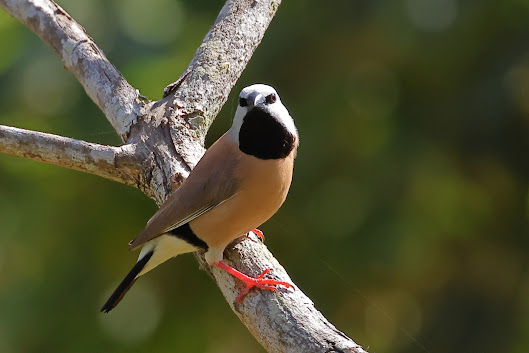
Lament for southern Black-throated Finches
Hollow logs for at risk birdies? Nature's nest boxes if you please Oh, such a clever wheeze So gather in twos and threes? Hundreds you w...
-
Seems Townsville will feel only the sting in Cyclone Debbie's tail. Nothing but light breeze and a rare drop of rain here yet as the c...
-
Hollow logs for at risk birdies? Nature's nest boxes if you please Oh, such a clever wheeze So gather in twos and threes? Hundreds you w...
-
Golden-headed Cisticola not so rusty when it comes to catching a feed See the eagle-eyed birdo doing his stuff. Eyes always on the move, mi...