Sulphur-crested Cockatoo (Cacatua galerita) drops in for quick feed of tulip tree seeds as dreary cloud continues over Tyto well into the dry season.
Almost white on white as Cockatoo looms large overhead.
Bit more colour in holdover shot of Little Shrike-Thrush (Colluricincla megarhyncha) in pandanus.
Another shot from holdover file: Red-backed Fairy-wren (Malurus melanocephalus) adds her subdued colour to the weeds.
June species count: 111, same as for May, and seven up on Jyne 2009.
Wednesday, July 7, 2010
Monday, July 5, 2010
Grey days give me the Willies
Added to holdover images of Willie Wagtails (Rhipidura leucophrys) as leaden skies over Tyto today drained most colour from the place.
Looking good - on a plastic post.
Bird's real: perch converted to post from plastic sign plank.
King of a small castle.
Sunnier scene recently on the lagoon.
Looking good - on a plastic post.
Bird's real: perch converted to post from plastic sign plank.
King of a small castle.
Sunnier scene recently on the lagoon.
Sunday, July 4, 2010
Fishy catch for big and small
Snack snatched from edge of main Tyto lagoon this week just the right size and shape for an Intermediate Egret (Ardea intermedia).
But sometimes the catch is almost to small to see - and impossible to identify.
Opposite problem for Australasian Grebes (Tachybaptus novaehollandiae) on lagoon yesterday. Three grebes fought over fish. All finally let it drop. Too much of a good thing it would seem.
But sometimes the catch is almost to small to see - and impossible to identify.
Opposite problem for Australasian Grebes (Tachybaptus novaehollandiae) on lagoon yesterday. Three grebes fought over fish. All finally let it drop. Too much of a good thing it would seem.
Friday, July 2, 2010
The green, green grass of home
Agile Wallaby up close on Tyto track this week.
The big male fills up on tender grass.
Shire keeps mowing weed to grass and moans wallaby numbers are surging. Strange are the ways of man!
The big male fills up on tender grass.
Shire keeps mowing weed to grass and moans wallaby numbers are surging. Strange are the ways of man!
Wednesday, June 30, 2010
Kingfisher's fish catch of the day
Caught this Forest Kingfisher (Todiramphus macleayii) zeroing in near Tyto lookout.
Gotcha!
'Sharky' shadow.
Dinner spinner.
Lotus-lander.
Gotcha!
'Sharky' shadow.
Dinner spinner.
Lotus-lander.
Monday, June 28, 2010
Ulysses continue to flutter by
Ulysses (Papilio ulysses) butterflies close wings upon landing and thus hide their startling blue colours. Their erratic and swift fluttering makes photography difficult.
Almost got the full blue image in Tyto yesterday, only to have butterfly turn and offer underside view as it left tulip tree flowers.
More Grey Goshawk chasing but this Masked Lapwing (Vanellus miles) the only usable picture after five clear sightings. Lapwings sped down main lagoon, tailed half-heartedly by the goshawk, which had probably been chasing other prey.
Also in the air over the lagoons, White-bellied Sea-Eagle (Haliaeetus leucogaster), and an Eastern Great Egret (Ardea modesta), on Saturday. Egrets and ducks all take off when sea-eagles appear. Wisely. Big raptors have big appetites. (Today, more panic with Swamp Harrier taking keen interest reed shallows at western end of lagoon.)
An earlier picture shows egrets don't offer much meat. Wouldn't want to live on pickings from those wings!
Almost got the full blue image in Tyto yesterday, only to have butterfly turn and offer underside view as it left tulip tree flowers.
More Grey Goshawk chasing but this Masked Lapwing (Vanellus miles) the only usable picture after five clear sightings. Lapwings sped down main lagoon, tailed half-heartedly by the goshawk, which had probably been chasing other prey.
Also in the air over the lagoons, White-bellied Sea-Eagle (Haliaeetus leucogaster), and an Eastern Great Egret (Ardea modesta), on Saturday. Egrets and ducks all take off when sea-eagles appear. Wisely. Big raptors have big appetites. (Today, more panic with Swamp Harrier taking keen interest reed shallows at western end of lagoon.)
An earlier picture shows egrets don't offer much meat. Wouldn't want to live on pickings from those wings!
Friday, June 25, 2010
Kite and heron help save the days
Chase after Gey and Brown Goshawks most of a cloudy week and what does one get? A few seconds of posing from a Whistling Kite (Haliastur sphenurus). And this bird only stayed around because it was eyeing a dead wallaby nearby.
Drizzle joined the cloud today, but this White-faced Heron (Egretta novaehollandiae) lifted spirits a bit. White-faces on ground seldom allow one close, less wary when they are higher up.
Often impossible to spot higher up, seldom seen in Tyto, and always wary, Frilled Lizard (Physignathus lesueurii). Small youngster enjoying sunny spot above concrete culvert a few days ago.
Finally, image of White-browed Robin (Poecilodryas superciliosa) shaded in pandanus clump, reworked slightly after helpful pointers on photo forum, BirdingOz.
Click all pix to enlarge. Critiques always welcome.
Drizzle joined the cloud today, but this White-faced Heron (Egretta novaehollandiae) lifted spirits a bit. White-faces on ground seldom allow one close, less wary when they are higher up.
Often impossible to spot higher up, seldom seen in Tyto, and always wary, Frilled Lizard (Physignathus lesueurii). Small youngster enjoying sunny spot above concrete culvert a few days ago.
Finally, image of White-browed Robin (Poecilodryas superciliosa) shaded in pandanus clump, reworked slightly after helpful pointers on photo forum, BirdingOz.
Click all pix to enlarge. Critiques always welcome.
Wednesday, June 23, 2010
Finches to the fore
Red-browed Finches (Neochmia temporalis) dwell doubly in the shade in Tyto: overshadowed somewhat by Crimsons, and preferring under-tree areas to sunlit grasses.
Both species enjoy sheltered margins of drying creek pools. Red-browed likes getting down to the muddy bits. And all too often behind some twig.
Crimson Finch (Neochmia phaeton) spends more time surveying things below. Little wonder Crimsons feature more often.
And, mopping up the finches, here's a Double-barred Finch (Taeniopygia bichenovii) feeding on seeds from grasses dying off in middle of dirt road.
Both species enjoy sheltered margins of drying creek pools. Red-browed likes getting down to the muddy bits. And all too often behind some twig.
Crimson Finch (Neochmia phaeton) spends more time surveying things below. Little wonder Crimsons feature more often.
And, mopping up the finches, here's a Double-barred Finch (Taeniopygia bichenovii) feeding on seeds from grasses dying off in middle of dirt road.
Monday, June 21, 2010
Barred Finches finally drop in
Taken four mornings to catch Double-barred Finches (Taeniopygia bichenovii) up close on the fringe of coastal woodland south of Ingham.
Birds spent little time in the open after landing on rutted dirt road.
Safety is a rusty fence.
Awful picture, interesting moment: Crimson Finch (Neochmia phaeton) taking ants on pandanus trunk. Perhaps turmoil in ants' nest and ensuing insect hyperactivity drew finches. Switch from seeds to meat lasted about five minutes.
Birds spent little time in the open after landing on rutted dirt road.
Safety is a rusty fence.
Awful picture, interesting moment: Crimson Finch (Neochmia phaeton) taking ants on pandanus trunk. Perhaps turmoil in ants' nest and ensuing insect hyperactivity drew finches. Switch from seeds to meat lasted about five minutes.
Friday, June 18, 2010
Honeyeaters yellow and grey
Never many problems identifying Yellow Honeyeaters (Lichenostomus flavus). They're just so, well, very yellow, noisy and busy. And, as with quite a few honeyeters, grey-eyed.
They seldom sit still, and prefer to forage away from in open sunlight. Had hopes for above picture, on tulip tree, but image too soft.
White-gaped Honeyeaters (Lichenostomus unicolor) share eye colour and much else with Yellows: side by side in bird lists, on same branch in one field guide, share habitat in north Queensland. Above bird kept returning to old Shining Flycatcher nest and eating bits of lining.
Bovine bonus: Cattle Egret and adopted family watch me seeking Double-barred Finches yesterday (post upcoming).
They seldom sit still, and prefer to forage away from in open sunlight. Had hopes for above picture, on tulip tree, but image too soft.
White-gaped Honeyeaters (Lichenostomus unicolor) share eye colour and much else with Yellows: side by side in bird lists, on same branch in one field guide, share habitat in north Queensland. Above bird kept returning to old Shining Flycatcher nest and eating bits of lining.
Bovine bonus: Cattle Egret and adopted family watch me seeking Double-barred Finches yesterday (post upcoming).
Subscribe to:
Posts (Atom)
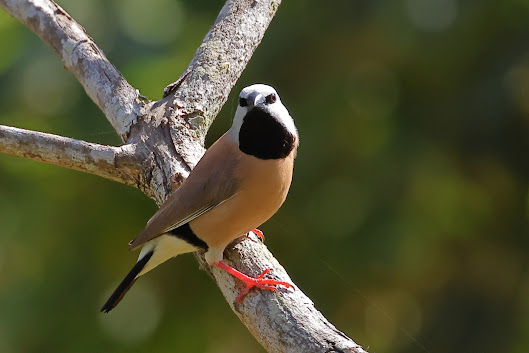
Lament for southern Black-throated Finches
Hollow logs for at risk birdies? Nature's nest boxes if you please Oh, such a clever wheeze So gather in twos and threes? Hundreds you w...
-
Hollow logs for at risk birdies? Nature's nest boxes if you please Oh, such a clever wheeze So gather in twos and threes? Hundreds you w...
-
Seems Townsville will feel only the sting in Cyclone Debbie's tail. Nothing but light breeze and a rare drop of rain here yet as the c...
-
Golden-headed Cisticola not so rusty when it comes to catching a feed See the eagle-eyed birdo doing his stuff. Eyes always on the move, mi...