Up to Wallaman Falls to hunt for Cassowary and almost fall over big juvenile upon jumping (aged knee joke) from Troopy near known haunt of resident male. Hurriedly grab camera, five frames, junior takes off and gone, swallowed up by forest. Fading juvenile stripes showed down front of bird, which didn't look big enough to be fending for itself. But long search in all directions turned up no trace of adult male (responsible for all hatching and rearing).
Down at Jourama Falls, Topknot Pigeons out and about in scores, though seldom dropping in anywhere near me. About 60 birds coming and going, stopping mostly on native olives (no threat to any farmed olive). Two of 60 was as good as it got for me.
Nearby, Dusky Honeyeater getting stuck into insectivorial side of its diet. Most honeyeaters are happily gymnastic in the hunt for leaf-laid food.
At Mungalla Station, Tawny Grassbirds made rare showings out of their frustratingly enclosing habitat. Closed in slowly on sodden bird during morning wash. Got no closer before it flew on to barbed wire (an ugly look). Then into hiding. But its mate came out and showed off in the open (ugly background but better than on barbed wire).
Among the mangroves at the end of Orient Road found bigger targets than expected, with two of about 30 Pelicans circling low above me after quitting one of last remaining big pools of king-tide saltwater, soon to evaporate away.
At Tyto, Jacana takes in extras along with dead glasswing plucked from the muddy edge of the main lagoon. Ants foraging on the insect carcase are about to disappear into the bird, except those falling back to the surface.
Closing this quick roundup of sites, Red-capped Plover stands its ground along the Lucinda sandspit. Not my target on the day, but all the migrants stayed well clear. Not to worry, the tides are more in my favour later this week. And, who knows, maybe more tidings of Master Cassowary!
Sunday, September 11, 2016
Monday, September 5, 2016
Beach Thick-knees lead me a merry dance
They're up to something, these Beach Thick-knees (Stone-curlews) (Esacus magnirostris). Took stroll along Lucinda sandspit yesterday and met the pair behaving suspiciously.
They slunk out from behind my back, led me up the spit, circled back, split up, came together again, ran toward me, stopped, propped, ducked into the dune grasses, and popped up again out the shore side. A merry dance indeed.
Are they just playing games? is there an eggy hollow somewhere in the sand? Or some little feathery bundle or two? Off tomorrow to have another look, weather willing.
Elsewhere, major meeting of Caspian Terns offered flight shots ...
... and similar chances with Great Knots. The migrants are among us!
Saturday, September 3, 2016
Young Pipit lets parent do all the work
Bit of a double oddity at Mungalla Station the other day. Watched Australasian Pipit (Anthus novaeseelandiae), parent and immature, as adult bird foraged and fed youngster.
The young bird sat silent as parent scoured nearby ground for insects. Even when food was plucked up from almost under its nose the passive and unprecocious youngster did not try to forage for itself. Odd. Perhaps this one young bird is a very slow learner. It's not as if grabbing insects from the dirt is a high skill. Or does it need help with prey ID?
Also odd, that in several years and hundreds of Pipit sightings this was my first undoubted view of parent-immature feeding. And I can't explain why I've never stumbled on a nest. Seems I might also be a slow learner.
Monday, August 29, 2016
Jaq-ing up companions along the creek
Here's my friend Jaq (gender-neutral), Comb-crested Jacana (Irediparra gallinacea). We enjoy long chats by the final Water Hyacinth pool where Palm Creek's eastern fork dribbles out over 100 hectares of hymenachne at Mungalla Station. Jaq shares the pool with a shy little Saltwater Crocodile and - recently- a sun-loving big Water Python. Plus about 20 other bird species. I talk to all, but Jaq's the one that sticks around.
Sunbathing on the banks of the creek a bit upstream most mornings these days is a biggish Saltie, not a chatty type but willing to listen across 40 metres of water. But shouting from 50m just isn't the same as jesting quietly with Jaq.
Thursday, August 25, 2016
Horsfield's Bushlark makes the dust fly
Warm days and dusty cattle tracks draw Horsfield's Bushlark (Mirafra javanica) out to compete with Australasian Pipit (Anthus novaeseelandiae) for a share of pasture pickings.
Got close to the dust-bath action the other day at Mungalla Station.
Dust flies as bird wriggles in.
And feathers dance as breeze picks up.
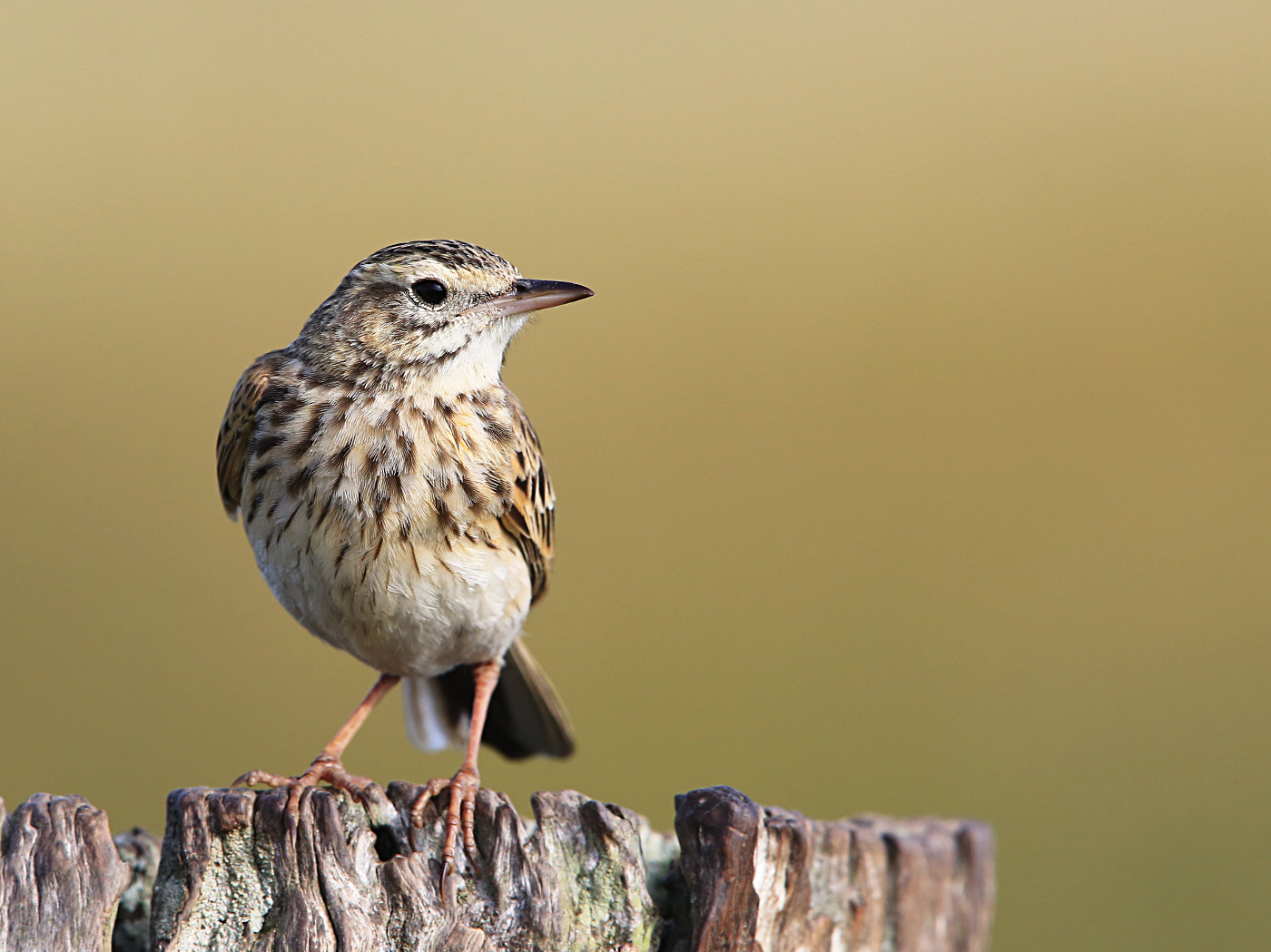
Mustn't leave Pipit out of the picture. One on a post from awhile ago.
Got close to the dust-bath action the other day at Mungalla Station.
Dust flies as bird wriggles in.
And feathers dance as breeze picks up.
Mustn't leave Pipit out of the picture. One on a post from awhile ago.
Saturday, August 20, 2016
Whole lot of sniping going on
Since they first arrived about two weeks ago, migratory Latham's Snipe are popping up in numbers on wetlands near the coast east of Ingham.
Got a bit closer to some of 24 on roadside pool at the Orient Station today, so intent on feeding they didn't flinch as I walked up openly toward them.
Unfortunately fence marking boundary between public road and private land prevented me taking full advantage of birds' interest in feeding above all else.
Later, got bit offside with presumed property owner when chasing Red-backed Kingfisher in tree on unfenced portion of grazing land.
He invited me to leave. I did, with my best pictures of a species uncommon to the area.
No need quit the road for head shot of immature Black-necked Stork (Jabiru).
Nor for Yellow-billed Spoonbill, tucking in near the snipe.
Afterword: Trespassing birdwatchers risk upsetting helpful property owners. Orient Station, however, has long tried to deter all birders from using the 7km public road through the property with ambiguous Private Property signs beside the road. Over the years I've helped farm managers with info about sick stock, dog and croc sightings and rubbish pickup. I figure we're more or less square.
Tuesday, August 16, 2016
Australian Raven alights to lighten the gloom
Bit of biz in the big smoke today so headed off in the dark for spot of birding soon as automatic gate opened at Townsville Common. Lot of light cloud and light drizzle and dark unidentifiable birds in the early gloom. And things stayed dark - but in a good way.
Australian Raven dropped on to pandanus beside the Troopy and proceeded with fussy morning toilette. ((Bird didn't budge at my presence, or flinch from low-power flash. Because ... and this is point to note, I was there first. In other words, it chose to enter my space.)
Bush Stone-curlew little less unconcerned at having photographer approaching. But stopped for a bit before walking quietly into deeper cover, along with its mate (imagine second bird out of focus to right of picture as you look at it).
Thursday, August 11, 2016
Standing out comes naturally to some
One or two birds go out of their way to help the photographer. But few oblige quite so enthusiastically as White-breasted Woodswallow doing a few stretches atop the Troopy in the Tyto carpark the other morning.
Another species with a habit of standing out is the White-eared Monarch, noted forager of outer foliage. Came upon three together today at the western end of the wetlands. Probably rather scruffy adults and an immature.
Hard for the scores of Willie Wagtails not to stand out. Not so often caught with tail fanned, though they are fantails, not wagtails.
Sunday, August 7, 2016
You can't beat the call of the wild - or can you?
Just as well there were few sightseers about in Tyto this morning as I engaged Pheasant Coucal in all-out silly noises competition. I claim the bird started it. Probably reverse claim made once my opponent went to ground. 'Yeouwch' was formerly my best Coucal call. Much wider repertoire these days. Sometimes I even imagine the birds take this sort of thing seriously. More likely they're actually calling attention to the nutter beneath them making funny faces and even stranger noises.
But ... but there is more to this than meets the ear. Here's a terrible picture of an Olive-backed Oriole in Tyto today. The bird gave forth a series of the usually wide variety of Oriole sounds, and then brought out a superb Pacific Baza 'ee chew'. Had me looking hard for the nonpresent Baza until the Oriole repeated the call. If I work on my calls for another, say, 20-30 years I might fool some bird some day. Meantime, birding will continue to call, every day.
Monday, August 1, 2016
What's black and white and red and blue and grey?
Tidy-up post for July pictures, that's what. Here we go:
Spangled Drongo, Great Egret, Red-backed Fairy-wren, Shining Flycatcher, Bustard, Purple Swamphens
Subscribe to:
Posts (Atom)
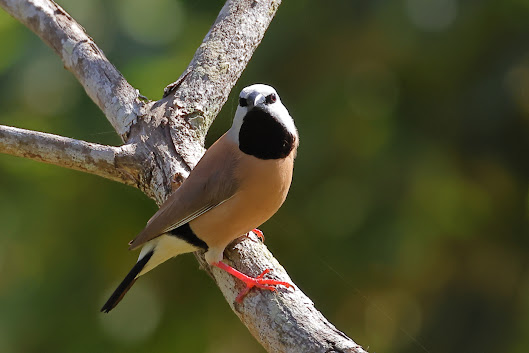
Lament for southern Black-throated Finches
Hollow logs for at risk birdies? Nature's nest boxes if you please Oh, such a clever wheeze So gather in twos and threes? Hundreds you w...
-
Hollow logs for at risk birdies? Nature's nest boxes if you please Oh, such a clever wheeze So gather in twos and threes? Hundreds you w...
-
Golden-headed Cisticola not so rusty when it comes to catching a feed See the eagle-eyed birdo doing his stuff. Eyes always on the move, mi...
-
Brown-backed Honeyeaters ( Ramsayornis modestus ) flourish in Tyto in spite of many nesting failures. They usually build their bulky, dangli...