Monday, March 30, 2020

Peregrination speeds from kestrel to ibis

Peregrine Falcon wafts easily on breeze below Bald Rock in Town Common Cons. Pk, Townsville, today. Nothing like so purposeless when first seen, as black blur hurtling at Nankeen Kestrel low over the flats near the rock. Last-second side slip saw Kestrel safe. Falcon's return attack lacked resolve.

Surprise came bit later when falcon flew from dead White Ibis at edge of mangroves. Stayed within sight of the corpse but showed no sign of speedy return to it. Dead bird probably explains circling presence and minor aggression among six Whistling Kites in the general area. At no time, however, did any of them land or even fly low close to the ibis. Falcon had plucked some of neck. No clear cause of death.

Other raptors in broader area this morning: two White-bellied Sea-Eagles, Wedge-tailed Eagle, Brown Goshawk, Swamp Harrier, Black Kite.

Tuesday, March 24, 2020

Good news, good sense put sparkle into the day


Just the thing to brighten our Covid-19 days. Sparkly treasure from the not so sparkly Common Crow butterfly.


Down in the mouth? Cheer up. Good news is burrowing frog got to live another day when tree snake lost grip of things.

Woe is the Bush Stone-curlew's lot? Course not. Sun's shining and that's a happy look. Unhappy stare can curl the toes and turn the unwary to stone.

Are you washing your hands and staying socially distanced? White-bellied Sea-Eagle knows what's good for it.

As does Intermediate Egret. Wouldn't come within 10 metres, let alone two, in the Common this morning.

Don't be a goose. Play it safe, is the way to go. 'Coz we've got a long way to go yet.


Saturday, March 21, 2020

Woodswallows would swallow whatever came their way

Aerial action aplenty as White-breasted Woodswallows compete for variety of flying prey at golf club carpark bordering Town Common Conservation Park, Townsville, yesterday.


Doesn't look terribly tasty, does it? But the woodswallows would swallow whatever came their way.

Sunday, March 15, 2020

Birds and birdwings fit images for green theme

Young (and so yellow-green) Blue-faced Honeyeater shows off colouring in golf course garden beside Townsville Town Common Conservation Park today.

Everything coming up green down below after plenty of rain lately, but black male Koel stands out while taking a break from preening today atop nearby paperbark.

Pheasant Coucal amid fresh shoots of grass on ground that was parched brown not so long ago.

Not so many Cairns Birdwings around this season. And not so commonly seen on mangroves but fitting image for green theme.

Friday, March 6, 2020

More to mangroves than honeyeaters

Giant Mudskippers are big on taste - bathed in clean water for a few days - so they say. Dried and served for breakfast, they'd then become mud's kippers, I suppose. But what do I know? Only this week did I discover that 'St Peter's Fish' is the dreaded scourge of our waterways, the Tilapia. Idle thoughts while chasing Mangrove Honeyeaters along the banks of the Ross River mouth, Townsville, recently.

Silver Gull probably not too interested in name of small silver fish it chanced upon nearby.

Whimbrel came along to stalk same stretch of sand soon after. Too late. It's not only worms that go to the early bird.

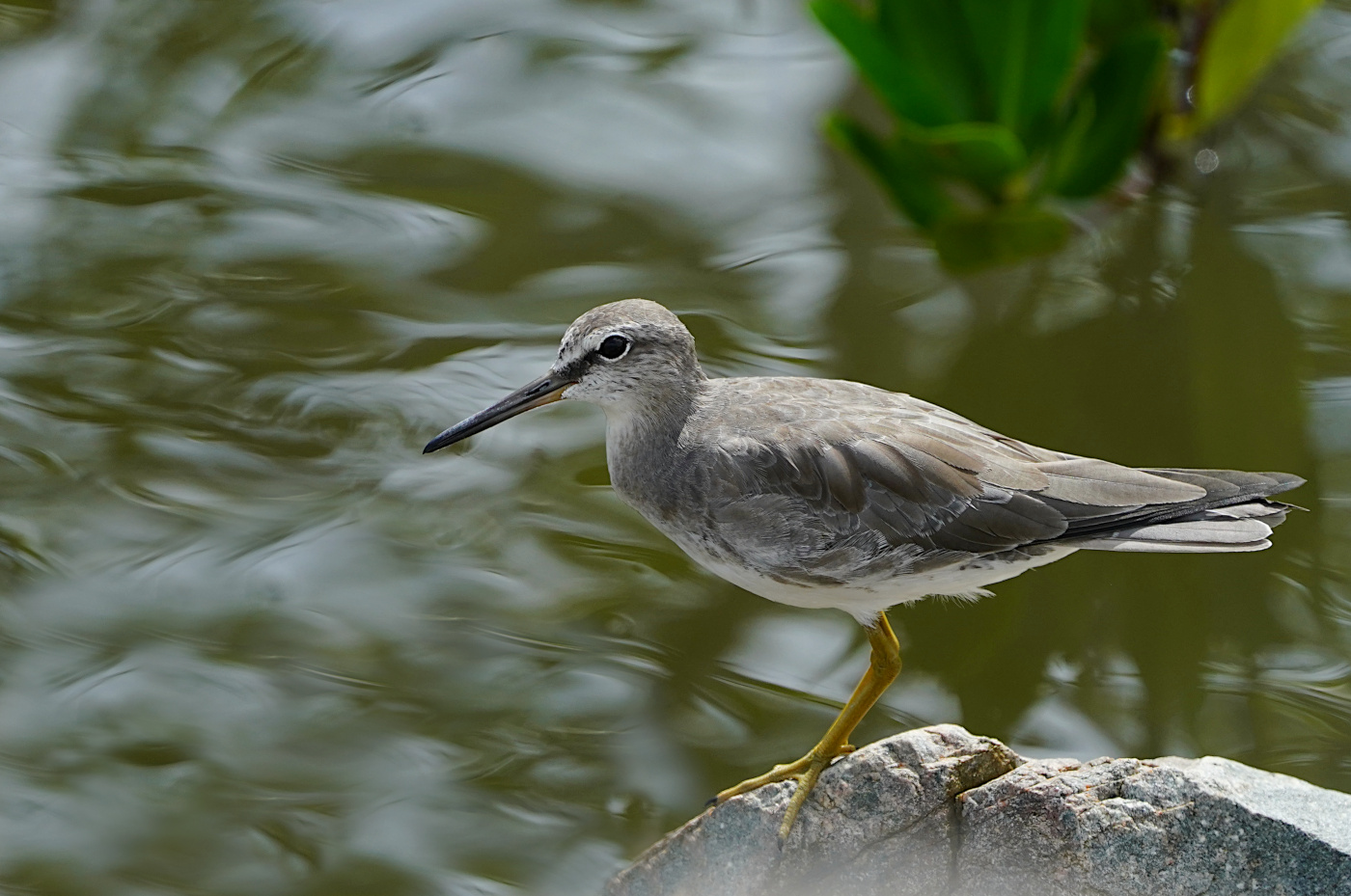
Grey-tailed Tattler more at home chasing after sand worms but bridge breakwater makes safe high-tide refuge.

Also brief base out in the open for Bar-shouldered Dove before a return to the mangroves.

No Mangrove Honeyeaters (previous post)? Later . . .


Wednesday, February 26, 2020

Mangrove-loving honeyeaters divide at Townsville


About 2.5 million years ago some honeyeaters split and created identity puzzles playing out in  Townsville mangroves every day. Three species now: Mangrove Honeyeater (Gavicalis fasciogularis), Singing Honeyeater (G. virescens) and, above, Varied Honeyeater (G. versicolor).


Mangrove Honeyeaters, above, and Varieds were for many years thought to be variations of one species, yellower and larger to the north (of Townsville, as it turns out), less coloured and smaller to the south (to northern NSW). Singing Honeyeaters, sisters to Mangroves, but more distantly related to Varieds, took all the rest of Australia.


So,Varieds in Rowes Bay mangroves, north Townsville; Mangroves in Ross River mangroves 5km away in Townsville south. No mangroves in between. Iffy old reports of each being seen hundreds of kilometres on the wrong side of Townsville. Not iffy, and bearing on the present puzzle, genetic evidence of one-way traffic from Varieds to Mangroves. Thus, above two birds, seen in close interacting company this week south of Ross River (Mangrove HE territory), may be closer related than appearances suggest. (Too late for me, birding future will surely bring fast analysis in the field from droppings or feathers.)


Sunday, February 16, 2020

Hurrah, hurrah for Radjah Radjah

What's in a name? More in some than others. Take above Radjah Shelduck (Tadorna radjah).  Also known as Burdekin Duck. Also now (Radjah radjah). Lovely, yes? One of several shelducks. But one on its own. No longer lumped in with Australian (T. tadornoides), Paradise (T. variegata), and others overseas. More on this here.

Burdekin Duck? Yes and no, and then again. Duck? Of a goosey sort. Burdekin? Not so common in the area as the name suggests. And on the colloquial menu, B. Duck meant sliced beef in batter. Shelduck? Above, probably Sheldrake, based on breastband thickness.

Can't be sure of above bird's gender. Almost certain, there'll be few chances of getting so close to another pair of Radjahs almost next door to me in Rowes Bay in any year to come. Rara avis!

Tuesday, February 11, 2020

Do Rufous Owls give a hoot about mozzies?

It's a little-regarded truth that most wildlife must suffer mosquitos (no plural e for me, thank you). No spray for them! Just today came a report that even earthworms suffer to satisfy the female mozzie's need to feed and thus to breed.

There are tales from Australia's past of various Aboriginal defences. Seems a particularly successful but drastic answer was to feast upon bats and flying foxes. Drastic because while the diet foiled mosquitos and other insects, it brought BO so powerful none could stomach being near bat-man.

So what to think of relations among, say, Rufous Owls when one clutches last night's kill through the next day? Mozzie repellent? Mate repellent? No worries, because owls lack much sense of smell? Whatever, got no answer from pair of birds near Ross River today.


Tuesday, February 4, 2020

Woe is me, I am bereft. Spotted Whistling Ducks have left.

Woe is me. I am bereft. My Spotted Whistling Ducks have left.

Five there were just yesterday. All upped sticks and gone away.

Thirtynine days and 40 nights. End so close to Biblical flights.

Sought solace in poetry on ducks. None to be had. It all sucks!
                                                                   The end

Monday, January 27, 2020

Adding something extra to Spotted Whistling Duck

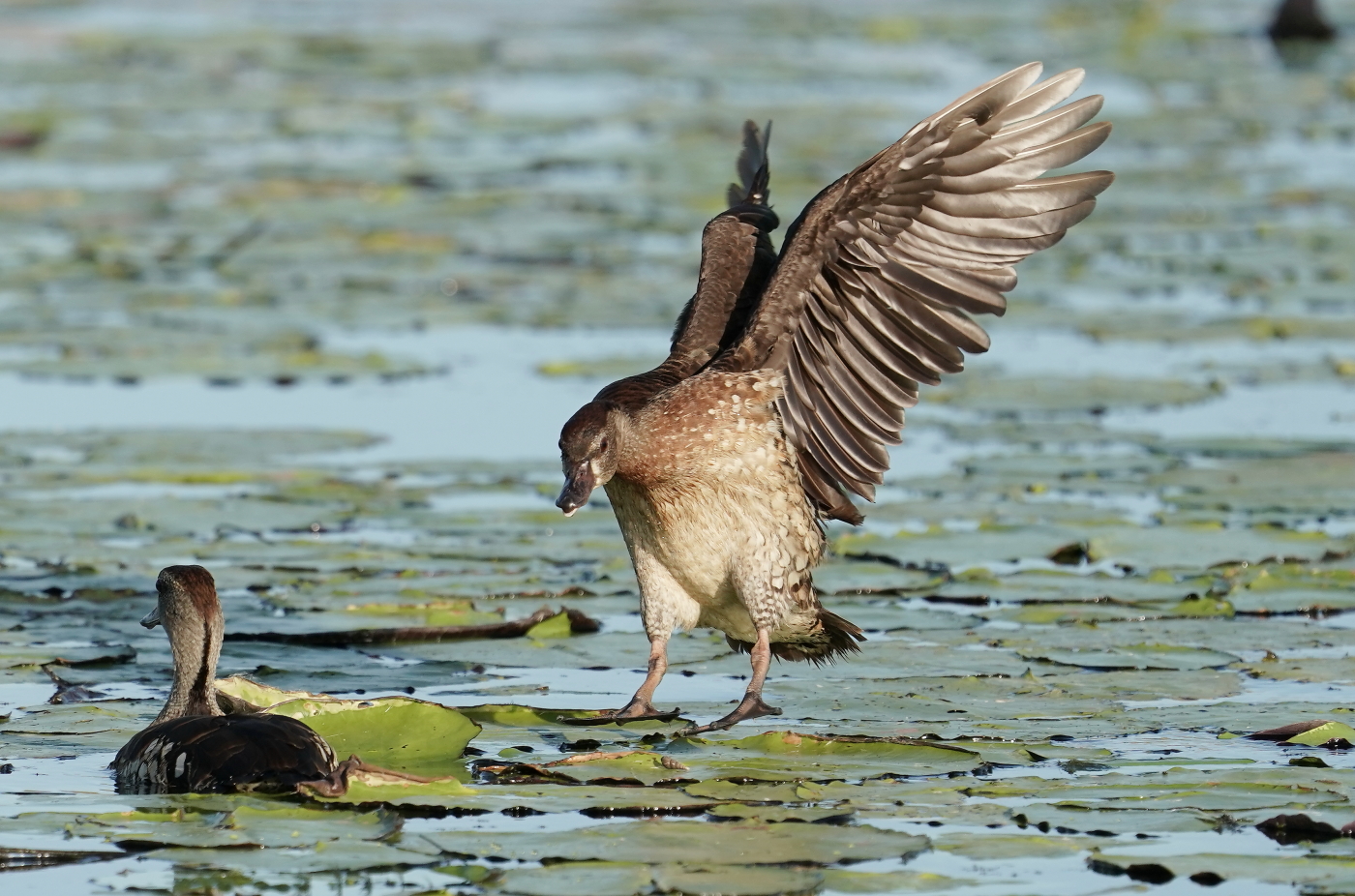
So, too many Spotted Whistling Ducks lately? No, wait, this isn't yet another one on the new borrow pits in the Townsville Town Common Cons. Pk. Look closely and you'll see a Blue Percher on the rightmost waterlily flower head. So it's really an insect picture. Honestly!

Well, perhaps not totally honest. But you can't argue about image of Honeybee at borrow pits laden with pollen. Before the present somewhat disappointing rain.

What about mosquito sitting late yesterday afternoon on head of Green Pygmy-goose? Nothing much here to be proud of but it's the first half-decent picture with super-duper new camera-lens combo. Gonna be a steep and long learning curve, I think.

Here's a Frilled-neck Lizard yesterday showing off bulging tongue and looking rather prehistoric with it. Unseen, because cloned out, one of hundreds of cigarette butts in the area. 'Nature-loving' chain smoker parks regularly at site and leaves evidence of addiction littering it. Wait, 50 years ago I was doing more or less the same. Yeah, but times change. Right? Anyway, I've changed.

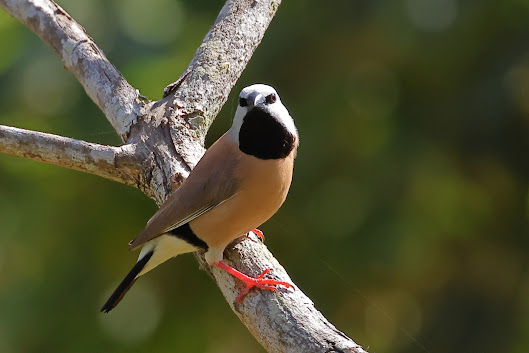
Lament for southern Black-throated Finches

Hollow logs for at risk birdies? Nature's nest boxes if you please Oh, such a clever wheeze So gather in twos and threes? Hundreds you w...