Friday, June 26, 2015

Tyto flying high on hotspot listings

Eight of Australia's top 10 birding hotspots are in North Queensland.

Tyto Wetlands sits fourth equal, according to listing site, eBird, sharing with Kingfisher Park, Julatten.

But metre for metre, minute for minute, it appears at present Tyto (90 hectares) offers more birds than any other spot in the land, with 70-80 species possible from an easy morning's walk (say four hours).

Townsville Town Common heads the hotspots, but dry conditions mean much reduced listings lately. Western Treatment Plant, Werrribee, Victoria holds second. It's great area would require a marathon walk or much driving to tally 70-80 birds. Cairns Esplanade sits third, but waves farewell to many of its prize species in April-May. Seasonal variation also cuts in Kingfisher Park counts.

So, Tyto rules, okay?

The bad news? Can't find any Grass Owls or Little Bitterns, and all the White-browed and Spotless Crakes have gone, likely because the Wet didn't happen this year.

Also probable will be depleted fish, frog, reptile and insect cycles, with consequences for all their predators.

The heat's on even the hottest hotspot.

Today's highlight, resident pair of Black-shouldered Kite (Elanus axillaris) on fallen tree over reeds at western end of lagoon. Flight by one (possibly male) drew calls from mate before it too flew off.

Sunday, June 21, 2015

Young Red-winged Parrots tuck into weeds

Found three immature Red-winged Parrots (Aprosmictus erythropterus) tucking into
weeds in Mungalla Station's old stockyards the other day.


Common enough along the coast, the species has seldom let me close at eye level.


Don't have ID for the rather unappetising looking husks, which contained almost no seed.

Wednesday, June 17, 2015

Missing Pipit telltale tail tells tale

Chased young Australasian Pipit (Anthus novaeseelandiae) up and down Tyto ditch for a spell without the bird ever showing in flight the telltale prominent light outer tail feathers. 

Yet the pale edge shows clearly, if narrowly. An older bird came along and took my young friend off, the older with full white edge showing, the youngster still flying with tail uniformly dark.

Nothing too significant about the differences. I imagine the young bird's tail will become more prominently white-edged soon. But the lack of the usual distinctive tail initially caused me to question the young bird's identity. 

Maybe it was a female Brown Songlark (Cincloramphus cruralis)?

Well, there is some similarity, but the larger songlark - much less common about Ingham - is clearly less strongly streaked and coloured. 

Just a little unsettling when doubts set in and second-guessing kicks in.  

Sunday, June 14, 2015

Kookaburra, Crimson Finch looking sharp


Two looks at female Blue-winged Kookaburra (Dacelo leachii) spotted untypically on the ground at Tyto yesterday without any prey in sight. A few seconds later and bird was back in nearby trees ready to pounce. 


No pouncing involved with Crimson Finch (Neochmia phaeton) on pandanus in Tyto. Two views again, this time to demonstrate the sharpness available through the image stabilisation of the Canon 600mm even when being hand-held by an offbalance photographer.

Ditto with this very uncommon visitor to Tyto, Restless Flycatcher (Myiagra inquieta) on dead lotus head in the main lagoon. Far from perfect but much better than I could ever hope for from 400mm nonIS lens.

Friday, June 12, 2015

Welcome Swallows on wing and perch

More efforts to capture Welcome Swallows (Hirundo neoxena) on the wing not helped lately by days of gusting winds and showers.

Fewer birds using previously favoured perch in pool on lower stretch of wetland at Mungalla Station.

One sharp in-flight image (with target perch cloned out).

Full-frame image.

Monday, June 8, 2015

Up close with striking Water Python


Haven't got this close to a Water Python for some time. Almost 180cm, the chubby (for its species) chap took a few lazy strikes at the camera lens (24-105mm) yesterday before accepting its presence and waiting more or less resignedly for me to bugger off.   

Tuesday, June 2, 2015

Magpie-lark takes spin on Mungalla mud

Spinning around and around on mud drew attention to this male Magpie-lark (Grallina cyanoleuca) at Mungalla Station. Didn't appear to draw any prey from the mud. And wasn't part of any noticeable nest-material gathering. Bird exhibited the circling for two mornings and then stopped it. No other Magpie-larks showed any similar turns. 

Monday, May 25, 2015

Catching them on the wing


Most birds look in their element on the wing. Pity it's so hard to capture them in the air. Distant looks at Welcome Swallows (Hirundo neoxena) at Orient Station yesterday don't do them justice.

Did catch an Australian Pratincole (Stiltia isabella) speeding past.

And another catching up with grasshopper.


Then again, sometimes catching a bird on the wing isn't good enough. Thus, one of the Striated Pardalotes (Pardalotus striatus) had to go.

And sometimes on the wing means something different, as with these Black-shouldered Kites (Elanus axillaris).

Tuesday, May 19, 2015

Noisy Pitta pops out, Grey Fantail pops in, pup pops up

Few calls and even fewer sightings of Noisy Pitta (Pitta versicolor) at Jourama Falls lately.


So, lucky to find one active within grove in middle of camping area today.


Didn't manage to get down to ground level in front of the bird but at least it came out in the open.


Also busy in the same grove, Grey Fantail (Rhipidura albiscapa).

An odd extra to the local colour, toy pup left parked in the camping area.

Thursday, May 14, 2015

Flying start with Mangrove Robins

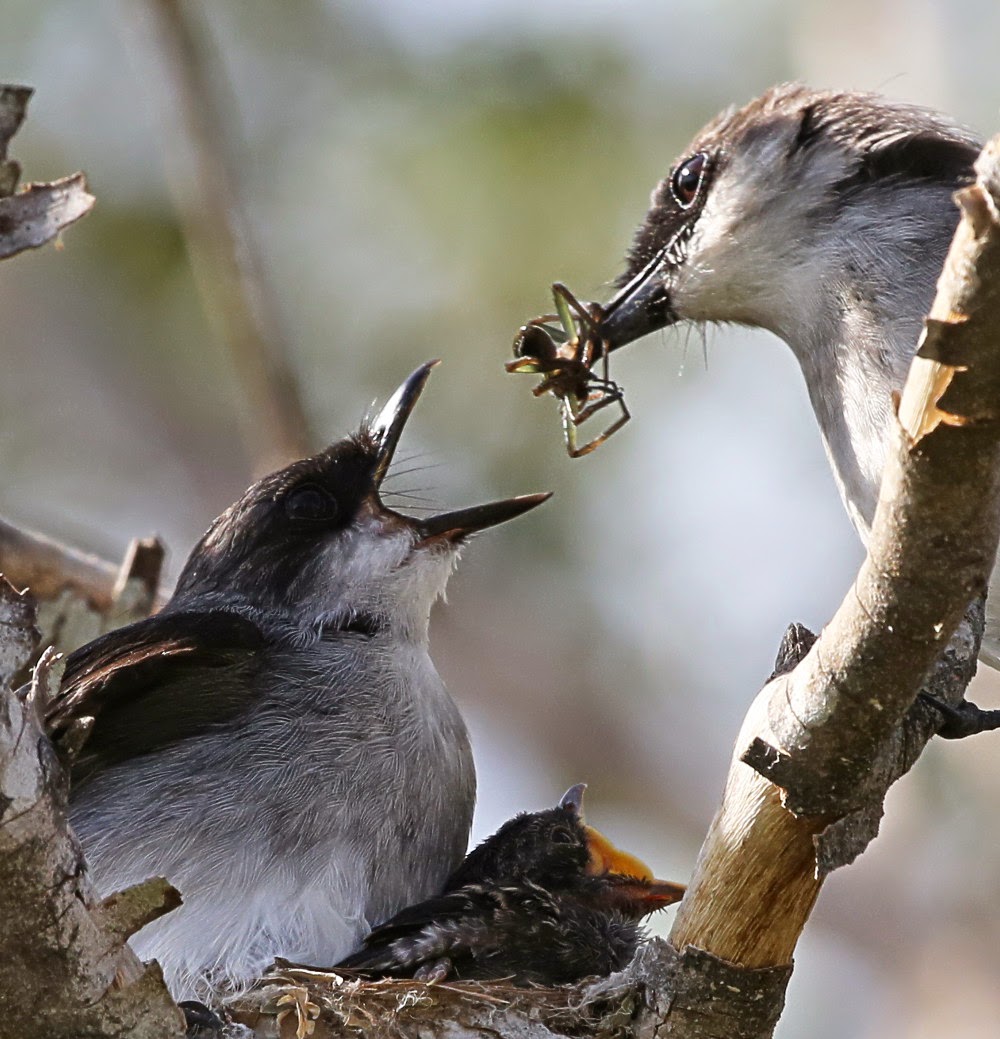
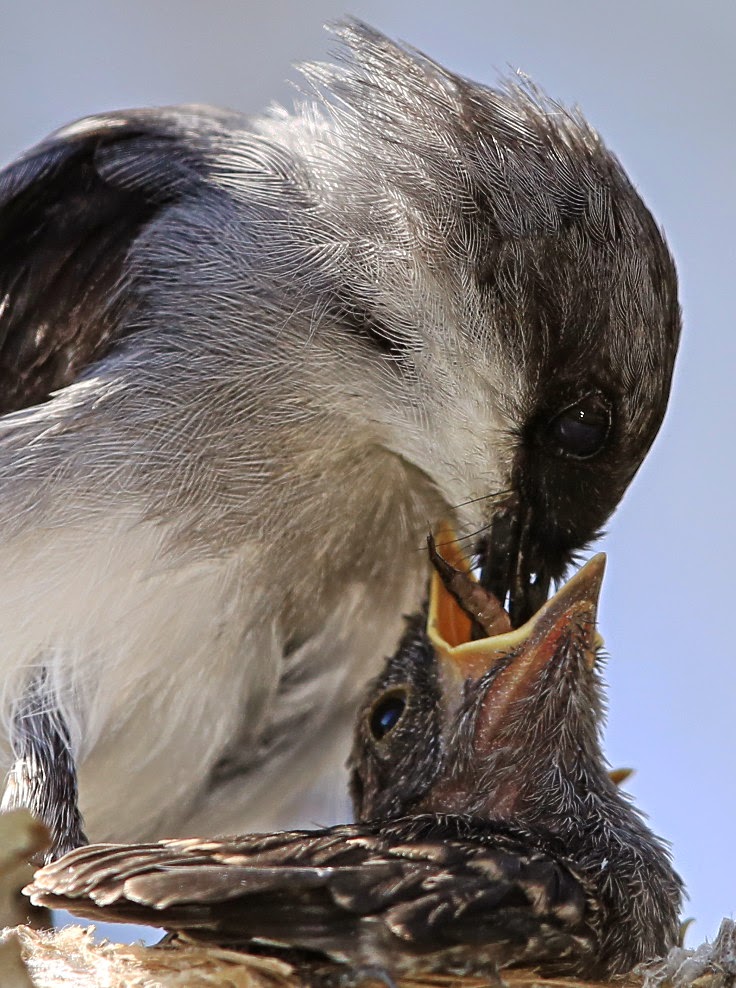
Uncommonly early access to coastal wetlands, fast drying out given the failed wet season, means more time with my Mangrove Robins (Peneonanthe pulverulenta) at the end of Orient Road, southeast of Ingham, this year.

Seems almost certain at least three pairs are breeding along a 500-metre stretch of winding and now stagnating tidal creek.

Two nests found, one of those occupied by birds used to me being close to them when nesting.


All doing well, apart from prey in the area, which is going down fast. 


Only  time will  tell how all living things fare later this El Nino year.

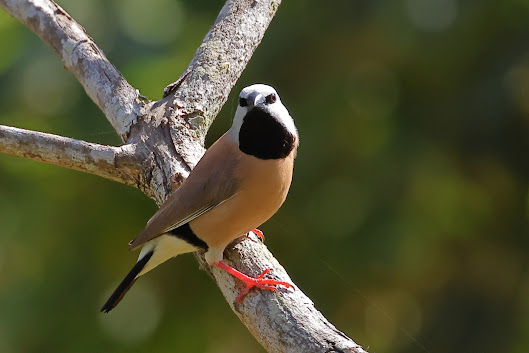
Lament for southern Black-throated Finches

Hollow logs for at risk birdies? Nature's nest boxes if you please Oh, such a clever wheeze So gather in twos and threes? Hundreds you w...