Big booboo last post - since mostly corrected, but clue left as challenge. Error came from initial assumption of bird's identity. Mistake then blocked any chance of self-correction. Here's a look at recent examples of ID problems, all from within limited confines of Townsville Common Conservation Park, starting with one of most frequent, Collared Sparrowhawk (juvenile above and below: but barred adults also look alike ) versus Brown Goshawk.
Sparrowhawks stare, Goshawks glower. Easy! Except Sparrowhawks often glower a bit. And their tails (square tipped with notch, against rounded unnotched) fold inconclusively in the field. And their very long middle toes and thin legs look less impressively different in the field than in the field guides. Ditto colour, head, bill, and, specially in the north, size differences. So, no surprise if Collared Sparrowhawk ID should be challenged.
Less contentious, though commonly mislisted as Grey Shrike-thrush, Little Shrike-thrush. (above and below), previously called Rufous Shrike-thrush. Above image closely matches what birders expect to see.
Same bird taken a day earlier in less sunlight shows why Little becomes identified as Grey, which is larger, lighter grey, sounds different, and in North Queensland prefers higher and drier inland woodland.
No question about Australasian Pipit. Until it's identified as Anthus australis australis. Because across the Top (of Australia) there's another subspecies, Anthus australis rogersi, which stands very upright, is more heavily streaked down the breast, is said to have a shorter tail and longer legs than the three other Pipit ssp.
It seems rogersi may have snuck southeast hundreds of kilometres down the NQ coast without drawing field guide attention to itself. Problems: every Pipit locally stands very upright, but often without extra heavy streaking. Tail and leg lengths difficult to measure without bird in hand.
Here's to further challenges (and fewer booboos) in 2018.
Sunday, January 7, 2018
Saturday, December 30, 2017
Little Egret, Red-capped Plovers fight for last bites
Last days of 2017, last days of action on, around and over the last two pools as Townsville Common wetland hardens under baking sunny days - which may last past January. So, bit of pressure for last of prey, as above with Little Egret flexing muscles and wings and things to see off fleeing rival.
And junior Red-capped Plover letting older bird know who's stud of the mud.
Red-necked Stint sticks to stints picking up prey and avoids those picking fights.
Black-necked Stork won't be walking across Payets pool with any more tilapia until next year's Wet (if it comes - no sure thing for Townsville). Even the hardy pest fish species are dying in the deoxygenated water.
But there's still prey enough in the air on and just above the water to keep Gull-billed Tern coming back every day.
And there'll always be the birds to keep me there day after day, wet or dry. Here's to 2018 and more Peregrine Falcons, White-bellied Sea-eagles and Whistling Kites, and . . .
Sunday, December 24, 2017
Merry Xmas and Happy New Year from some Townsville Common friends
Crimson Finch, Golden-headed Cisticola, Dollarbird, Red-tailed Black Cockatoo, Black Swan, Pelican and Royal Spoonbill, Red-backed Fairy-wren, and one of two unexplained recent arrivals.
Saturday, December 23, 2017
Nature in the raw . . .
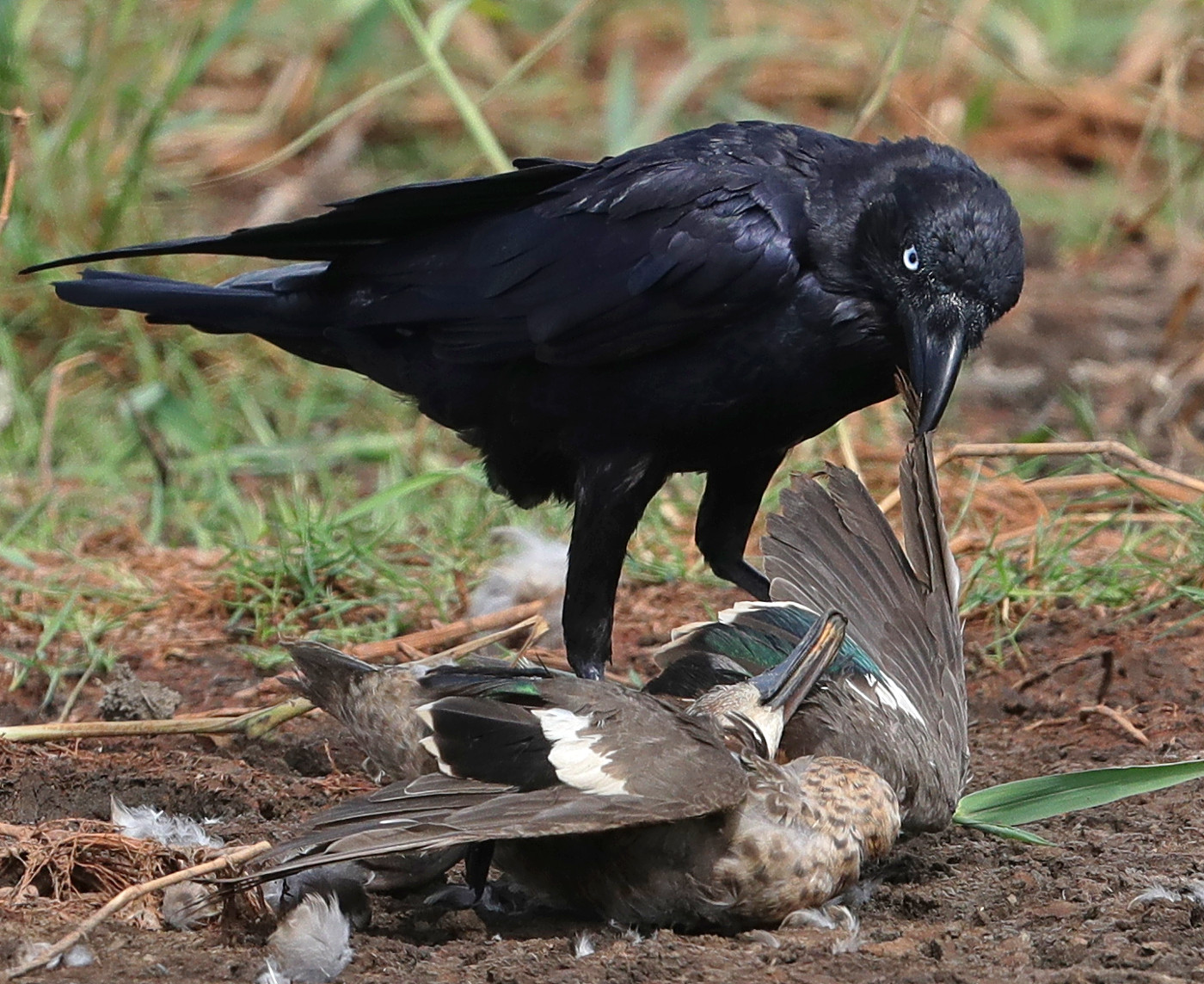
Be sad for Grey Teal, glad for Australian Raven: nature in the raw today.
Raven chanced upon injured or sick Teal in Townsville Common Conservation Park.
Quickly plucked breast plumage away from dying bird and began feeding.
Flew off, to clean bill and return later. No room for sentiment in the wild.
Raven chanced upon injured or sick Teal in Townsville Common Conservation Park.
Quickly plucked breast plumage away from dying bird and began feeding.
Flew off, to clean bill and return later. No room for sentiment in the wild.
Monday, December 18, 2017
Mud, mud, glorious mud . . .
Sloshing around muddy edges of fast-receding shallows at Melaleuca viewing area in the Townsville Common Conservation Park lately brought dodgy footing and images, including low overflight by young Brolga - bill much muddied - today.
Down on the 'ground' (mostly mud bounded by thick para grass), solitary Greater Sand Plover highlighted yesterday and today.
More numerous, thinly scattered Sharp-tailed Sandpipers came and went without troubling the plover.
As also did Red-necked Stints, in lower numbers and all flightier than others marching and munching across the mud.
And poised high and dry above it all this morning, Golden-headed Cisticola sings from dead sedge stalk.
Down on the 'ground' (mostly mud bounded by thick para grass), solitary Greater Sand Plover highlighted yesterday and today.
More numerous, thinly scattered Sharp-tailed Sandpipers came and went without troubling the plover.
As also did Red-necked Stints, in lower numbers and all flightier than others marching and munching across the mud.
And poised high and dry above it all this morning, Golden-headed Cisticola sings from dead sedge stalk.
Monday, December 11, 2017
Egret gets kicks in out of pool possession
Resident Mr Big among Eastern Great Egrets in the Townsville Common doesn't like sharing the waters at Payets Tower with others of his species.
Sometimes, as today, the intruder needs a lesson in egret kickboxing to get the message.
Seemed even enough at first, but as most agree, possession is nine-tenths of the lore.
Also showing competitive physicality, immature Black-necked Stork (Jabiru), apparently challenged to water race by Little Black Cormorant.
Long legs take time getting up to speed so LBC swam away the honours.
Also entertaining in recent days, catch-of-the-day comps. White Ibis made grand start with fish capture.
Sadly, quickly found that any number of failed swallows don't make a summa, a summit, or summat like that.
Junior Jabiru's dad showed he was the real deal with feel in taking prize for the biggest eel.
Played to the crowd with many grabs and drops before flipping eel up, into, and down, down, down bill and throat.
Two Pelicans were disqualified for refusing to reveal their many catches.
Sometimes, as today, the intruder needs a lesson in egret kickboxing to get the message.
Seemed even enough at first, but as most agree, possession is nine-tenths of the lore.
Also showing competitive physicality, immature Black-necked Stork (Jabiru), apparently challenged to water race by Little Black Cormorant.
Long legs take time getting up to speed so LBC swam away the honours.
Also entertaining in recent days, catch-of-the-day comps. White Ibis made grand start with fish capture.
Sadly, quickly found that any number of failed swallows don't make a summa, a summit, or summat like that.
Junior Jabiru's dad showed he was the real deal with feel in taking prize for the biggest eel.
Played to the crowd with many grabs and drops before flipping eel up, into, and down, down, down bill and throat.
Two Pelicans were disqualified for refusing to reveal their many catches.
Tuesday, December 5, 2017
Big boar takes uncommon amble through pool
Uncommon seeing one of the Common's unwanted feral pigs ambling around in full morning sun unaware of nearby watcher.
Even less common having big boar fill the frame as he walks through shallows less than 10 metres from the earth bank beside Payets Tower pool.
Make that closer to five metres. And not a hint of concern as he looks up at the lens.
And off he goes toward other end of the pool to chomp on aquatic greenery. Not a pretty sight, and a pest creating ugly damage, specially in and near wetlands, but - like most pests - a survivor and problem of our making.
Even less common having big boar fill the frame as he walks through shallows less than 10 metres from the earth bank beside Payets Tower pool.
Make that closer to five metres. And not a hint of concern as he looks up at the lens.
And off he goes toward other end of the pool to chomp on aquatic greenery. Not a pretty sight, and a pest creating ugly damage, specially in and near wetlands, but - like most pests - a survivor and problem of our making.
Friday, December 1, 2017
Storks brighten Melaleuca mornings
Adding colour to latest mornings at Melaleuca viewing area, pair of Blacked-necked Storks - and on occasion their shy brown offspring.
Pa Stork can be bit of a showoff. But, then, when you've got it . . .
Ma Stork mostly busier stabbing around for fish amid the weedy shallows.
No big catches seen, but here's hoping.
Pa Stork can be bit of a showoff. But, then, when you've got it . . .
Ma Stork mostly busier stabbing around for fish amid the weedy shallows.
No big catches seen, but here's hoping.
Subscribe to:
Posts (Atom)
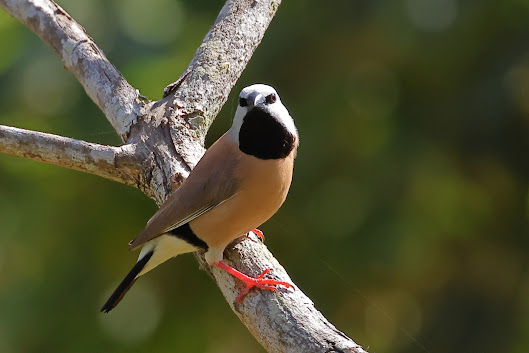
Lament for southern Black-throated Finches
Hollow logs for at risk birdies? Nature's nest boxes if you please Oh, such a clever wheeze So gather in twos and threes? Hundreds you w...
-
Hollow logs for at risk birdies? Nature's nest boxes if you please Oh, such a clever wheeze So gather in twos and threes? Hundreds you w...
-
White-faced Heron stands up and begs picture be taken at Tyto. The birds can develop some trust in people, but I've never found any aro...
-
Who gives way on footbridge, Yellow-spotted Monitor or unspotted bird watcher? Naturally, dinkum locals have right-of-way. I step aside, Spo...