Sunday, March 20, 2016

Shelduck drops in for waterlogged figs

Looking for Radjah Shelduck (Tadorna radjah) around Ingham would mostly be a waste of time. Finding one feeding happily on waterlogged figs fallen into cattle-trodden mud this week was a surprise.

The bird did not appear injured or exhausted yet allowed rare close approach before keeping wary distance by walking slowly off. Pity the overcast light muted the plumage colours.

Monday, March 14, 2016

Hello, sunny Cisticola, farewell wetted Wagtails

Bit of sunshine after about 10 days rain off and on and minor coastal flooding took me to a weir behind the Ingham sugar mill, looking for interesting fly-ins, but finding only flighty sparrows and a Golden-headed Cisticola (Cisticola exilis).

A charming cisticola, though, and so determined to show off to shining advantage.

But it seems my Yellow Wagtails have been driven away by all the rain. The departure usually comes with the normal deluges in early January. So they stayed an extra two months this year. Image above is one of last and best from Mungalla Station.

Wednesday, March 9, 2016

Floods bring terns from beach to road

White-winged Black Tern (Chlidonias leucopterus) drops in to mix with smaller Little Tern (Sternula albifrons). Just another morning at the beach? Not quite. The terns are in the middle of a high part of Orient Road, running through Orient Station southeast of Ingham. The local drought's broken with about 600mm of rain in the past 10 days. The first 200mm went straight through the cracks. Much of the past 300mm has backed up and caused minor flooding. It should mean an excellent beef and sugar cane year. And the terns will enjoy a change from the seaside.

Friday, March 4, 2016

A bird's gotta do what a bird's gotta do

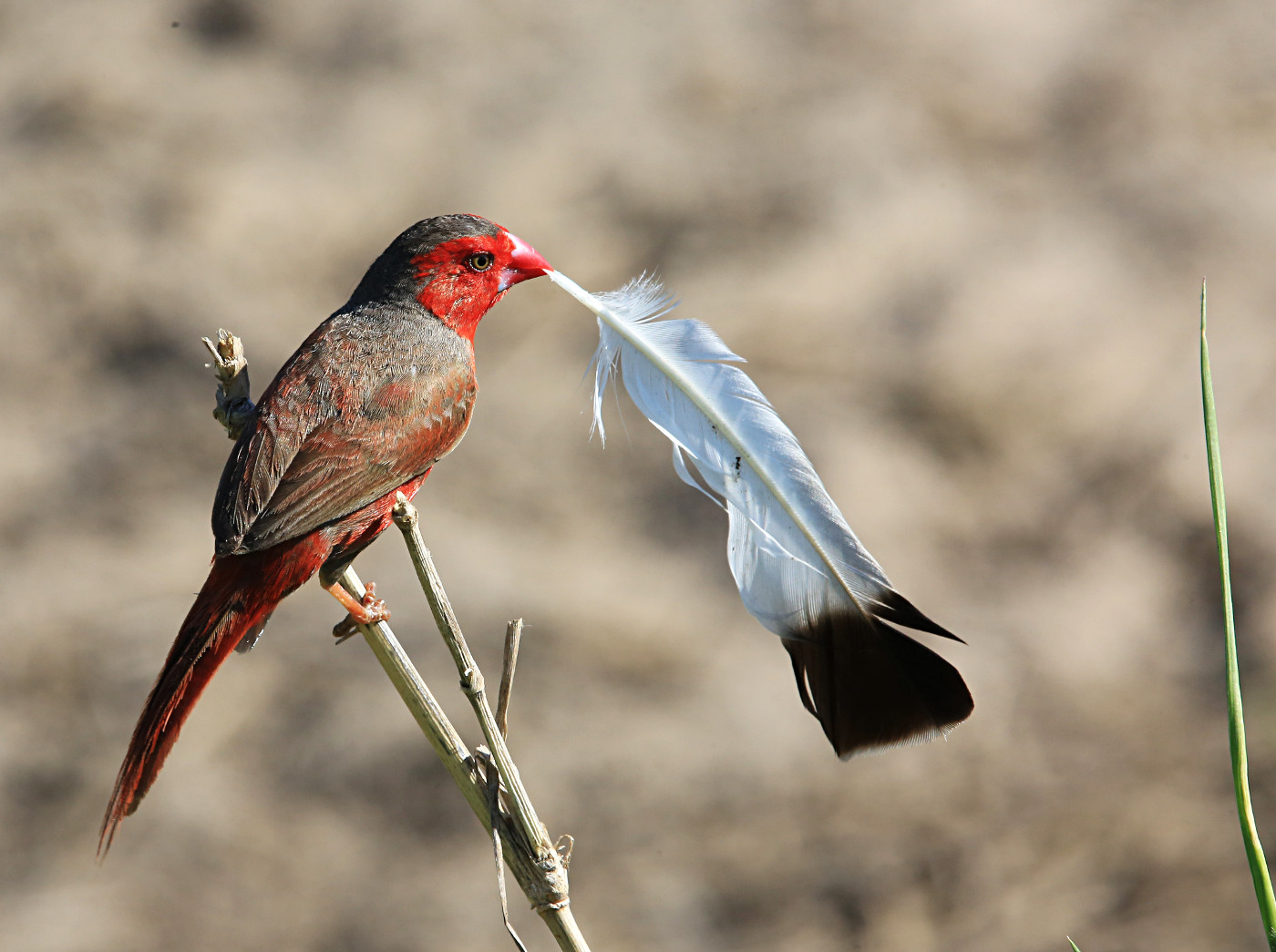
A nest-building Crimson Finch (Neochmia phaeton) tries to pick up every white feather it sees. Because the small soft ones are the ultimate in nesting comfort. And she who must be obeyed is fussy about what she'll accept for her coming clutch.
But it seems the birds lack much sense of timing or scale and can't discriminate between perfect bedding and impossibly large challenges. Eventually they find that some feathers just won't fly.

What's in a colour? Young Mistletoebird (Dicaeum hirundinaceum) comes with bright orange bill and gape. Parents carry plain old dull dark grey. Presumably because no one is going to try to poke food into them while inside a dark cute nest shaped like baby's bootee. Possibly also the colour helps parents locate their young after they've first left the nest.

Why the striking pattern? Young Pallid Cuckoo (Cacomantis pallidus) stands out in full sunlight. Soon it will take on the grey tones of a maturing bird. The juvenile plumage doesn't bear much resemblance to honeyeaters and other species parasitised by Pallids. It is said to perhaps offer dappling camouflage as the bird spills out over the small nests the egg is deposited in. It's the first juvenile Pallid I've seen for years.

Sunday, February 28, 2016

Pair of Squatters potter about in hotter spot


Trip into dry country turned up pair of Squatter Pigeons (Geophaps scripta) fussing around in roadside shadows. Limped around (broke toe the other day) after them without getting any clear shots in good light. My first sighting of Squatters for several years.

Lack of easy movement means bit more driving and shooting from the Troopy. Caught this Cattle Egret (Ardea ibis) standing on beefy pal.

With even beefier neighbour standing close,

And shaking off some of the drizzle that began falling a bit later on.

Monday, February 22, 2016

Rain! Just what every bird wants!

Crimson Finch rejoices in today's drizzling answer to farmers' prayers. Imagine the joy if Ingham had got the 600mm it needs.

Wednesday, February 17, 2016

Apostles answer birder's prayers

Out west in dry country beyond Mt Fox yesterday praying for something to turn up and down from on high come two Apostlebirds (Struthidea cinerea).

The birds appeared intrigued by the Troopy and keen on sharing strange sounds with the driver. No sign of others in the area but nearby were Pale-headed Rosellas, Magpies and Noisy Miners. Earlier, on drive up to Mt Fox the birds included rainforest Wompoo Pigeons and Noisy Pittas. Land of contrasts!

Tuesday, February 9, 2016

Yellow Wagtails sticking together, sticking around

Three's not often company among Eastern Yellow Wagtails (Motacilla tschutschensis) at Mungalla Station but today a trio of birds stuck together through four shifts to various sites along the road in from the highway. Sorry, no trio picture presented itself. (Above, one I can almost always count on.)
First time I've seen three birds getting on well and sticking relatively close together (10-20 metres apart) as they foraged along the roadside, being forced to move as station traffic travelled the road.

In its usual spot, at the waterhole that marks the eastern end of Palm Creek these dryish days, the only Yellow Wagtail that can be counted almost every day its looked for.

The bird moves from typical dry, patchy pasture favoured by Australasian Pipit (Anthus novaeseelandiae) to wet areas of dead water hyacinth (sprayed from helicopter some weeks ago).

The birds would in a normal Wet season have flown on south by now. It appears likely North Queensland will get only patchy rain this season and the Wagtails may stay until ready to fly off north to Japan and/or Russia about the end ofApril.

Time enough to have one, or even a trio, come close enough for 'the' shot. Meantime, this post offers the recent best.


Friday, February 5, 2016

Corella, Cockatoo brighten the roadside


Helping keep a roadside trim this week, Little Corella (Cacatua sanguinea) - one of six on the ground -  tucks into its morning greens.

And further along the road, Red-tailed Black-Cockatoo (Calyptorhynchus banksii) - one of eight - makes a meal of old coastal (Indian) almond.

Monday, February 1, 2016

Here's our World Wetlands Day outing

Tomorrow is World Wetlands Day.  Here is what it's all about. I know most couldn't make it. So I've done some looking for you:


Enjoy the outing?

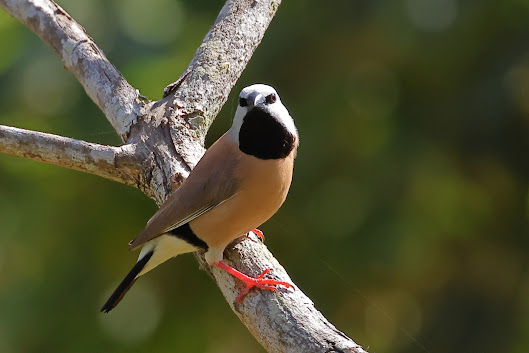
Lament for southern Black-throated Finches

Hollow logs for at risk birdies? Nature's nest boxes if you please Oh, such a clever wheeze So gather in twos and threes? Hundreds you w...