Showing posts with label Shining Flycatcher. Show all posts

Monday, November 14, 2011

Catchlights catch them watching

Three images from Jourama Falls reflect wildlife awareness of the intruder among them: Rainbow skink (Carlia rostralis) keeps a cautious eye out.


Northern Fantail (Rhipidura rufiventris) casts a backward look.


Male Shining Flycatcher (Myiagra alecto) glances sideways.


Meanwhile, revised, noise-reduced Pied Monarch (Arses kaupi, with mantid) looks sharper.
Click pix to enlarge

Tuesday, October 18, 2011

Flycatcher not the only one shining

Male Shining Flycatcher (Myiagra alecto) takes a break from building nest over water at Jourama Falls south of Ingham. 


Noisy Pitta (Pitta versicolor) on tumbled stones near a Jourama ford.
  
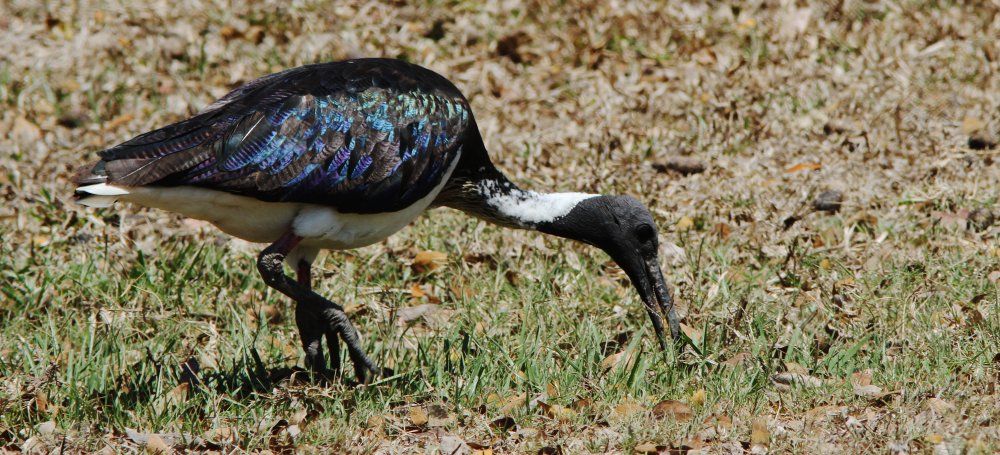
In Tyto, immature Straw-necked Ibis (Threskiornis spinicollis) gleams in late morning sunshine.


Purple Swamphen (Porphyrio porphyrio) close up.


Varied Triller (Lalage leucomela) glistens on coastal growth, Lucinda sandspit.   
Click pix to enlarge

Sunday, November 14, 2010

Woodswallow tucks into tree fork

White-breasted Woodswallow (Artamus leucorynchus) peers out from nest tucked typically into fork of paperbark. 


Brown-backed Honeyeaters (Ramsayornis modestus) nesting in same tree though little activity spotted through past three very wet days.   


Close by, Shining Flycatcher (Myiagra alecto) nesting near creek-side spot used earlier in the year. 


Male - much quicker to quit the nest - has been sharing more of the sitting this time.  
Click pix to enlarge  

Monday, May 31, 2010

Little Kingfisher tests the reflexes

Tested reflexes by trying to catch Little Kingfisher (Ceyx pusilla) on the dive yesterday.

Bird won 149-1. Well, almost one. And maybe it was 249 duds.

Anyway, just near enough to encourage more efforts.

Meanwhile, Shining Flycatcher (Myiagra alecto) juveniles doing well.

Female parent was doing almost all the feeding.

Male now doing some, because one juvenile chasing it.

May species count: 112, very slightly down on most of previous six years.

Friday, May 28, 2010

Comedy with not so old Chestnut

Colours bit muted for a clown, but this Chestnut-breasted Mannikin (Lonchura castaneothorax) could be auditioning for best comic dance in the Tyto Follies.

Same bird, a split-second earlier. Timing's all in comedy.

No laughs from this Carpet Python the other day. Though some seem to grin when open mouthed, snakes offer little humour.

Many honeyeaters today and yesterday found large Amethystine Python in pandanus no joke. It proved camera shy, so snake-cringers can relax.

Meanwhile, Shining Flycatcher juveniles doing well with parent female (above) doing almost all the feeding.

Friday, May 14, 2010

Brahminy heads shaky showing

Trip to Townsville yesterday meant chance an hour or two through the Town Common, a magnet for birders. Notable sightings of several raptors chasing various prey. Notable lack of luck capturing anything. Above Brahminy Kite (Haliastur indus) best of a shaky showing.

It was sharing perch and launch tree about 50 metres from the Freshwater Lagoon's formidable concrete bunker of a hide with an immature Brahminy, which I mistook at first for a Little Eagle. Junior took up positions almost impossible to photograph. And every dive it made for insects took it behind cover.

Even this Australian Brush-turkey (Alectura lathami) near the hide refused to get into the clear. To be unkind, could be because such looks really shouldn't be paraded in the open.

Back at Tyto, male Shining Flycatcher about to feed demanding throats. Picture from earlier in week but same story today.

Friday, April 16, 2010

Crimsons lead in breeding bonanza

Tyto teeming with tinkling young Crimson Finches (Neochmia phaeton). Plenty more on the way as nesting carries on apace. Why stop with one lot of four or five? Five for Mum, five for Dad. Maybe even five for the country (he smirked).

Also numerous, but not so fixed on nonstop breeding, Golden-headed Cisticola (Cisticola exilis) finds time to sing and enjoy the warmth this week.

Bad news at Shining Flycatcher nest? Well, female turned up again yesterday and today. The epic nest build is back on. Be 2011 before eggs are laid at the present erection (pun if you like) rate.

Found another four young Comb-crested Jacanas today. That's eight thriving in main lagoon system. Above, four more (one hidden behind egg on left) on the way.

Parent resented the attention, but 'threatening' display actually drew me to look for the eggs.

Wednesday, March 24, 2010

Black-Cockatoo cruises over wetlands

Male Red-tailed Black-Cockatoo (Calyptorhynchus banksii) cruises over Tyto today. The most common of Australia's six black-cockatoos - and the only one in this area - is often heard passing by but is not attracted to the wetland's trees (loves Indian Almonds).


And the red tail? Hinted at in these pictures, after brutal adjusting colour curves. Have been trying for long time to get takeoff and landing shots of birds with tails splayed to show the red or yellow (female) tail panels. Another in the 'one day' file.

Shining Flycatcher nest: still abuilding.

Friday, March 19, 2010

Shining Flycatcher nest in wrong light?

Female Shining Flycatcher (Myiagra alecto) gets down to adding material to nest in triple fork of bare sapling today. First nest-building by the infrequent visitors in my more than six years in Tyto.

The site amid open pandanus and cheesewood trees, and right alongside main service track into the wetlands, is a surprising choice, even though over a temporary pond. The birds, specially males, love deep shadows along creeks and other treed waterways.

Got quick picture and left after male flew in and took off without going close to nest. Rare to even see a male in Tyto. I'd predict birds won't go on with the project - if I'd a better track record.

And talking of track records, here's an immature White-bellied Sea-Eagle (Haliaeetus leucogaster: 2-3 years) caught cruising briefly overhead the other day. My record of tracking high birds and getting super sharp pix is not great. And unimproved!

Anyway, eagle wasting its time really, given the near total lack of prey on or near the main lagoon. Frustrating for both of us since bird didn't hang about and allow time for (possibly) sharper shots.

Friday, September 25, 2009

Shining light in the shadows


Shifted the morning round to nearby rainforest for part of this week. Found both Little and Azure Kingfishers along shadowed creek and caught flashing glimpse of Noisy Pitta. But only the Shining Flycatcher above obliged by hanging about for a few minutes. Picture not helped by skies clouded by that southern dust! Meantime, this female Shining has stayed near Tyto's now last creek pool for about two months.


Change of pace with a couple of Agile Wallaby images. Caught above animal on the hop along the northern boundary track at the wetlands. Missed the startled reaction springing from seeing me astride bicycle in middle of path, and sideways launch into long grass.


Not much of an anchor! Willie Wagtails usually take up a higher position on their living perch and watch for prey.


Talking of watching, Blue-winged Kookaburra glared briefly at me but chose not to fly off as the gap between us narrowed. Looks as if it's bitten on something rather hard and incurred bit of bill damage. Chewing on rhino beetles perhaps?

Wednesday, August 5, 2009

Flitting after finch and flycatcher


The quest for top pictures of Red-browed Finches (Neochmia temporalis) goes on. These two entries merit a showing, but don't quite do full justice to the birds.


Indeed, the species might have a case for cruel and unusual caricature after being shot in the round at Tyto today.


Also flitting shy of satisfaction, the Shining Flycatcher (Myiagra alecto) that has been keeping company (more or less) with a Little Kingfisher (Ceyx pusilla) at a creek pool. Here's an earlier picture of the Little up close.

Wednesday, March 18, 2009

Masked Lapwing on guard

Masked Lapwing (Vanellus miles) leaves no doubt about its intention to defend four eggs in a 'nest' (the merest of depressions amid short grassy weeds) beside a sugar mill road near Ingham. Spotted the breeding pair a few days ago and drove in yesterday with camera at ready.

A few moments of fuss from the bird and plenty of pictures from the car for me and we could return to doing what comes naturally. The bird sat back on the greasy-green eggs - which look as if thinly splattered with black by a Jackson Pollock wannabe. I drove off looking for anything out of the ordinary around the mill treatment ponds. Nothing!


The photographic catches at Tyto have continued to be thin, with low overall bird numbers and reduced species present. But a few birds yesterday and today fronted up for brief flights across my horizon. They all managed to looked sharper and more attractive in life than in camera. Goes without saying, of course. 


Female Black-necked Stork teased me into contemplating crawl closer (on swollen bung knee!) as it poked and prodded at the western end of the main lagoon. Luckily it eased into the air and headed east before I committed to the almost certainly fruitless effort to catch if off guard. Its presence back after the floods is, however, a favourable hint of other impending returns.


Magpie Geese have stayed in the general area, though not in large numbers. Even these big birds can be difficult to sneak up on, the more so since they've taken to the tree tops more frequently since the floods and are flightier.

One noteworthy sighting yesterday came when a pair of Shining Flycatchers darted up a creekline just as I was puzzling over the disappearance of a Common Tree Snake from a footbridge. Seems I was victim of divided attention disorder (DAD, as in you're getting old, Dad!): trying to watch three things at once led to losing all three! It did mean a rare tick, the male flycatcher being the first in five years for me at Tyto. Even females, less enamoured of the shadows, seldom venture into Tyto.

Also standing out from this week's sightings: a White-browed Crake and four large young just beginning to grow out of their black plumage. Should prove to be the first of many families begun when the floodwaters receded. 

Another nesting pair also showed out. Earlier in the week watched from 40 metres away as a Comb-crested Jacana alighted directly on top of its partner in the middle of open water with just a few scraggly lotus roots and leaves forming a precarious platform. Missed the picture! Could just make out the upper outline of two eggs today. Progress will be easy enough to follow and report, near to impossible to photograph effectively.

Lament for southern Black-throated Finches

Hollow logs for at risk birdies? Nature's nest boxes if you please Oh, such a clever wheeze So gather in twos and threes? Hundreds you w...