Showing posts with label Indian Almond. Show all posts
Friday, February 5, 2016
Corella, Cockatoo brighten the roadside
Helping keep a roadside trim this week, Little Corella (Cacatua sanguinea) - one of six on the ground - tucks into its morning greens.
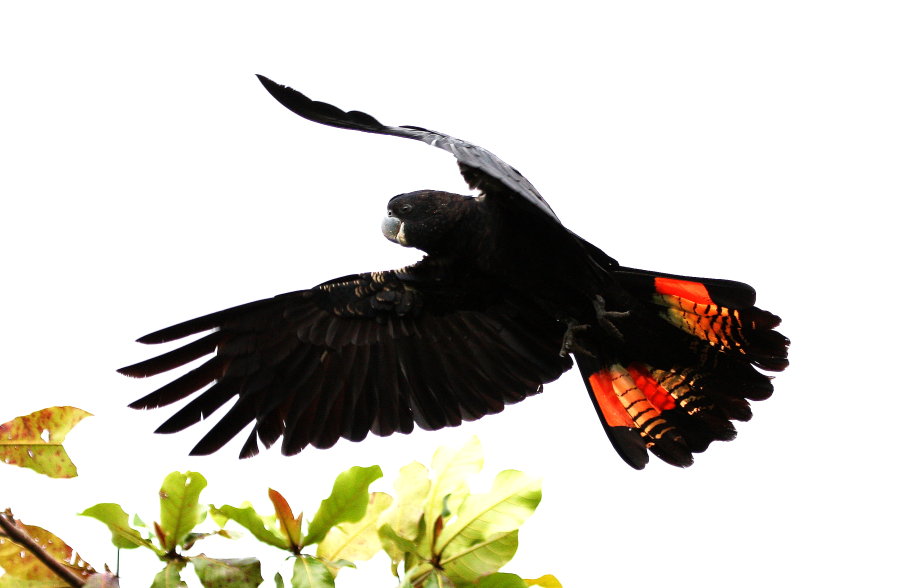
And further along the road, Red-tailed Black-Cockatoo (Calyptorhynchus banksii) - one of eight - makes a meal of old coastal (Indian) almond.
Saturday, January 22, 2011
Tale of Red-tailed Black Cockatoos
Red-tailed Black-Cockatoos (Calyptorhynchus banksii) descend on Indian almonds with strong appetites and stronger beaks.
Males are solid black with red under-tail panels.
Females come with light spots and bars, and barred yellow-red tail panels.
Plenty of action with three or four small flocks interacting today.
But too much cloud to capture glossy glory.
Click pix to enlarge
Males are solid black with red under-tail panels.
Females come with light spots and bars, and barred yellow-red tail panels.
Plenty of action with three or four small flocks interacting today.
But too much cloud to capture glossy glory.
Click pix to enlarge
Friday, January 23, 2009
Red tails in the sunset

A small flock of Red-tailed Black Cockatoos (Calyptorhynchus banksii) has graced the caravan park over the past week. The birds are drawn to Indian almond trees. More exactly, to the tough, fibrous fruit. Above, a male flourishes its crest in late afternoon light.

The birds have two feeding strategies. Pluck the almonds and eat them while perched in the tree. Or litter the ground beneath the tree with branches bearing the almonds and descend to eat them. A female (above) makes light of ripping into a tough green almond.
Either way, feeding is accompanied by companionable chat conducted in hoarse squawks. Full volume alarm screeches can make the birds somewhat less lovable.
Once the almonds have been stripped from the trees the cockatoos will move on, usually toward the beaches, where they can find more almonds and also tuck into casuarina nuts. Less often, they tackle green pine cones in the district's forestry plantations.

Hard to catch the birds' coloured tail panels in flight, but this male showed off 'reddily' while preening late this afternoon.
Subscribe to:
Posts (Atom)
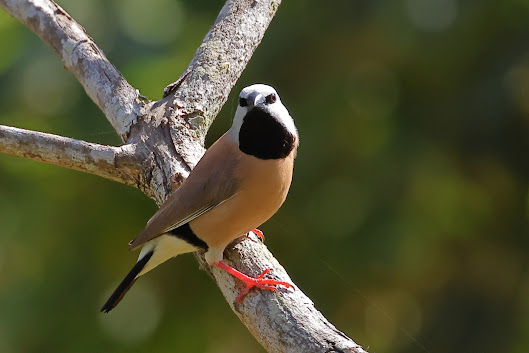
Lament for southern Black-throated Finches
Hollow logs for at risk birdies? Nature's nest boxes if you please Oh, such a clever wheeze So gather in twos and threes? Hundreds you w...
-
Hollow logs for at risk birdies? Nature's nest boxes if you please Oh, such a clever wheeze So gather in twos and threes? Hundreds you w...
-
Seems Townsville will feel only the sting in Cyclone Debbie's tail. Nothing but light breeze and a rare drop of rain here yet as the c...
-
Golden-headed Cisticola not so rusty when it comes to catching a feed See the eagle-eyed birdo doing his stuff. Eyes always on the move, mi...