Showing posts with label Mungalla Station. Show all posts

Saturday, September 3, 2016

Young Pipit lets parent do all the work

Bit of a double oddity at Mungalla Station the other day. Watched Australasian Pipit (Anthus novaeseelandiae), parent and immature, as adult bird foraged and fed youngster.

The young bird sat silent as parent scoured nearby ground for insects. Even when food was plucked up from almost under its nose the passive and unprecocious youngster did not try to forage for itself. Odd. Perhaps this one young bird is a very slow learner. It's not as if grabbing insects from the dirt is a high skill. Or does it need help with prey ID?

Also odd, that in several years and hundreds of Pipit sightings this was my first undoubted view of parent-immature feeding. And I can't explain why I've never stumbled on a nest. Seems I might also be a slow learner.

Monday, August 29, 2016

Jaq-ing up companions along the creek


Here's my friend Jaq (gender-neutral), Comb-crested Jacana (Irediparra gallinacea). We enjoy long chats by the final Water Hyacinth pool where Palm Creek's eastern fork dribbles out over 100 hectares of hymenachne at Mungalla Station. Jaq shares the pool with a shy little Saltwater Crocodile and - recently- a sun-loving big Water Python. Plus about 20 other bird species. I talk to all, but Jaq's the one that sticks around.

Sunbathing on the banks of the creek a bit upstream most mornings these days is a biggish Saltie, not a chatty type but willing to listen across 40 metres of water. But shouting from 50m just isn't the same as jesting quietly with Jaq.

Thursday, August 25, 2016

Horsfield's Bushlark makes the dust fly

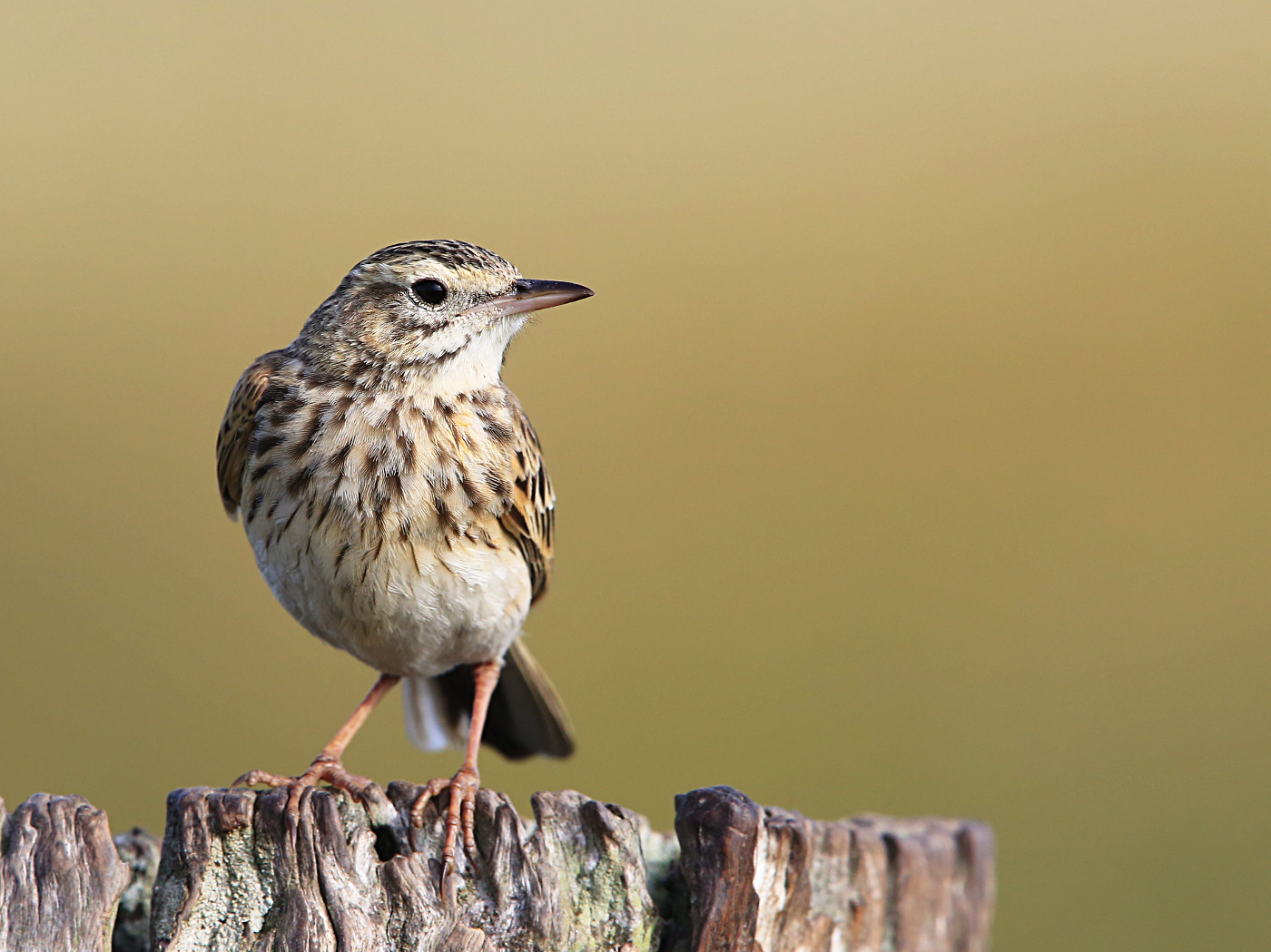
Warm days and dusty cattle tracks draw Horsfield's Bushlark (Mirafra javanica) out to compete with Australasian Pipit (Anthus novaeseelandiae) for a share of pasture pickings.

Got close to the dust-bath action the other day at Mungalla Station.

Dust flies as bird wriggles in.

And feathers dance as breeze picks up.

Mustn't leave Pipit out of the picture. One on a post from awhile ago.

Wednesday, March 23, 2016

Scores of Latham's Snipe - score one for me

Flooded creek at Mungalla Station looks rather lifeless, but hiding in those dead grasses are Latham's Snipe (Gallinago hardwickii) aplenty. How many? Counted 11 today, 15 previously. That's without even getting too close. My best guess? At least 30.

But they've not been lining up for pictures. Just luck that helped me catch sight of this one close enough to roadside to sneak up in the Troopy - and not have the bird fly as I stopped and poked camera and lens across the bonnet. One frame only not obscured by vegetation or blurred by the bird's movement.

And more good luck. No picture, but saw one Yellow Wagtail at another part of creek today. Could be newcomer on way to northern migration, More likely one of summer residents still around in spite of 1000mm rain this month.

Monday, March 14, 2016

Hello, sunny Cisticola, farewell wetted Wagtails

Bit of sunshine after about 10 days rain off and on and minor coastal flooding took me to a weir behind the Ingham sugar mill, looking for interesting fly-ins, but finding only flighty sparrows and a Golden-headed Cisticola (Cisticola exilis).

A charming cisticola, though, and so determined to show off to shining advantage.

But it seems my Yellow Wagtails have been driven away by all the rain. The departure usually comes with the normal deluges in early January. So they stayed an extra two months this year. Image above is one of last and best from Mungalla Station.

Tuesday, February 9, 2016

Yellow Wagtails sticking together, sticking around

Three's not often company among Eastern Yellow Wagtails (Motacilla tschutschensis) at Mungalla Station but today a trio of birds stuck together through four shifts to various sites along the road in from the highway. Sorry, no trio picture presented itself. (Above, one I can almost always count on.)
First time I've seen three birds getting on well and sticking relatively close together (10-20 metres apart) as they foraged along the roadside, being forced to move as station traffic travelled the road.

In its usual spot, at the waterhole that marks the eastern end of Palm Creek these dryish days, the only Yellow Wagtail that can be counted almost every day its looked for.

The bird moves from typical dry, patchy pasture favoured by Australasian Pipit (Anthus novaeseelandiae) to wet areas of dead water hyacinth (sprayed from helicopter some weeks ago).

The birds would in a normal Wet season have flown on south by now. It appears likely North Queensland will get only patchy rain this season and the Wagtails may stay until ready to fly off north to Japan and/or Russia about the end ofApril.

Time enough to have one, or even a trio, come close enough for 'the' shot. Meantime, this post offers the recent best.


Friday, June 12, 2015

Welcome Swallows on wing and perch

More efforts to capture Welcome Swallows (Hirundo neoxena) on the wing not helped lately by days of gusting winds and showers.

Fewer birds using previously favoured perch in pool on lower stretch of wetland at Mungalla Station.

One sharp in-flight image (with target perch cloned out).

Full-frame image.

Thursday, March 26, 2015

Yellow Wagtails brighter every day they stay

Getting brighter by the day, Eastern Yellow Wagtail (Motacilla tschutschensis) stands out at Mungalla Station as presumed northern departure time draws closer.


Hard to be sure,  though, since this season has so far been remarkably dry. Who knows what migratory birds make of such phenomena? Certainly the Yellow Wagtails have never stuck  around Ingham during the Wet, in my experience. 


It would be exciting to find the Mungalla birds deciding to give Japan or further north  a miss this season and settling down to raise a local family. No harm in dreaming, I suppose.


Meantime, enjoy  their colourful presence while we can.

AND then there were none to be  found. Off, it seems, with the  latest full moon.


Sunday, March 22, 2015

Rewarding moments with Rainbow Bee-eaters

Rewarding short session with Rainbow Bee-eaters (Merops ornatus) at Mungalla Station this morning.


Birds using dead cottonwood branch to sight and launch at flying prey.


Ever-moving bash and thrash after successful strikes made it hard to get sharp shots.


And the slowish frame rate of the 5D3 and the luck of shutter activation combined to frustrate hopes of a perfect action picture.


Thursday, November 27, 2014

Yellow Wagtails hard on crawlers

How hard can it be to crawl close and get a few decent  pictures of migrant Eastern Yellow Wagtail (Motacilla tschutschensis) at Mungalla Station?

Hard, hard, hard. Hard on the knees. Hard on the elbows. Hard on the neck and spine. 

Hard on the heels of one failure, yet another.

Friday, November 14, 2014

Masked Lapwing youngsters stand out

Cute youngsters showing out in wetlands these days, without often standing around for picture, so happy to come upon pair of Masked Lapwing (Vanellus miles) juveniles up close at Mungalla Station.


Pretty sure I've got them both: their parents weren't much help.


Very helpful in Tyto  the other morning, my favourite White-browed Crake (Amaurornis cinerea). The more I talk the closer the bird walks.

Unlike distant Eastern Yellow Wagtail (Motacilla tschutschensis) in Mungalla today. Flighty migrant kept whizzing across muddy Palm Creek, forcing me into gumboots. Much squelching came to nothing much bar a boot full of mud and salvinia. Still, first sighting for me this season. 

Monday, October 20, 2014

Shining moments with Flycatcher

Shining moments with Shining Flycatcher (Myiagra alecto) at two nest sides along tidal boundary at Mungalla Station this week.

Female doing most of building at one site...


...and feeding at the other.

Where's the male? He'll be along sometime, I hope.

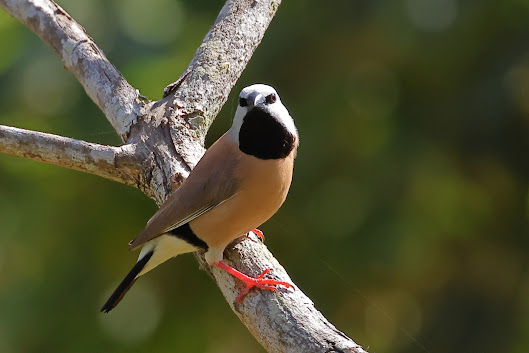
Lament for southern Black-throated Finches

Hollow logs for at risk birdies? Nature's nest boxes if you please Oh, such a clever wheeze So gather in twos and threes? Hundreds you w...